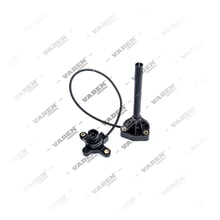
What are the functions of the Oil Pan Sensor?
As one of the first warning sources in engine protection systems, the sensor performs several functions:
- Oil level monitoring: Continuously or periodically measures the amount of oil in the pan to detect a low level.
- Temperature tracking: Monitors oil operating temperature and gives early warning of overheating risk.
- Data to the ECU: Feeds measured values to the engine control unit, forming the basis for oil change interval calculations and fault codes.
- Early warning: Alerts the driver before a critical level is reached, helping prevent engine damage.
- System integration: On some vehicles, feeds data to service interval indicators and oil quality estimation algorithms.
What are the symptoms of a failed Oil Pan Sensor?
Sensor failure is usually noticed on the dashboard or in engine behavior:
- False or constant warning light: A low oil warning may stay on or a fault code may be logged even when the oil level is normal.
- Inconsistent gauge readings: The oil temperature or level gauge may show unrealistic, fluctuating values.
- Diagnostic trouble code (DTC): An open or short circuit in the sensor wiring triggers the relevant fault code on a diagnostic tool.
- Engine protection mode: Some ECU software restricts engine power when it receives unreliable sensor data.
- Failure to detect real low oil: A completely failed sensor may not report an actual low-oil condition, carrying serious engine risk.
How is the Oil Pan Sensor inspected?
Inspection covers both an electrical test and a comparative measurement:
- Diagnostic scan: Scan the system for stored fault codes using an OBD/diagnostic tool.
- Resistance/voltage measurement: Compare readings at the sensor connector against the manufacturer's reference values.
- Manual level check: Compare the actual level measured with the dipstick against the dashboard reading.
- Wiring and connector inspection: Check the sensor connection for corrosion, looseness, or insulation damage.
- Visual inspection: Check the sensor body for oil leakage or physical damage.
What should be considered when replacing it?
Points to watch during sensor replacement affect both sealing and measurement accuracy:
- Oil draining: Since the sensor is mounted on the bottom or side of the pan, draining the oil before replacement may be required.
- Gasket/o-ring replacement: The seal supplied with the sensor must always be replaced with a new one; never reuse the old seal.
- Correct tightening torque: Over-tightening cracks the pan body, under-tightening causes an oil leak.
- Connector engagement: The electrical connector must be fully seated; check the locking tab.
- Oil level check: After installation, top up engine oil to the manufacturer's level, clear the fault code, and test.
How to choose the right Oil Pan Sensor?
Measurement type, connector layout, and mounting thread are the deciding factors when choosing the correct sensor.
Engine Oil Pan Sensor selection criteria| Criterion | Description |
|---|
| Measurement type | Must match the required level, temperature, or combined measurement function |
| Connector type and pin count | Must exactly match the vehicle wiring harness |
| Mounting thread | Must exactly match the thread on the oil pan |
| Signal output | Must match the signal type (analog/digital) expected by the ECU |
| Application | Verify OEM reference against engine code and chassis number |
Maintenance and service life
The sensor's service life depends largely on engine oil cleanliness and the heat cycle within the pan. Regular oil and filter changes reduce deposit buildup on the sensor tip, helping preserve measurement accuracy over time. Checking the connector for moisture and corrosion at scheduled service prevents sudden failures. The vehicle's current service manual is the authority for exact torque and electrical values.
VADEN Oil Pan Sensor
VADEN supplies OE-quality oil pan sensors for heavy commercial vehicle engines. Manufactured with correct measurement accuracy and connector compatibility, these sensors help the engine protection system operate reliably.
Frequently Asked Questions (FAQ)
What does the engine oil pan sensor do?
It measures oil level, temperature, or pressure in the pan and sends this data to the engine control unit.
What happens when the sensor fails?
A false warning light, a fault code, or in some cases the engine entering protection mode can occur.
Can a sensor failure hide a real low-oil condition?
Yes, a completely failed sensor may not report an actual low-oil condition, which carries serious engine risk.
What should be watched during sensor replacement?
The seal must always be replaced with a new one, correct torque applied, and the oil level checked after installation.
What affects the sensor's service life?
Engine oil cleanliness and regular oil/filter changes reduce deposit buildup on the sensor tip, extending its life.
Related technical guide: Truck Oil Pan Group: Faults, Replacement & Maintenance Guide