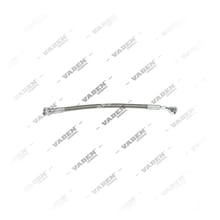
What are the functions of the Exhaust Brake Pressure Regulator Hose?
Though it looks like a simple length of tubing, the hose performs several functions essential to correct system operation:
- Pressure transfer: Carries controlled air pressure from the regulator to the exhaust brake valve without leakage.
- Vibration absorption: Its flexible construction absorbs movement between engine and chassis, protecting rigid connection points.
- Sealing: Fittings and o-ring connections at each end prevent air loss from the system.
- Heat resistance: Its position near the exhaust system means it must retain flexibility at high temperature to keep functioning.
- Fast response: Correct internal diameter ensures the pressure signal is transmitted without delay.
What are the symptoms of a failed Exhaust Brake Pressure Regulator Hose?
A problem in the hose usually shows up in the exhaust brake's effect or response speed:
- Late or weak exhaust brake engagement: Pressure loss prevents the valve from opening fully, so engine braking cannot deliver the expected deceleration.
- Audible air leak: A hissing sound is heard if there is a crack in the hose body or its connections.
- Pressure warning on the dash: General air loss in the system can affect the vehicle's air circuit pressure gauge.
- Visible damage: The hose surface may show cracking, bulging, hardening, or deformation from oil or heat exposure.
- Exhaust brake not working at all: A severe rupture or full blockage takes the system out of service.
How is the Exhaust Brake Pressure Regulator Hose inspected?
Inspection covers both a visual check and a pressurized system test:
- Visual inspection: Check along the hose for cracking, wear, chafing marks, or looseness at connection points.
- Soapy water test: With the system under pressure, apply soapy water to connections and look for bubbles to locate leaks.
- Pressure drop test: Pressurize the system and measure pressure drop over a set time to evaluate sealing.
- Exhaust brake response test: Observe how long the valve takes to fully close once the brake is engaged.
What should be considered when replacing it?
Points to watch during hose replacement directly affect system reliability:
- Correct routing and connection: Route the new hose along the original path to prevent contact with the exhaust or moving parts.
- Fitting and o-ring check: Replace worn fittings along with the hose.
- Correct tightening torque: Fittings should be tightened to the manufacturer's value; over-tightening must not damage the threads.
- Pressure test: Pressurize the system after installation and check for leaks.
- Keep away from heat sources: Use a heat shield if needed to prevent direct contact between the hose and the exhaust pipe.
How to choose the right Exhaust Brake Pressure Regulator Hose?
Pressure rating, temperature tolerance, and connection type are the deciding factors when choosing the correct hose.
Exhaust Brake Pressure Regulator Hose selection criteria| Criterion | Description |
|---|
| Working pressure | Must match the vehicle's air brake system nominal pressure |
| Temperature resistance | Material must withstand high temperature near the exhaust |
| Length and inner diameter | Must exactly match the original hose dimensions |
| Connection type | Must match the fitting type at the regulator and valve ends |
| Application | Verify OEM reference against engine code and chassis number |
Maintenance and service life
The hose's service life depends on operating temperature, air quality (moisture and oil content), and exposure to mechanical friction. Checking the hose for hardening or cracking at scheduled service prevents a sudden failure. Regular maintenance of the air dryer and filters reduces moisture and contamination in the line, extending the life of the hose's inner surface.
VADEN Exhaust Brake Pressure Regulator Hose
VADEN supplies OE-quality hoses matched to the correct pressure and temperature ratings for the exhaust brake systems of heavy commercial vehicles. These parts help the engine brake engage reliably and on time.
Frequently Asked Questions (FAQ)
What does the exhaust brake pressure regulator hose do?
It carries air pressure from the regulator to the exhaust brake valve, enabling the engine brake to engage.
How does a failed hose affect the exhaust brake?
Pressure loss prevents the valve from opening fully, so the exhaust brake engages late, weakly, or not at all.
How is a leak in the hose detected?
With the system under pressure, apply soapy water to the connections and look for bubbles to locate the leak.
Is a test needed after replacement?
Yes, the system must always be pressurized and checked for leaks after installation.
Why does the hose need to be heat resistant?
Its position near the exhaust system means it must retain flexibility at high temperature to avoid cracking and leaks.
Related technical guide: Exhaust / Engine Brake: Faults, Replacement & Maintenance Guide