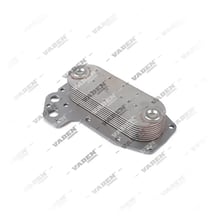
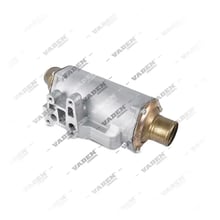
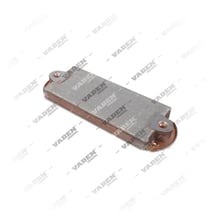
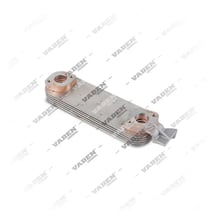
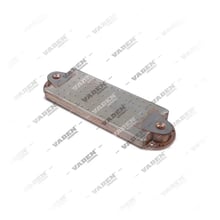
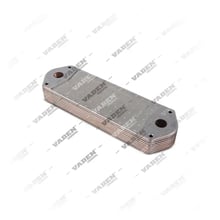
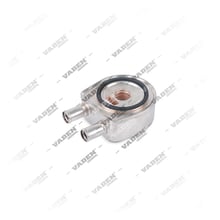
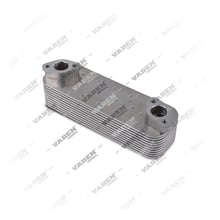
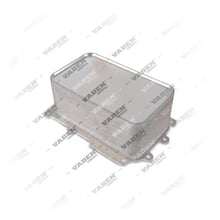
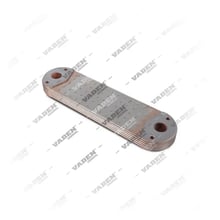
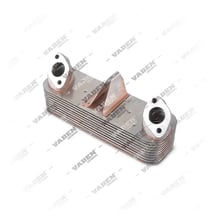
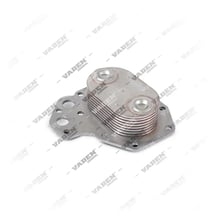
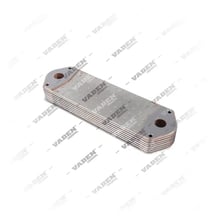
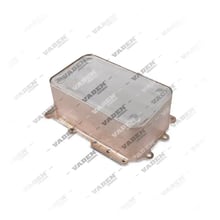
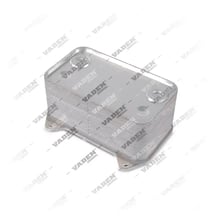
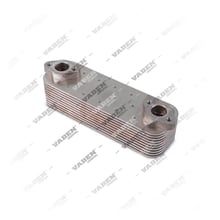
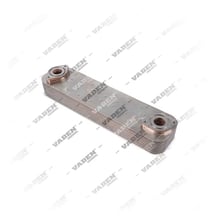
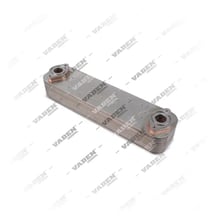
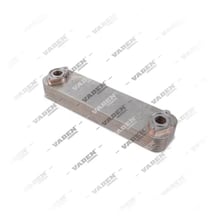
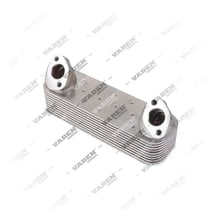
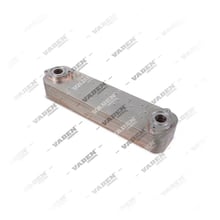
What Is an Engine Oil Cooler?
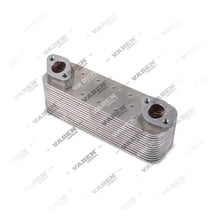
An oil cooler is a complete heat-exchanger unit that keeps engine oil temperature within safe limits on heavy commercial vehicles. Oil circulating through the engine is constantly exposed to friction and combustion heat; the oil cooler transfers this heat to the coolant or directly to the airstream, preventing overheating. Sometimes called an "oil radiator" in the field, it sits on the engine block and forms a critical link in the oil circuit. This category is the main product line for the complete Oil Cooler unit, aimed at replacing a failed or underperforming oil cooler in full, or matching it with an OE-equivalent counterpart. Widely used on Mercedes-Benz, MAN, Scania, Volvo, DAF, Iveco, and Renault Trucks heavy-duty engines, the Oil Cooler is a safety-critical component affecting engine life.
How Does an Engine Oil Cooler Work?
The oil cooler routes hot oil from the oil pump through its internal channels, exchanging heat with the coolant circulating around the housing or with the passing airstream. In liquid-cooled types, oil and antifreeze pass through thin metal plates without mixing, transferring heat rapidly from oil to coolant. In air-cooled types, a finned core is cooled by airflow while the vehicle moves or with help from a fan. As engine load increases, oil temperature rises, and the oil cooler brings it back down, preserving the oil film's viscosity. Oil that isn't cooled sufficiently thins out, the lubricating film weakens, and friction increases at moving parts. The Oil Cooler plays an indispensable role in keeping the engine running long and reliably.
Engine Oil Cooler Technical Specifications
Oil coolers typically use an aluminum or steel housing built as a plate-type or tube-and-fin heat exchanger, bolted directly to the engine block. Cooling capacity is engineered to match engine displacement and power, so models come in different sizes and channel counts for different engine types. Connection points seal into the oil and coolant circuits using original gaskets or O-ring seals. Pressure resistance and temperature tolerance are verified against the engine manufacturer's specified ranges; exact values follow the vehicle's current service manual. Mounting surfaces and the bolt pattern are machined to match OE dimensions exactly.
- Housing Material: Aluminum or steel, depending on engine type.
- Channel/Plate Structure: Cooling capacity proportional to engine power.
- Sealing Elements: Match original gasket and O-ring dimensions.
Engine Oil Cooler Types and Subcategories
- Plate-Type Oil Cooler: A compact, high-efficiency design in which oil and coolant travel through separate channels between thin metal plates.
- Tube-and-Fin Oil Cooler: The classic design in which oil flows through thin tubes while the outer surface is cooled by air or liquid.
- Liquid-Cooled Unit: Integrated into the engine's cooling system, using the same coolant as the engine cooling circuit.
- Air-Cooled Unit: Operates independently, cooling with the outside airstream; commonly found in turbo or transmission oil circuits.
- Models with a Thermostatic Bypass Valve: Short-circuit the flow while the oil is still cold, allowing the engine to warm up quickly.
- Combined Units with Filter Housing: Manufactured as a single housing together with the oil filter mount, simplifying installation.
How to Choose the Right Engine Oil Cooler
Choosing the right Oil Cooler starts with verifying the engine code, chassis number, and OEM reference number of the existing part. Because the same engine family may have variants in capacity or connection type, compare the code stamped on the housing before ordering. Full unit replacement is right when internal channels are clogged or sealing has failed badly; a sealing kit may be enough for minor gasket leaks. The table below summarizes the key criteria.
Oil Cooler Selection and Compatibility Criteria| Criterion | What to Check |
|---|
| Engine Code / Chassis Number | The first verification step for an exact match with the removed part |
| Cooling Type | Confirm whether the unit is liquid-cooled or air-cooled |
| Connection Points | Bolt pattern and gasket/O-ring dimensions must match the original |
| Complete Unit or Repair Kit | Choose a complete unit for internal blockage or cracks; a repair kit only for a leak on its own |
| OEM Reference Number | Verify the match against Wabco, Knorr-Bremse, or the engine manufacturer's code |
Engine Oil Cooler Maintenance and Key Considerations
- Maintain Coolant and Oil Quality: Contaminated or degraded fluids cause sediment to build up in the internal channels, reducing cooling efficiency.
- Carry Out Periodic Visual Checks: Oil or coolant stains around the housing are an early warning sign.
- Follow the Correct Mounting Torque: Overtightening can crack the housing, while a loose mount risks leaks; follow the vehicle manufacturer's current service manual.
- Use Original Dimensions When Replacing Gaskets and O-rings: An incorrect size can cause seal failure and let air or fluids mix.
- Clear Any Cooling System Blockages: Contamination in the radiator or coolant circuit directly affects the oil cooler's efficiency.
Common Failures and Solutions
- Rising Engine Oil Temperature: Caused by clogged internal channels or insufficient coolant flow; the unit should be inspected and replaced in full if necessary.
- Oil and Coolant Mixing: Caused by a cracked internal gasket or plate; this requires full unit replacement rather than repair, or the engine risks damage.
- Leakage Around the Housing: Caused by a worn O-ring or gasket; a sealing kit can resolve this, but a cracked housing requires full replacement.
- Engine Overheating Warning: A blockage or damage in the oil cooler should be assessed together with the overall cooling system.
- Fluctuating Oil Pressure: Caused by a malfunctioning bypass valve; inspect the valve and gasket assembly and renew the unit if needed.
Why Choose VADEN ORIGINAL?
- Manufactured to OE Dimensions: The housing, channel structure, and connection points are built to original-part tolerances.
- Extensive OEM Coverage: Cross-referenced with the correct part numbers for Mercedes-Benz, MAN, Scania, Volvo, DAF, and Iveco engine families.
- Leak-Tested Production: Every unit is shipped only after passing pressure and seal-integrity testing.
- Exported to Over 100 Countries: Proven manufacturing experience trusted by fleet operators worldwide.
- Complete Unit and Repair Kit Options: Lets you choose an economical or a full solution depending on the scope of the failure.
Conclusion
By keeping engine oil temperature under control, the Oil Cooler protects critical components such as bearings, crankshaft, and turbocharger; this category is the main product group for complete unit replacement. An Oil Cooler matched to the correct engine code and OEM reference number delivers long-term reliability in sealing and cooling performance. With OE-dimension manufacturing and broad vehicle compatibility, VADEN ORIGINAL Oil Cooler products are a dependable choice for protecting engine health across heavy vehicle fleets.
Frequently Asked Questions (FAQ)
What does an oil cooler do?
An oil cooler lowers the engine oil's operating temperature, helping preserve the lubricating film. As oil temperature drops, it lubricates moving parts such as bearings, the crankshaft, and pistons more effectively, reducing wear and the risk of overheating.
Can a vehicle keep running with a failed oil cooler?
No. A failed oil cooler can cause engine oil temperature to rise rapidly and lead to serious engine damage. Especially when oil and coolant have mixed, the vehicle should be taken to a workshop immediately so the unit can be inspected and replaced in full if necessary.
Should I repair the oil cooler or replace it completely?
For minor gasket or O-ring leaks, a sealing kit may be sufficient. However, issues such as internal channel blockage, a cracked plate, or oil and coolant mixing require a complete unit replacement; a partial repair won't permanently fix failures of this kind.
Which vehicles are VADEN ORIGINAL oil coolers compatible with?
VADEN ORIGINAL oil coolers are cross-referenced with the correct OEM part numbers for Mercedes-Benz, MAN, Scania, Volvo, DAF, Iveco, and Renault Trucks heavy-duty engines. We recommend verifying compatibility using the engine code and chassis number before ordering.
How can you tell if the oil cooler is blocked?
Engine oil temperature rising above normal, fluctuating oil pressure, and general engine overheating warnings are possible signs of a blockage. In this case, the oil cooler and its connected cooling circuit should be inspected together.
Related technical guide: Oil Cooler: Failure Symptoms, Replacement & Maintenance Guide