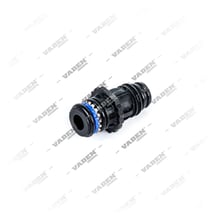
What is Connection Components Nipple?
In the electrical system, the nipple provides mechanical protection at the point where the wiring harness passes through the body, shields the cable from external factors (dust, moisture, friction), and, when combined with a sealing gasket, raises the IP protection rating. It is a small but functional connection part commonly found at pass-through points for wiring harnesses running to headlights, indicators, ABS sensors, alternators, or control boxes. Although low in stock, it is a part frequently implicated in electrical faults and one that service workshops should keep on hand. Given the high vibration levels in heavy commercial vehicles, the thread design and gasket fit of nipples used at harness-to-body connection points directly affects the long-term reliability of the electrical system; choosing a nipple with the correct protection rating is decisive in preventing intermittent electrical faults, especially in chassis areas exposed to rain, mud, and salt.
What are the functions of Connection Components Nipple?
- Pass-through point: Allows the wiring harness to safely pass through the body or panel.
- Mechanical protection: Protects the cable against sharp edges, vibration, and friction.
- Sealing: When used with a gasket, prevents water, dust, and moisture ingress.
- Strain relief: Supports the cable against pulling or bending forces at the connection point.
- Modularity: Provides a standard threaded connection for wiring harnesses of different diameters.
- Grounding support: In some applications, maintains electrical continuity between the body and the cable conduit.
What are the symptoms of a failed Electrical Connection Equipment Cable Nipple?
Nipple failures usually appear as indirect symptoms rather than a direct electrical cutoff. The issue often progresses unnoticed for a long time and only reaches the workshop once sensor readings become unstable or a lamp flickers intermittently, which is why periodic visual inspection matters.
- Moisture ingress: Moisture, corrosion, or green oxide buildup inside the connector.
- Intermittent fault: Signal cutting in and out with vibration, sensor or lighting malfunction.
- Looseness: The nipple loosening from the body thread, the harness sagging.
- Cracked/broken housing: Cracking due to UV and heat exposure, especially on plastic nipples.
- Visible corrosion: Rusting on metal nipples, thread degradation.
How is Connection Components Nipple checked?
Inspection is carried out during periodic wiring maintenance or fault diagnosis.
- The nipple is visually inspected for cracks, breakage, or excessive corrosion.
- The thread connection tightness is checked by hand and tightened or replaced if loose.
- If a gasket is present, it is checked for hardening, cracking, or absence.
- The harness is checked for chafing marks where it passes through the nipple.
- Grounding continuity and insulation resistance are measured with a multimeter to confirm electrical integrity.
What should be considered when replacing it?
- The new nipple's thread type (metric/NPT) and diameter must exactly match the existing harness.
- Where sealing is required, an appropriate gasket or O-ring must be used together with it.
- Avoid thread or housing damage from overtightening during installation.
- Make sure the harness does not contact sharp edges while being routed through the nipple.
- After the electrical connection is complete, run a fuse and system test to confirm correct operation.
How to choose Connection Components Nipple?
Selection is determined by thread standard, material, and the protection rating required for the operating environment.
Electrical Connection Equipment Cable Nipple selection criteria| Criterion | Description |
|---|
| Material | Brass/steel nipples are durable, plastic nipples are lightweight and economical |
| Thread standard | Metric or NPT, must match the connector/panel thread it mates with |
| Diameter | Inner bore size must match the outer diameter of the wiring harness |
| Protection rating | For damp/dusty environments, a gasket-supported nipple with a high IP rating is preferred |
| Application area | Heat-resistant material should be chosen for high-heat zones such as the engine compartment |
Maintenance and lifespan
When correctly installed, the electrical connection equipment cable nipple has a long service life and does not require periodic replacement. Still, checking thread tightness, gasket condition, and corrosion during periodic wiring inspections helps prevent intermittent electrical faults. Inspection frequency should be increased in areas exposed to high heat and vibration, such as the engine compartment.
VADEN Electrical Connection Equipment Cable Nipple
VADEN offers connection nipples for heavy commercial vehicle electrical wiring in original dimensions and thread standards, manufactured to OE-referenced specifications for correct sealing and mechanical strength.
Frequently Asked Questions (FAQ)
Where is an electrical connection nipple used
It is used at points where wiring harnesses pass through the chassis, control box, or panel, and at sensor and lighting connections.
What symptoms indicate a failed nipple
Typically intermittent electrical dropout, corrosion caused by moisture ingress, or a sagging wiring harness.
What is the difference between metric and NPT thread
Metric thread is measured in millimeters, NPT thread is tapered and based on the inch standard; the same standard as the mating connector must be selected.
Is a gasket needed when replacing a nipple
Yes, at points where sealing is required, it must be installed together with a suitable gasket or O-ring.
Is a plastic nipple weaker than a metal one
Plastic nipples are lightweight and economical but less resistant to high heat and UV exposure than metal nipples.
Related technical guide: What Is a Starter Motor? Failure Symptoms and Brush Replacement