What Is a Check Valve?
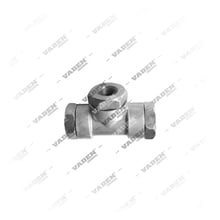
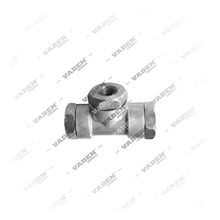
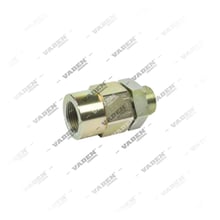
A check valve is a safety component in the air brake system of heavy commercial vehicles that allows air to pass in only one direction while completely blocking reverse airflow. Also known in the field as a "one-way valve," this part delivers compressed air from the compressor to the air tank while preventing the pressure on the tank side from bleeding back, protecting the other brake circuits if any line in the system fails. Without a check valve, an air leak in one circuit could drain the pressure from otherwise intact circuits, leading to a total loss of braking power. For this reason, the check valve is a small but critical component for brake safety.
How Does a Check Valve Work?
The working principle is simple: inside the housing sits a ball, disc, or gasket-type sealing element held closed by a spring. When the air pressure from the compressor exceeds a certain threshold, this element overcomes the spring resistance and opens, allowing air to pass into the reservoir. Once pressure equalizes or a reverse differential develops, the spring closes the element again and stops backflow.
In multi-circuit brake systems, the check valve is part of the protection logic that keeps each circuit operating independently. Even if damage occurs in the front axle circuit, the check valve preserves the pressure in the rear axle or auxiliary brake circuit, allowing the vehicle to be brought to a safe stop - a function that is vital in tractor-trailer combinations.
Check Valve Technical Specifications
Check valves vary by connection type (threaded, flanged, or quick-connect) and by opening pressure. The housing material is typically corrosion-resistant brass or a steel alloy, while the internal sealing element is a synthetic rubber or polymer-based gasket. The opening pressure is set by the manufacturer to suit the system's operating pressure and circuit logic, generally opening at a low differential so protection is provided without reducing overall system efficiency. Connection dimensions may be standard pneumatic thread sizes such as M16 or M22, or manufacturer-specific flange types.
An incorrect opening pressure can cause delayed pressure build-up or unexpected air loss. Always consult the vehicle's current service manual for exact torque, pressure, and tolerance values.
Check Valve Types and Subgroups
- Threaded Check Valve: Mounted directly onto air lines via a threaded connection; commonly used at the compressor outlet and in single-line applications.
- Flanged Check Valve: Secured to the air tank or multi-circuit protection valve housing with a gasketed flange connection.
- Fittings with Integrated Check Valve: Some adapters and T-fittings house a built-in check valve mechanism.
- High-Flow Check Valve: Features a wide flow cross-section for rapid filling in large-volume air tank circuits.
- Low Differential-Pressure Check Valve: Designed to operate with minimal pressure loss in sensitive circuits, such as the auxiliary brake or air-suspension bellows line.
How to Choose the Right Check Valve
When selecting the right check valve, first verify the original part reference against the vehicle's make, model, and chassis number. The following three points should be checked as a priority.
- Connection Type: The thread size or flange pattern must match the existing line exactly.
- Installation Direction: The airflow arrow must match the actual flow direction in the circuit.
- Position in the Circuit: Whether it sits at the compressor outlet, tank inlet, or between multi-circuit protection valve ports must be clearly identified.
The table below summarizes the key criteria to consider when selecting a check valve.
Check Valve Selection and Compatibility Criteria| Criterion | Description |
|---|
| Connection Type | Threaded (M16/M22, etc.) or flanged connection must match the existing line dimensions exactly |
| Mounting Position | Compressor outlet, air tank inlet, or between multi-circuit protection valve ports |
| Opening Pressure | Must suit the circuit logic and fall within manufacturer tolerances |
| Housing Material | Corrosion-resistant brass or steel alloy is preferred |
| Vehicle Compatibility | Compatible with Wabco/Knorr-Bremse systems used on Mercedes-Benz, MAN, Scania, Volvo, DAF, Iveco, and Renault Trucks vehicles |
| Sealing Condition | Internal gasket and spring mechanism must be tested against wear |
Check Valve Maintenance and Points to Consider
- Periodic Leak Testing: Check connection points and the valve housing regularly for air leaks using a soapy water test.
- Pay Attention to Installation Direction: Follow the airflow direction arrow marked on the check valve; reverse installation completely blocks the system.
- Contamination and Moisture Control: Moisture and contamination in the air system can cause premature wear of the internal sealing element; dryer maintenance should not be neglected.
- Torque Compliance: Tighten connection nuts within the torque range specified by the vehicle manufacturer; overtightening can crack the housing.
- Use of Genuine Parts: Prefer VADEN ORIGINAL check valves for the correct opening pressure and sealing quality.
Common Failures and Solutions
- Symptom - Pressure Loss in the Air Tank: Likely cause: wear of the sealing element or trapped foreign matter. Action: remove and clean the valve, or replace it if necessary.
- Symptom - A Failure in One Circuit Also Affects Another: Likely cause: the check valve is not closing fully or has failed. Action: test the valve and replace it with a genuine VADEN ORIGINAL part.
- Symptom - Abnormal Air Leak Noise While the Compressor Is Running: Likely cause: a deformed valve gasket or a crack in the housing. Action: inspect the housing visually and replace it completely if damaged.
- Symptom - System Builds Pressure Slowly: Likely cause: contamination buildup inside the valve or a weakened spring. Action: service the air dryer and filter, and renew the valve if necessary.
Why VADEN ORIGINAL?
- Manufactured to OE Dimensions: Produced with dimensions and opening pressures that precisely match original equipment tolerances.
- Broad OEM Coverage: Compatible with Wabco and Knorr-Bremse references, suitable for Mercedes-Benz, MAN, Scania, Volvo, DAF, Iveco, and Renault Trucks vehicles.
- Durable Material Quality: Corrosion-resistant housings and sealing elements deliver a long service life.
- Exported to Over 100 Countries: Trusted by fleet operators and workshops worldwide.
Conclusion
The check valve is a small but indispensable component in the multi-circuit safety architecture of the air brake system. Selected with the correct connection type, opening pressure, and vehicle compatibility, it ensures that even if one circuit fails, the pressure in the other brake circuits is preserved and the vehicle can be brought to a safe stop. VADEN ORIGINAL check valves fulfill this critical role reliably, thanks to their OE-quality manufacturing.
Frequently Asked Questions (FAQ)
What does a check valve do?
A check valve ensures that air flows in only one direction within the air brake system, preventing pressure from bleeding back from the air tank toward the compressor. This way, a failure in one circuit does not lower the pressure in the other brake circuits, and the vehicle can still be brought to a safe stop.
What happens when a check valve fails?
A faulty check valve can cause pressure loss in the air tank, slow pressure build-up in the system, or allow a failure in one circuit to affect the others as well. Because this poses a serious brake safety risk, the valve should be inspected immediately and replaced if necessary.
Which vehicles use a check valve?
Check valves are commonly found in the Wabco and Knorr-Bremse air brake systems used on heavy commercial vehicles such as Mercedes-Benz, MAN, Scania, Volvo, DAF, Iveco, and Renault Trucks. Compatibility should be verified against the vehicle's chassis number to select the correct part.
What is the most important point to watch during check valve installation?
The most critical point during installation is correctly following the airflow direction arrow marked on the valve housing. A check valve installed in the reverse direction completely blocks airflow and stops the system from working.
How often should a check valve be checked?
The check valve should be checked for leaks using a soapy water test during periodic brake system maintenance. If moisture or contamination buildup is detected in the air system, it is recommended to inspect the valve as well.
Related technical guide: Four-Circuit Protection Valve: Faults, Diagnosis & Replacement