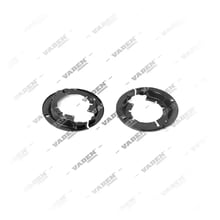
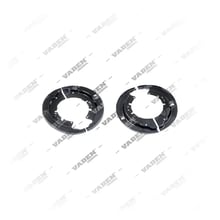
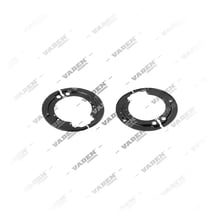
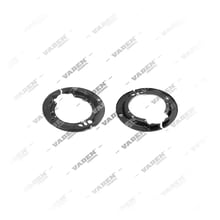
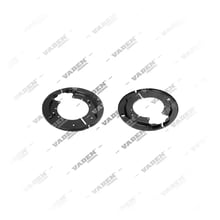
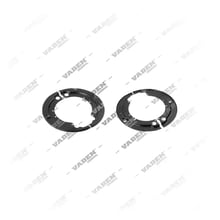
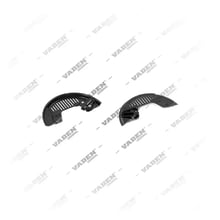
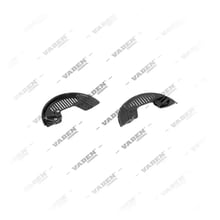
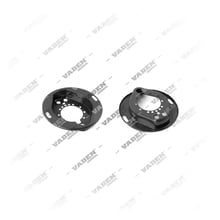
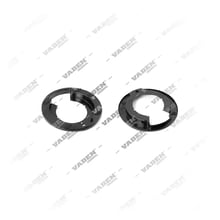
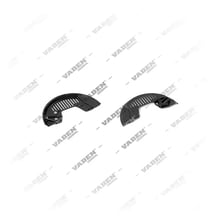
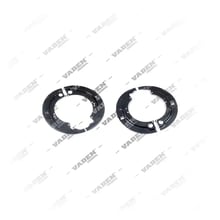
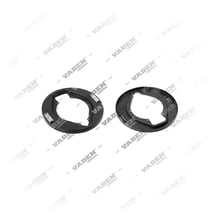
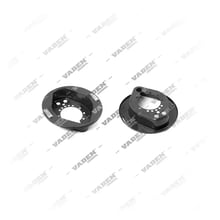
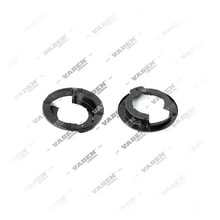
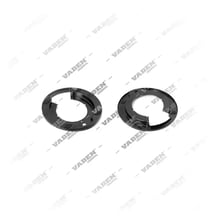
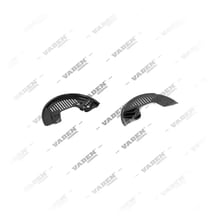
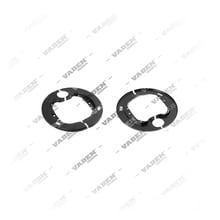
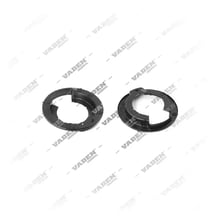
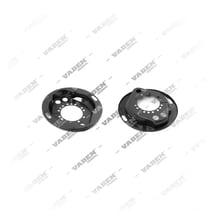
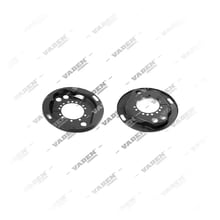
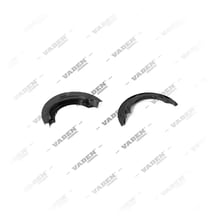
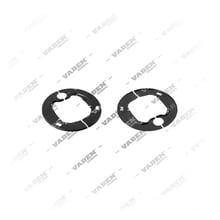
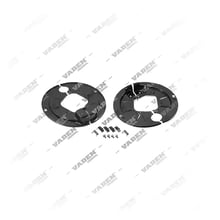
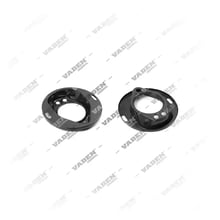
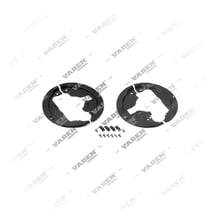
What Is a Brake Dust Cap?
A Brake Dust Shield Dust Cap is the closing component that completes the brake dust shield assembly on heavy commercial vehicles; it seals the inspection openings, adjuster access points, and hub-area clearances on the dust shield. The dust shield is the metal barrier wrapping around the drum or disc; the dust cap is the small rubber, thermoplastic, or sheet-metal part that closes the openings left in that barrier. It is used in drum and disc brake arrangements on trucks, tractor units, buses, and trailers. In the field it is also called a dust shield plug, inspection hole cover, or adjuster plug. Since it determines how much abrasive dirt reaches the lining and drum surface, its effect on brake service life is significant.
How Does a Brake Dust Cap Work?
The dust cap is not a moving part; it works through a tight fit and continuous contact. It engages the seat on the dust shield by press-fit, clip, or screw attachment, keeping road dirt out of the brake assembly while still allowing brake dust and heat to escape.
- Physical barrier: Blocks mud, sand, stone chips, and road-salt solution from entering through the dust shield opening.
- Water and moisture control: Cuts off water ingress during washing and rain, reducing corrosion risk on the drum surface.
- Protecting the adjuster mechanism: Prevents the slack adjuster unit and S-cam bearing area from becoming contaminated and seizing.
- Service access: Its removable design allows lining-thickness inspection without removing the drum.
Brake Dust Cap Technical Specifications
The determining criteria are the diameter of the hole the cap sits in, seat depth, and attachment method; material is chosen according to operating temperature and chemical resistance needs. For dimensions, use the vehicle's original part number as reference, and treat the vehicle manufacturer's current service manual as authoritative.
- Material: Heat-resistant elastomer compounds, reinforced thermoplastics, or coated sheet steel.
- Diameter and seat size: Generally small-to-medium diameter; evaluated together with hole diameter and sheet thickness.
- Temperature resistance: Must not deform or work loose from its seat during sudden heating in the brake area.
- Attachment type: Press-fit, clip-in, tab-lock, or screw-on variants exist; the type must match the seat exactly.
Brake Dust Cap Types and Subgroups
Dust caps fall into subgroups by location and brake type. In drum brakes, inspection and adjuster openings stand out; in disc arrangements, the caliper adjuster mechanism and pin area come to the fore.
- Inspection hole dust caps: Close the opening used to check lining wear without removing the drum; the most frequently replaced group.
- Adjuster mechanism plugs: Close the slack adjuster's access point, keeping the adjuster gear from becoming contaminated and seizing.
- Hub and axle-end dust caps: Close the gap where the dust shield meets the hub, reducing dirt reaching the bearing area.
- Caliper guide pin caps: Close the pin bore, preventing grease loss and corrosion-related seizure of the pin.
- Sensor and cable pass-through caps: Close the openings where ABS and wear-sensor cables pass, protecting the cable.
- Cap retention and clip sets: The clips and tabs holding the cap in its seat; recommended for renewal together with the cap.
How to Choose the Right Brake Dust Cap
The most reliable method is to start from the OE number of the removed part or dust shield assembly. If the number can't be read, match by make, model, axle type, and brake architecture, then confirm seat diameter and attachment method.
Brake Dust Shield Dust Cap Selection and Compatibility Criteria| Criterion | What to Check | Why It Matters |
|---|
| OE part number | Reference marking on the old cap or dust shield assembly | The most precise way to match; prevents application errors |
| Brake type | Drum or disc brake arrangement | Seat geometry differs completely between the two architectures |
| Axle position | Front axle, drive axle, or trailer axle | Cap dimensions can vary by axle position |
| Seat diameter and depth | Hole diameter, sheet thickness, seating depth | A loose cap falls out on the road; an oversized cap cracks on installation |
| Attachment method | Press-fit, clip, tab-lock, or screw retention | The wrong type works loose under vibration |
| Material class | Rubber, thermoplastic, or sheet metal; operating temperature | An inadequate material hardens and cracks quickly |
| Vehicle application | Mercedes-Benz, MAN, Scania, Volvo, DAF, Iveco, Renault Trucks, BMC | The dust shield assembly can differ by model series |
The vehicle manufacturer's current service manual is authoritative for dimensional and installation values.
Brake Dust Cap Maintenance and Points to Note
Dust caps are often overlooked during routine maintenance, yet should be checked during lining replacement, drum removal, and axle service. A missing or cracked cap lets in dirt that abrades the lining and drum surface.
- Check at every lining service: Inspect whether the cap sits fully in its seat and check for cracking or hardening.
- Do not run the vehicle with a missing cap: An open inspection hole quickly lets dirt and water into the drum.
- Clean the seat and fit without forcing: Remove rust and dirt from the hole's edge; press the cap in evenly rather than hammering it into place.
- Renew clips and retaining elements: Fatigued clips can't hold the cap; replace them together with the cap.
Common Failures and Solutions
Problems caused by the dust cap show up indirectly; the fault appears not in the cap itself but in the components it protects. Reading the symptom correctly avoids unnecessary parts replacement.
- Excessive dirt buildup inside the drum: The inspection hole cap may have fallen out or cracked; clean the assembly and renew the cap.
- Fast, uneven lining wear: Abrasive dust entering from outside scores the lining; check the dust shield and caps for integrity.
- Adjuster mechanism seizing: A missing adjuster plug lets the mechanism get contaminated and freeze up; clean the area and fit the plug.
- Rattling noise from the brake: A loose cap can knock against the dust shield under vibration; check the fit and retaining elements.
- Cap repeatedly falling out: The wrong diameter or attachment type was chosen; re-verify the dimension against the OE reference.
Why VADEN ORIGINAL?
VADEN ORIGINAL brake dust shield dust caps are made using the dimensional and material logic of the original parts, aiming for a part that seats without forcing and retains its flexibility.
- Manufactured to OE dimensions: Seat diameter, seating depth, and attachment geometry follow the original part as reference.
- Broad OEM coverage: Wide reference coverage for the dust shield assemblies common on heavy commercial vehicles.
- Durable material: Crack-resistant materials suited to the temperature and chemical conditions of the brake area.
- International reach: VADEN products are exported to more than 100 countries; supply never holds up fleet operations.
Conclusion
The Brake Dust Shield Dust Cap is a low-cost yet high-impact protective part. Because it determines how much dust, water, and salt reach the brake area, it extends the service life of the lining, drum, and adjuster mechanism. For the right product, start from the OE number, confirm brake type and seat dimensions, and fit it without forcing during installation.
Frequently Asked Questions (FAQ)
What does a brake dust shield dust cap do?
By closing the inspection and adjuster openings on the brake dust shield, it prevents mud, sand, stone chips, water, and road-salt solution from entering the brake area. This protects the lining and drum surface from abrasive dirt and keeps the adjuster mechanism clean. Although a small part, it directly affects the service life of the brake assembly.
What happens if the dust cap is missing?
A large amount of dirt and water quickly enters the drum through the open inspection hole. This leads to fast, uneven lining wear, corrosion on the drum surface, and seizing of the automatic adjuster mechanism. Once a missing cap is identified, the brake assembly should be cleaned and the cap renewed in the original dimension.
How do I choose the right dust cap?
The most reliable way is to start from the OE part number of the removed cap or the dust shield assembly. If the number cannot be read, matching is done via the vehicle's make, model, axle position, and brake type. Before ordering, be sure to confirm that the seat diameter, seating depth, and attachment type match the original part.
Are drum and disc brake dust caps the same?
No, the seat geometry and the cap's role differ between the two architectures. In drum brakes, inspection hole and adjuster mechanism plugs are the main types, while disc brakes use caliper guide pin caps and adjuster access caps. That is why brake type is the first criterion to check when selecting.
How often should the dust cap be replaced?
There is no fixed replacement interval; the part is replaced if it is cracked, hardened, deformed, or missing. During lining replacement, drum removal, and axle service, check that the caps sit fully in their seats. It is also recommended to renew fatigued clips and retaining elements together with the cap.
Related technical guide: Brake Dust Shield: Faults, Replacement & Maintenance Guide
Main technical guide: Disc Brakes vs. Drum Brakes: A Heavy-Duty Vehicle Comparison