What is Brake Caliper Tappet?
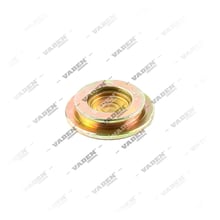
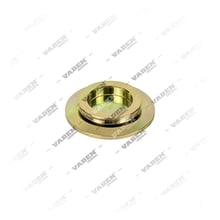
This part is a cylindrical or conical-bodied element located at the center of the caliper mechanism that directly transfers the force from the air chamber to the pad carrier. The pusher contacts the air chamber diaphragm at one end while connecting to the gear or screw arrangement inside the mechanism at the other end; this way it both transmits the pushing force and functions as part of the mechanism that performs automatic pad clearance adjustment. A properly functioning pusher directly affects how fast and consistent the brake response is.
What are the functions of Brake Caliper Tappet?
The pusher performs several critical functions so the caliper mechanism correctly transmits braking force.
- Force transmission: Transfers the axial force from the air chamber to the gear arrangement inside the mechanism.
- Linear motion: Helps convert the mechanism's rotary motion into the linear pushing motion of the pad carrier toward the disc.
- Automatic adjustment support: As the pad wears, allows the mechanism to advance the pusher forward, automatically compensating clearance.
- Load carrying: Transmits the high axial load generated during braking to the mechanism housing without deforming.
- Sealing support: Together with surrounding boot or seal elements, contributes to protecting the mechanism's interior.
What are the symptoms of Brake Caliper Tappet failure?
When wear or damage begins in the pusher, distinct changes appear in brake performance and pedal feel. A worn or scored pusher can prevent the mechanism from sliding smoothly, causing a hard or delayed response at the brake pedal. Since the automatic adjustment mechanism depends on the pusher, when the pusher fails pad clearance can increase irregularly and stopping distance can lengthen. In advanced wear cases, notching or deformation on the pusher surface can turn into a serious failure, up to mechanism lock-up and complete loss of braking at that wheel.
How is the Brake Caliper Tappet checked?
For inspection, the caliper mechanism is disassembled and the pusher is visually examined for scratches, notches, corrosion, or deformation. Whether the pusher slides freely inside the mechanism should be checked by hand; if stiff movement is found, contamination or lack of grease on the internal surface should be investigated. Pusher diameter should be compared against the manufacturer's specified tolerance value using a caliper gauge, and replacement is required if wear allowance is exceeded. During a brake test, indirect verification can be done by checking pedal feel and whether pad clearance settles to the correct value after automatic adjustment.
What should be considered during replacement?
Before replacement, the mechanism should be fully cleaned, taking care that wear debris from the old pusher does not remain inside the mechanism. Before installing the new pusher, grease of the type and amount specified by the manufacturer should be applied; dry assembly leads to premature wear. The pusher must be installed in the correct orientation and fully seated into the gear or screw arrangement inside the mechanism; misalignment disrupts the automatic adjustment function. After assembly, the mechanism should be operated by hand a few times to verify it moves freely and that automatic adjustment functions correctly.
Brake Caliper Mechanism Pusher technical reference values| Parameter | General range | Note |
|---|
| Pusher diameter tolerance | ±0.05 mm | Compare against original dimension |
| Maximum axial load | Varies by caliper type | Refer to the vehicle's current OE service manual |
| Surface hardness | High (coated) | Required for wear resistance |
| Inspection interval | At every pad replacement | Visual and manual movement check recommended |
How to choose Brake Caliper Tappet?
The first requirement in selection is exact fit to the caliper model and mechanism type; pusher diameter and length can vary between caliper families. The material being hardened steel with a surface coating matching the original is decisive for wear resistance. Having geometry fully compatible with the automatic adjustment mechanism is important for the clearance adjustment to work correctly. Parts matching the OE reference number with traceable quality documentation should be preferred over competing aftermarket brands.
Maintenance and service life
Pusher service life depends on the grease quality inside the mechanism and the soundness of boot sealing; contaminated or dried-out grease leads to rapid wear on the pusher surface. At every pad replacement, pusher and mechanism grease condition should be checked, and grease renewed if necessary. Under proper maintenance conditions, the pusher can generally function trouble-free up to the caliper mechanism's general service interval, i.e. in the 100,000 - 150,000 km range.
VADEN Brake Caliper Tappet
VADEN applies a manufacturing standard exactly matching OE dimensions and surface hardness for mechanism pushers it produces for heavy-duty commercial vehicle brake calipers. The product range covers pushers in diameters and lengths specific to different caliper families, offering workshops a reliable solution.
Frequently Asked Questions (FAQ)
What does a caliper mechanism pusher do?
It is a moving component that transfers the force from the air chamber to the gear arrangement inside the mechanism, pushing the pad carrier toward the disc.
What happens if the pusher wears out?
A hard or delayed brake pedal response can be felt, the automatic adjustment mechanism may not function properly, and pad clearance can increase irregularly.
How is the pusher related to the automatic adjustment mechanism?
As the pad wears, the pusher advancing forward automatically compensates for clearance; this function is disrupted when the pusher fails.
Should grease be used during replacement?
Yes, grease of the type and amount specified by the manufacturer should be applied; dry assembly leads to premature wear.
When should the pusher be checked?
It should be visually and manually checked at every pad replacement; replacement is required if there is scoring, notching, or stiff movement.
Related technical guide: Caliper Tappet & Dust Boot: Function, Failure, Replacement