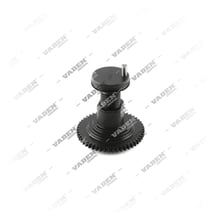
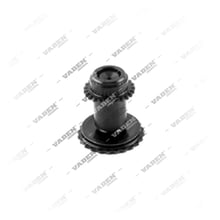
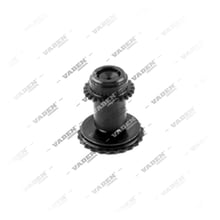
What Is the Brake Caliper Mechanism Adjustment Gear?
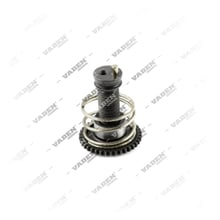
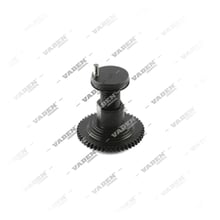
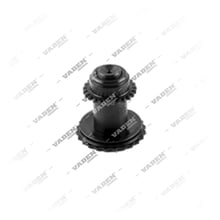
The caliper mechanism adjuster gear is the geared part inside a heavy-duty disc brake caliper's automatic slack adjustment mechanism, and it keeps the clearance between pad and disc continuously compensated. Inside the caliper housing, the adjuster mechanism (often called the slack adjuster) turns the adjuster spindle as the pads wear, matching piston travel to the new clearance, and this rotation passes directly through the adjuster gear. In the field it is also known as the "caliper adjuster gear" or "mechanism gear." Most disc brake calipers on Wabco, Knorr-Bremse, and Bendix platforms share this logic; the gear sits at the heart of the mechanism and works continuously for the life of the brake system.
How Does the Brake Caliper Mechanism Adjustment Gear Work?
When the brake pedal is applied, the caliper piston pushes the pad toward the disc. Once contact is made, the adjuster mechanism converts this movement into a torque signal. Past a set torque threshold, the adjuster gear turns the adjuster spindle by a small angle, resetting the pad-to-disc clearance for the next application. This cycle repeats automatically as the pad wears, so no manual adjustment is needed. The gear assembly usually works with a pawl, a torque-limiting clutch, and a spring; together they keep the clearance neither too tight nor too loose. If the gear wears or its teeth skip, this balance is lost and brake response suffers.
Brake Caliper Mechanism Adjustment Gear Technical Specifications
The adjuster gear is typically made from hardened steel or a sintered metal alloy so the tooth profile resists deformation under continuous torque. It is matched to the adjuster spindle and torque-limiting clutch within tight tolerances; always check the vehicle's or caliper's current technical documentation for these values.
- Material: Hardened steel or sintered metal alloy, resistant to continuous torque load.
- Tooth Count and Module: Varies by the caliper manufacturer's mechanism design; model and version are decisive.
- Tolerances: Requires precise dimensional matching with the adjuster spindle and torque-limiting clutch.
- Compatibility Criteria: Caliper housing type, spindle diameter, and mechanism housing geometry are decisive.
Brake Caliper Mechanism Adjustment Gear Types and Subgroups
- Main Adjuster Gear: The primary element connected directly to the adjuster spindle that performs the clearance adjustment.
- Drive/Intermediate Gear: The stage that transfers motion to the main gear and regulates torque flow.
- Pawl and Clutch Gear: The locking element that ensures one-directional rotation and stops the gear turning back.
- Torque-Limiting Gear Set: The clutch-equipped set that slips once a set torque is reached, preventing over-tightening.
- Left/Right Caliper-Specific Gears: Variants requiring a different rotation direction by axle-side position.
- Gear Sets Within Service Kits: Complete gear sets sold with the adjuster spindle, spring, and pawl.
How to Choose the Right Brake Caliper Mechanism Adjustment Gear?
First verify the caliper manufacturer and mechanism type (for example, Wabco- or Knorr-Bremse-based); similar-looking gears can have different tooth profiles, and a mismatch keeps the mechanism from holding. Second, make sure the adjuster spindle diameter and gear hub geometry fit the caliper housing exactly. Third, decide whether to replace the gear alone or together with the pawl-spring-clutch set. The table below summarizes the key selection criteria.
Caliper Mechanism Adjuster Gear Selection Criteria| Criterion | Why It Matters |
|---|
| Caliper Manufacturer/Mechanism Type | Tooth profile and torque-limiter setting vary by manufacturer |
| Spindle Diameter and Hub Size | Wrong dimensions prevent proper seating or cause a clearance fault |
| Left/Right Axle Position | Rotation direction differs, so a mismatched part disrupts the mechanism |
| Set vs. Single Part | If the pawl, spring, and clutch are also worn, a complete set is recommended |
| Material and Heat Treatment | A hardened surface reduces tooth wear under continuous torque |
| Caliper Version/Model Code | Revision differences on similar calipers can affect gear compatibility |
Brake Caliper Mechanism Adjustment Gear Maintenance and Precautions
- Pre-Installation Cleaning: Fit the new gear only after old grease and metal shavings are fully removed from the housing.
- Use of Suitable Grease: Use only high-temperature grease recommended by the caliper manufacturer; incompatible grease causes premature tooth wear.
- Correct Installation Torque: Tighten spindle and gear fasteners to the value in the vehicle's current service manual; wrong torque disrupts operation.
- Pawl and Spring Check: When replacing the gear, also check the pawl and spring and renew them together if needed.
- Function Test: After installation, apply the brakes several times to confirm the clearance adjusts progressively.
Common Faults and Solutions
- Pad Clearance Requires Manual Adjustment: The gear teeth may be worn or the pawl may not hold; replace the gear and pawl set.
- Brake Pedal Feels Hard or Pads Wear Prematurely: The gear may be over-closing the clearance; check the torque-limiting clutch and gear together.
- Vibration or Irregular Noise During Braking: Tooth breakage or skipping may have occurred; disassemble the mechanism and inspect the gear surface.
- Delayed Brake Response: The mechanism may be seized or corroded; clean, regrease correctly, and put it back into service.
- Sense of Excessive Load on the Spindle: The fit between gear and spindle may have deteriorated; check dimensions and replace as a set if needed.
Why VADEN ORIGINAL?
- Manufactured to OE Dimensions: Produced to match the original tooth profile and tolerance values exactly.
- Broad OEM Coverage: A wide range compatible with numerous caliper versions on Wabco- and Knorr-Bremse-based mechanisms.
- Durable Material and Heat Treatment: Hardened steel construction gives long service life under continuous torque load.
- Exported to More Than 100 Countries: Field-proven performance across different climates and road conditions.
Conclusion
The caliper mechanism adjuster gear is a small but critical component that determines how well a disc brake caliper's automatic clearance system functions. A gear installed with the correct tooth profile, correct dimensions, and proper greasing extends pad life and keeps brake response consistent. VADEN ORIGINAL caliper mechanism adjuster gear products, manufactured to OE dimensions, are the preferred choice for safe, predictable braking.
Frequently Asked Questions (FAQ)
What does the caliper mechanism adjuster gear do?
This gear transmits the motion of the disc brake caliper's automatic adjustment mechanism to the adjuster spindle, regulating the clearance between the pad and the disc. As the pad wears, the gear automatically closes the clearance, ensuring the brake pedal responds at a consistent point.
What symptoms appear when the adjuster gear fails?
The most common symptoms are the pad clearance no longer adjusting itself, the brake pedal becoming hard or requiring a deeper stroke, uneven pad wear, and vibration or delayed response during braking. If any of these symptoms appear, the caliper mechanism should be inspected.
Should the adjuster gear be replaced alone or as a set?
Because the gear normally works together with the pawl, spring, and torque-limiting clutch, these components are also likely to be worn. For long-term reliability, replacing the mechanism as a complete set is usually the safer option.
Which vehicles use the caliper mechanism adjuster gear?
This type of adjuster gear is widely used in heavy trucks, tractor units, buses, and trailers fitted with Wabco- or Knorr-Bremse-based disc brake caliper mechanisms. To select the correct part, the caliper manufacturer and model code should be verified.
What should be considered when installing the adjuster gear?
Before installation, old grease and dirt must be completely removed, the high-temperature-resistant grease recommended by the manufacturer should be used, and the fasteners must be tightened to the torque value specified in the current service manual. After installation, several brake applications should confirm that the mechanism is working correctly.
Related technical guide: Brake Caliper Mechanism: Camshaft, Bearings, and Return Spring