What is a Bracket Thrust Washer?
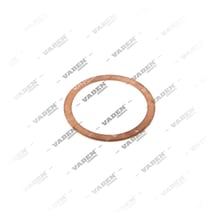
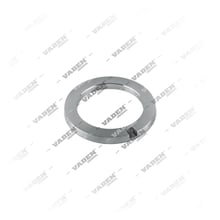
The Suspension Bracket Pressure Washer is typically made from hardened steel, with a flat or tapered surface and a center hole for the bolt to pass through. Some bracket designs use a single washer, while others use paired washers on both sides of the bracket body. The washer's thickness and diameter are determined through engineering calculations based on the load the bracket must carry and the bolt size.
What are the functions of the Bracket Thrust Washer?
- Load distribution: Spreads bolt clamping force evenly across the bracket surface.
- Surface protection: Prevents the bracket body from being crushed at the bolt head or nut contact point.
- Loosening prevention: Correct load distribution delays connection loosening over time.
- Vibration resistance: Reduces wear at the connection point caused by road-induced vibration.
- Alignment support: Ensures correct alignment between the bracket and the fastener.
What are the symptoms of a Bracket Thrust Washer failure?
- Visible deformation or pitting at the bracket connection point
- Recurring loosening of the bolt or nut
- Metallic clunking or knocking noise coming from the suspension area
- Rust or crack formation on the bracket surface
- A sense of irregularity in vehicle handling or suspension movement
How is the Bracket Thrust Washer checked?
- Visual inspection: Check the washer surface for pitting, cracks or excessive wear.
- Flatness check: Verify the washer has a flat surface and has not deformed.
- Bolt tightness: Periodically check connection torque to assess whether loosening has occurred.
- Bracket surface: Check the bracket surface the washer contacts for crushing or gouging marks.
- General suspension inspection: Assess along with other bracket and fastener elements during periodic chassis inspection.
What should be considered when replacing it?
- Clean the bracket connection point before replacement, removing rust and dirt residue.
- A deformed or cracked washer must never be reused.
- Apply bolt and nut tightening torque according to the vehicle's current OE service manual; under- or over-tightening compromises connection safety.
- Position the washer so it seats fully flat against the bracket surface; a tilted installation disrupts load distribution.
- After installation, check the vehicle with a short test drive and re-check torque values after a certain mileage.
How to choose the right Bracket Thrust Washer?
Correct washer selection should be based on bracket model, bolt size and the load it must carry.
Suspension Bracket Pressure Washer Selection Criteria| Criterion | Description |
|---|
| Bracket model | The washer must be fully compatible with the vehicle's suspension bracket type |
| Bolt diameter | The washer hole must precisely match the diameter of the bolt or stud used |
| Thickness and material | Hardened steel must be of a thickness suited to the load to be carried |
| Surface treatment | Must be coated or treated for corrosion resistance |
| OE reference cross-check | Verify by matching the OE number of the removed part |
Maintenance and service life
Although not a directly moving part, the suspension bracket pressure washer is under continuous mechanical load and should be assessed during periodic chassis inspections. More frequent checks of the washer and bracket connections are recommended on vehicles operating in heavy-load haulage and on rough road conditions. Washers installed with correct torque and regularly inspected can perform reliably for many years.
VADEN Bracket Thrust Washer
VADEN manufactures pressure washers compatible with OE references for heavy commercial vehicle suspension systems; products are tested for load resistance and corrosion resistance before release.
Frequently Asked Questions (FAQ)
Why should a deformed pressure washer not be reused?
A deformed washer cannot distribute clamping force evenly, which can cause point loading on the bracket and lead to cracking over time.
Is the pressure washer the same part as a regular washer?
No, the pressure washer is typically made from thicker, hardened steel and is specifically designed for bracket connections that carry high mechanical loads.
Does the bolt also need to be replaced when replacing the washer?
Not necessarily if the bolt shows no deformation, thread damage or excessive corrosion, but replacing the bolt as well is recommended for safety in doubtful cases.
How is pressure washer loosening prevented?
Applying correct tightening torque, performing regular torque checks and using a locking element where needed are effective in preventing loosening.
Is the pressure washer the same size across all suspension brackets?
No, washers of different sizes and thicknesses are used depending on bracket type, bolt diameter and the load to be carried, so the correct part should be selected based on the OE reference.
Related technical guide: Heavy-Duty Air Suspension Failures: Air Springs, Leveling Valves and ECAS