
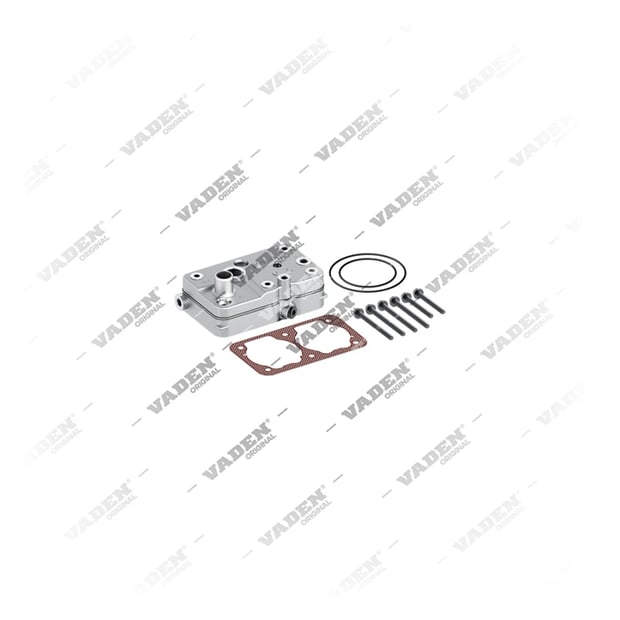
11 23 10 Compressor Cylinder Head Equivalent
11 23 10
Summary
This compressor cylinder head serves as a critical service component for air brake compressors. It is designed to seal the compression chamber and manage air passages, ensuring reliable operation in heavy commercial vehicle air systems.
| EAN Code | 8699031019741 |
|---|
Ready to Order
Description
What does a compressor cylinder head do?
A compressor cylinder head is the cast service component that sits on top of an air brake compressor's cylinder block and seals the compression chamber from above.System function and durability
This component is essential for maintaining the pressure and thermal stability of the air braking system. By providing seats for the inlet and discharge valves and managing internal air passages, this part directly governs both the air output and the running temperature of the compressor.Installation and maintenance
Technicians can use this component to rebuild a compressor in place rather than replacing the entire unit, making it a cost-effective solution for workshop repairs. It is vital to verify the specific architecture, such as whether the head is air-cooled or water-cooled, before installation.Selection guidance
When selecting a replacement, ensure it matches the existing compressor architecture to maintain proper sealing and pressure regulation within the pneumatic system.FAQ
What is the function of a compressor cylinder head?
It sits atop the cylinder block to seal the compression chamber and houses the inlet and discharge valve seats to regulate air output.
Can I rebuild my compressor using only the cylinder head?
Yes, replacing the cylinder head allows a workshop technician to rebuild a compressor in place instead of replacing the entire unit.
What should I check before installing a new head?
Verify if your compressor requires an air-cooled or water-cooled design and check if it needs an unloader port for governor signals.
Why is the cylinder head important for temperature control?
The internal cavities within the head manage heat dissipation, which is critical for maintaining stable operating temperatures under load.