What Is an Accelerator Pedal?
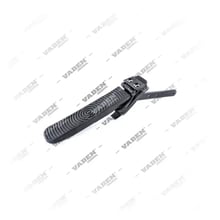
The accelerator pedal (also called the gas pedal or throttle pedal) is the component that sets engine speed and power output in proportion to how hard the driver presses it. In trucks, tractor units, buses, and trailers, the accelerator pedal either sends an electronic signal to the engine control unit (ECU) through a potentiometer/sensor assembly, or moves the throttle body directly via a mechanical cable linkage. Most modern heavy commercial vehicles now use electronic (drive-by-wire) accelerator pedals, which detect even the smallest movement of the driver's foot and fine-tune engine response accordingly. Heavy-duty accelerator pedals are engineered to withstand demanding conditions such as high temperatures, constant vibration, and intensive daily use.
What Does an Accelerator Pedal Do?
- Engine speed control: Increases or decreases engine RPM in direct response to how much pressure the driver applies to the pedal.
- Precision response: Modern accelerator pedals detect the smallest foot movements to fine-tune throttle response.
- Fuel efficiency: How the pedal is used has a direct impact on fuel consumption and overall driving efficiency.
- Emissions control: Accurate, well-balanced engine control helps keep vehicle emissions within limits.
- Signal transmission (electronic types): The pedal position sensor converts foot pressure into an electronic signal sent to the engine control unit.
- Driving comfort: An ergonomic design reduces driver fatigue on long-haul journeys.
Accelerator Pedal Specifications
| Specification | Description |
|---|
| Part group | Engine / Accelerator Pedal (Throttle Pedal) |
| Operating principle | Electronic (sensor/potentiometer-based) or mechanical (cable-operated) |
| Signal transmission | Analog/digital signal to the engine control unit (ECU) on electronic types |
| Housing material | High-strength polymer with metal-reinforced construction |
| Application | Trucks, tractor units, buses, trailers, and other heavy commercial vehicles |
| Durability | Built to withstand high temperatures, vibration, and heavy daily use |
| Compatible vehicle segment | Mercedes-Benz, MAN, Scania, Volvo, DAF, Iveco, Renault, BMC, Ford heavy commercial vehicle models |
Types of Accelerator Pedals
- Electronic accelerator pedal: Uses a pedal position sensor to convert foot pressure into an electronic signal sent to the engine control unit; the standard choice on modern heavy commercial vehicles.
- Mechanical (cable-operated) accelerator pedal: Transfers pedal movement directly to the throttle body via a cable linkage; commonly found on older-generation vehicles.
- Sensor unit: The critical sub-component of an electronic accelerator pedal that precisely relays pedal movement to the engine control unit.
- Pedal mechanism/housing: The mechanical assembly that mounts the pedal to the vehicle and houses its moving and pivot points.
Accelerator Pedal Maintenance
- Cleaning: Keep the pedal mechanism free of dust and dirt; buildup can cause stiff or sticking movement.
- Sensor inspection: On electronic accelerator pedals, regularly check the sensor connections and wiring harness.
- Lubrication: Lubricate the moving parts of mechanical pedals to prevent wear and reduce friction.
- Timely replacement: Replace worn, damaged, or faulty-signaling pedals promptly to avoid downtime.
- Visual inspection: Periodically check the pedal arm for cracks, deformation, or loose connections.
Common Faults & Solutions
- Loss of responsiveness: A pedal that reacts slowly to movement causes delayed engine response; check the pedal sensors in this case.
- Stiff or sticky pedal: A pedal that binds or is hard to move usually points to a mechanical issue; clean the pedal mechanism and replace parts if needed.
- Warning light on: A dashboard warning light related to the accelerator pedal may indicate a problem with the ECU or sensors; scan the system with diagnostic equipment.
- Inconsistent engine response: A mismatch between pedal pressure and engine RPM calls for a check of sensor calibration and the wiring connection.
- Pedal fails to return: Slow or incomplete return of the pedal after release points to a spring or friction issue inside the mechanism and poses a safety risk.
Why Choose a VADEN ORIGINAL Accelerator Pedal?
- Durability: Engineered to withstand high temperatures, vibration, and heavy daily use.
- Precision: Detects driver input instantly to optimize engine response and improve driving safety.
- Long service life: Quality materials and OEM-standard manufacturing ensure years of reliable operation.
- Broad vehicle coverage: Available for heavy commercial models from Mercedes-Benz, MAN, Scania, Volvo, DAF, Iveco, Renault, BMC, and Ford.
- Driving comfort: Ergonomic design supports both driver comfort and engine performance on long journeys.
Frequently Asked Questions (FAQ)
What are the symptoms of a faulty accelerator pedal?
Delayed engine response, a stiff or sticky pedal feel, erratic RPM, and a dashboard warning light are the most common signs of accelerator pedal trouble. On electronic accelerator pedals, the root cause is usually a faulty sensor or wiring connection.
What is the difference between an electronic and a mechanical accelerator pedal?
An electronic accelerator pedal converts foot pressure into an electronic signal via a sensor and sends it to the engine control unit, while a mechanical accelerator pedal moves the throttle body directly through a cable linkage. Electronic (drive-by-wire) pedals are now standard on most heavy commercial vehicles.
What happens if the accelerator pedal position sensor fails?
When the sensor fails, the engine control unit no longer receives an accurate signal, which can cause delayed throttle response, power loss, an unstable idle, or a warning light on the dashboard. The sensor should be tested and replaced if needed.
How often should an accelerator pedal be inspected or replaced?
The accelerator pedal should be visually checked during routine maintenance, with sensor connections and mechanical movement inspected at regular intervals. Replace the pedal without delay if wear, damage, or a faulty signal is detected.
Why does my accelerator pedal feel stiff or hard to press?
A stiff or sticky pedal is usually caused by dirt buildup in the pedal mechanism, mechanical binding, or a worn spring or pivot. Cleaning the mechanism and replacing worn parts as needed resolves the issue.
Which trucks and buses are VADEN ORIGINAL accelerator pedals compatible with?
VADEN ORIGINAL accelerator pedals are available as OEM-standard spare parts for heavy commercial trucks, tractor units, buses, and trailers from Mercedes-Benz, MAN, Scania, Volvo, DAF, Iveco, Renault, BMC, and Ford.
Conclusion
The accelerator pedal is a critical driver control component with a direct impact on engine performance and driving experience. Regular maintenance, sensor checks, and choosing a quality replacement part keep your vehicle running safely, precisely, and efficiently. VADEN ORIGINAL accelerator pedals deliver the durability, precision, and broad vehicle compatibility that heavy-duty trucks, buses, and trailers demand. Choose VADEN ORIGINAL for driving comfort and dependable, long-lasting performance.