What is Trailer Height Adjustment Valve?
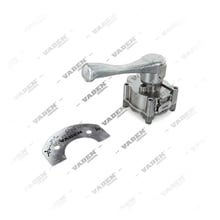
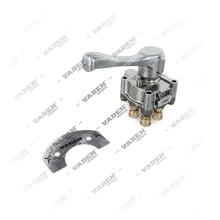
This valve is a mechanical air distribution element mounted on the trailer chassis, operated by a control arm linked to the axle. When the distance between the chassis and the axle deviates from the reference value, the control arm moves the slide inside the valve; this movement opens or closes the line to the air bellows, adjusting the bellows pressure so the chassis height returns to the reference level.
If the control arm length and mounting angle are set incorrectly, the valve produces a false height reference; calibration must always be verified after installation.
What are the functions of Trailer Height Adjustment Valve?
- Level maintenance: Keeps the chassis height at a fixed reference level regardless of load condition.
- Pressure distribution: Regulates airflow to and from the air bellows.
- Fast response: Quickly balances bellows pressure during sudden load changes.
- Overload protection: Some designs limit maximum bellows pressure to protect the suspension.
- Delay function: Responds with a slight delay to avoid unnecessary air consumption from road shocks.
What are the symptoms of a failing Trailer Height Adjustment Valve Valve?
When the valve fails, the trailer starts riding lower or higher than normal under load, and one side may sit at a different level than the other. If there is looseness or breakage in the control arm connection, the bellows may not inflate at all, or continuous air leakage may occur. If the internal slide is worn, slow response, gradual level changes, or continuous air venting (hissing sound) can be observed. The trailer leaning to one side while parked is also a typical symptom. In addition, if the valve responds too slowly, the trailer may not reach the expected level in time when approaching or leaving a loading ramp, which can cause delays during loading.
How is Trailer Height Adjustment Valve inspected?
Inspection starts with a visual check of the control arm and linkage rod end, looking for looseness or wear. The valve body and air connections are tested for leaks with soap water. The control arm is moved by hand to observe whether the valve responds in both the inflate and exhaust directions. Chassis height is checked against the reference measurement; if there is deviation, the arm length is readjusted.
What should be considered during replacement?
- Mounting position: The valve must be mounted at the chassis location and orientation specified by the manufacturer.
- Arm length: The control arm length must be set correctly according to the reference height.
- Calibration: Level should be checked after installation both empty and loaded.
- Air connections: The inlet and bellows lines must not be mixed up and connected to the correct ports.
- Sealing: Connection gaskets should be renewed to prevent air leaks.
- Load condition test: Chassis level should be rechecked both empty and fully loaded after replacement.
How to choose Trailer Height Adjustment Valve?
Selection should verify parameters such as trailer chassis type, suspension manufacturer, and control arm length. The vehicle's current OE service manual should be used as reference. Since the control arm linkage geometry and delay function setting can differ between valves from different suspension manufacturers, compatibility with the original part number should always be checked before purchase.
Trailer Height Control Valve - General Information| Property | Description |
|---|
| Application | Air-suspended trailers and semi-trailers |
| Working principle | Mechanical arm + pneumatic slide valve |
| Function | Automatically maintain chassis height at reference level |
| Mounting location | On chassis, near the axle |
| Service interval | Periodic visual inspection and leak check |
Maintenance and service life
The service life of a trailer height control valve depends on lubrication of the control arm linkage points, the moisture/dirt level of the air system, and avoidance of mechanical impacts. The arm linkage rod ends should be checked periodically and greased when needed. Maintaining the air filter and dryer delays corrosion of the internal slide surfaces of the valve. For vehicles operating on salted roads in winter, washing the control arm linkage area frequently is an effective measure to prevent early corrosion.
VADEN Trailer Height Adjustment Valve
VADEN manufactures height control valves for air-suspended trailers and semi-trailers to OE-equivalent precision. Accurate level control supports load safety and ride comfort. With a suitable control arm geometry and durable slide mechanism, the goal is consistent level regulation even in demanding road and climate conditions.
Frequently Asked Questions (FAQ)
What does a trailer height control valve do
It keeps the distance between the chassis and the axle constant regardless of load condition, so the trailer stays at the correct ride height.
How does the trailer behave when the valve fails
The trailer may ride lower or higher than normal, one side may sit at a different level than the other, or continuous air leakage may occur.
Why is the control arm length important
The arm length determines the valve's reference height measurement; an incorrect setting leads to faulty level control.
What should be checked after replacing the valve
Chassis height should be measured both empty and loaded, and the control arm readjusted if needed.
What can a continuous hissing air sound indicate
Continuous air venting can indicate wear in the internal slide or damage to the connection gaskets.
Related technical guide: Trailer Control Valve: Faults, Replacement & Maintenance Guide