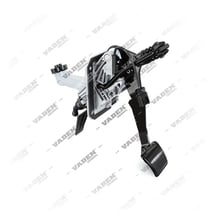
What is a Synchronized Hydraulic Clutch Pedal Unit?
The hydraulic clutch pedal unit synchronizing part is the link that ensures the pressing motion applied to the pedal arm is transmitted to the master cylinder piston at the correct ratio and without delay. Inside the pedal unit, the geometric relationship between the pedal arm, the pivot point, and the piston rod is maintained by this part; when the part wears or play develops, a timing mismatch appears between pedal motion and piston motion. This mismatch causes the moment of clutch engagement and disengagement to no longer match the driver's pedal feel.
What are the functions of the Synchronized Hydraulic Clutch Pedal Unit?
- Motion synchronization: keeps motion between the pedal arm and the master cylinder piston in sync.
- Play-free transmission: lets piston motion begin without delay the moment the pedal is pressed.
- Geometric alignment: maintains the angular relationship between the pedal arm, pivot, and piston rod.
- Fatigue resistance: preserves mechanical integrity against repeated pedal-pressing cycles.
- Clutch feel: supports a consistent relationship between pedal pressure and clutch response for the driver.
What are the symptoms of a Synchronized Hydraulic Clutch Pedal Unit failure?
When the synchronizing part wears, the most obvious symptom is play felt when the pedal is pressed, or a delayed clutch response. As play increases, part of the pedal motion no longer converts to piston motion, causing clutch engagement to feel out of sync with the pedal. Symptoms such as stiffness during gear changes or the clutch not fully engaging or disengaging may appear. In some cases, a faint rattling or friction sound may be heard from the pedal unit, becoming more noticeable when the pedal is released quickly. If wear goes unnoticed for a long time, the master cylinder piston can also be at risk of premature fatigue and wear.
How is the Synchronized Hydraulic Clutch Pedal Unit inspected?
Inspection starts by pressing the pedal by hand, assessing whether any play or stiffness is felt at the start of pedal motion. Before disassembling the pedal unit, pedal free play should be compared against the manufacturer's tolerances. Once the unit is opened, the synchronizing part should be visually examined for wear, cracks, or deformation. The connection point between the piston rod and the pedal arm should be moved by hand to directly test for play.
What should be considered during replacement?
Before fitting the new part, the pedal unit housing should be cleaned of dirt and old grease residue. The part's installation orientation and pivot angle should be maintained as specified by the manufacturer; incorrect installation can cause premature wear. Connecting pins or bolts should be secured to the torque specified by the manufacturer; over-tightening can restrict free movement. After installation, press and release the pedal a few times to confirm motion is smooth and free of play.
How to choose the right Synchronized Hydraulic Clutch Pedal Unit?
Selection should be based on the pedal unit's OE reference number, with part dimensions and pivot geometry matching the original unit exactly.
Hydraulic Clutch Pedal Unit Synchronizing Part selection criteria| Criterion | Description |
|---|
| Pedal unit OE number | The reference specified in the vehicle's current OE service manual is authoritative |
| Pivot geometry | Connection angle and distance must match the original part |
| Material strength | Must have high fatigue resistance against repeated pedal cycles |
| Connection point dimension | Pin or bolt hole must fully match the original dimension |
| Master cylinder compatibility | Must be compatible with the master cylinder model used |
Maintenance and service life
Because the hydraulic clutch pedal unit synchronizing part operates inside an enclosed mechanism, direct visual inspection can be difficult; measuring pedal free play during periodic clutch maintenance is an indirect indicator of the part's health. Lubricating the pedal unit's pivot points with grease at the recommended interval slows wear. On vehicles that use the clutch frequently in heavy city traffic, the part should be checked more often.
VADEN Synchronized Hydraulic Clutch Pedal Unit
Vaden offers synchronizing parts matched to different pedal unit models in OE tolerances with broad OEM reference coverage. For correct pedal feel and clutch response, the part should be selected according to the pedal unit's OE number.
Frequently Asked Questions (FAQ)
Why can play felt in the pedal come from the synchronizing part?
When the part wears, part of the pedal motion no longer converts to piston motion, which causes play to be felt when the pedal is pressed.
Can stiffness during gear changes relate to a synchronizing part failure?
Yes, the clutch not fully engaging or disengaging can result from wear or play in the synchronizing part; the pedal unit should be inspected.
Why is cleaning important before installation?
Dirt and old grease residue inside the housing can prevent the new part from operating at full performance, so cleaning should be done before installation.
Why should connecting pins not be over-tightened?
Over-tightening restricts free movement and can cause premature wear of the synchronizing part; the torque value specified by the manufacturer should be maintained.
Should the part be checked more often in heavy city traffic?
Yes, since frequent clutch use increases fatigue load on the part, inspection frequency should be increased on these vehicles.
Vehicle and engine pages that list parts from this category: Freightliner · Mack
Related technical guide: Hydraulic Clutch Pedal Unit: Fault Diagnosis, Replacement, Maintenance