What is Support Bracket Wedge?
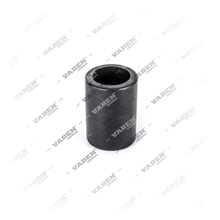
The mount typically has a natural or synthetic rubber body, and some applications include an internal metal bushing or steel reinforcement plate. This structure needs to be firm enough to carry vertical loads while still flexing to absorb sudden shocks from road irregularities. Although the mount's location varies by vehicle, its function is always the same: to form a flexible, damping interface between the bracket and the chassis.
What are the functions of Support Bracket Wedge?
The functions this mount performs directly affect the vehicle's safe and comfortable operation.
- Vibration damping: Reduces the transmission of vibration from the engine, wheels and road surface through the bracket to the chassis and cabin.
- Noise isolation: Prevents rattling and squeaking caused by metal-to-metal contact, improving cabin comfort.
- Load distribution: Spreads static and dynamic loads on the bracket across a wider contact surface, reducing point loading.
- Protecting connection life: Delays loosening at bolts and bracket holes, limiting wear caused by continuous micro-movement.
- Corrosion barrier: Acts as a separating layer that reduces moisture retention and galvanic corrosion risk between the bracket and the chassis.
What are the symptoms of Support Bracket Wedge failure?
Signs that the mount is worn or no longer performing its function usually appear gradually; catching them early prevents damage to the bracket and chassis.
- Metallic knocking noise: Irregular knocking from the bracket area, especially over rough road sections or during acceleration and braking.
- Visible cracking or deformation: Splits, hardening, distortion or breakup of the rubber body.
- Bracket looseness: Once the mount loses its function, bracket bolts can gradually loosen and bracket movement becomes noticeable.
- Excessive vibration: A clearly increased sense of vibration in the relevant area of the cabin or chassis.
- Bracket or chassis fatigue cracking: Once the mount loses its damping ability, the risk of cracking at bracket weld areas or the chassis body increases over time.
How is Support Bracket Wedge checked?
Inspection should be carried out during scheduled maintenance or after an unusual noise or vibration complaint.
- Visual inspection: Check the mount's rubber surface for cracking, tearing, excessive hardening, or signs of oil or chemical exposure.
- Manual movement test: Lightly force the bracket by hand or with a suitable pry bar to assess whether there is abnormal play in the mount.
- Bolt torque check: Check bracket bolt torque against the manufacturer's specified value; loosening can be a result of mount failure.
- Road test: Listen for noise and vibration from the bracket area while the vehicle is moving, noting sounds that become more pronounced on rough surfaces.
- Adjacent component check: Also inspect whether the mount failure has caused damage to the bracket, chassis or other connected parts.
What should be considered when replacing it?
Attention to the following points during replacement ensures both correct installation and long service life.
- Securing the bracket: Before replacing the mount, the bracket should be secured with suitable support to prevent sudden dropping or load shifting.
- Cleaning the contact surface: The chassis and bracket contact surfaces should be cleared of rust, dirt and old mount residue.
- Correct mount size: The correct size and hardness of mount should be selected based on the chassis number and OEM reference; an incompatible mount leads to premature failure.
- Bolt torque: Bracket bolts should be tightened to the torque value specified in the vehicle's service manual; under- or over-tightening impairs the mount's function.
- Bracket alignment: When fitting the new mount, ensure the bracket is correctly aligned with the chassis and avoid forcing it during installation.
- Exact OE values: General ranges can be used as reference for torque and dimensions; the vehicle's current OE service manual is the definitive source.
How to choose Support Bracket Wedge?
Choosing the right mount should be based on the vehicle model, bracket type and operating conditions. The table below summarizes the key criteria to consider during selection.
Chassis connection bracket mount selection criteria| Criterion | Description |
|---|
| Chassis/model match | Select a mount that exactly matches the vehicle chassis number and bracket reference |
| Rubber hardness | Rubber compound hardness suited to the carried load; a mount that is too soft deforms prematurely |
| Material durability | Prefer a rubber compound resistant to oil, road salt and temperature variation |
| Metal reinforcement | Check whether the application requires an internal bushing or steel-reinforced type |
| OE reference match | Cross-check against OE part numbers from manufacturers such as Wabco, Knorr-Bremse, Mercedes-Benz, Volvo, MAN, DAF and Scania |
| Installation dimensions | Bolt hole diameter and mount height must fully match the bracket |
Maintenance and service life
The chassis connection bracket mount wears gradually over years depending on the vehicle's operating conditions. Vehicles that run on rough roads and carry heavy loads experience faster wear than those used mainly for short urban trips. Including a visual check in routine maintenance allows early intervention before cracking or hardening becomes advanced. To extend the mount's life, protecting the bracket area from oil, fuel or chemical leaks prevents the rubber from deteriorating over time. Periodically checking bolt torque also prevents premature wear caused by loosening. As the vehicle's age and mileage increase, evaluating the adjacent bracket and chassis areas together with the mount helps identify potential secondary damage early.
VADEN chassis connection bracket mount
VADEN produces chassis connection bracket mounts for heavy commercial vehicles with OE-level rubber formulation and dimensional precision. The products are developed to match the different bracket types used on truck and bus chassis, and their vibration damping performance is verified during production. Mounts that pass VADEN's quality control processes are designed to offer fleet operators and workshops a reliable, long-lasting replacement part solution.
Frequently Asked Questions (FAQ)
What does a chassis connection bracket mount do?
It forms a flexible interface between the bracket and the chassis, damping vibration, reducing noise and delaying fatigue at the bracket connection points.
What happens when a chassis connection bracket mount fails?
Metallic knocking noises, bracket looseness, increased vibration and, over time, a risk of fatigue cracking at the bracket or chassis can occur.
How is the correct torque value determined when replacing the mount?
The exact torque value varies by vehicle; the value specified in the vehicle's current OE service manual should be used as the reference, not a general range.
How often should the mount be checked?
A visual inspection should be included in routine maintenance, with increased check frequency for vehicles used on rough roads or carrying heavy loads.
What is the risk of using an incompatible mount?
Using a mount with the wrong hardness or size leads to premature deformation, bracket looseness and inadequate vibration damping.
Related technical guide: Chassis Mounting Bracket: Failure, Replacement & Care Guide