What Is a Steering Box?
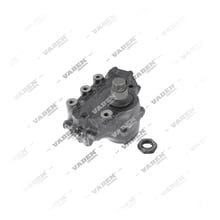
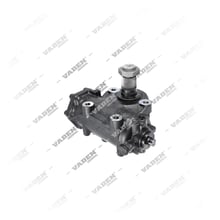
The steering box is a complete mechanical-hydraulic unit that transfers the rotational motion from the steering wheel to the steering linkage at the front axle of heavy commercial vehicles. On truck, tractor unit, bus and trailer platforms, it is commonly referred to in the field as a "steering gear box", "steering gear" or simply "steering box". Inside the housing sits a worm shaft, a sector shaft, and a hydraulic piston and valve assembly; the steering angle and force applied by the driver are amplified here before being passed on to the pitman arm. Because it combines mechanical and hydraulic power transmission in a single housing, it is one of the most critical components in the system. A failure directly affects vehicle handling, which is why OEM dimensions must be followed closely whenever a steering box is serviced.
How Does a Steering Box Work?
When the steering wheel is turned, motion is transferred to the steering shaft and from there to the worm shaft inside the steering box. In hydraulically assisted types, the flow of oil entering the steering box is directed by a control valve, which applies force to the piston and amplifies the torque the driver applies by hand. This amplified force is transmitted through the sector shaft to the pitman arm, and from there to the wheels via the tie rod and tie rod ends. Correct operation depends on oil pressure inside the box, the condition of the sealing elements, and mechanical clearances staying within the manufacturer's tolerances.
Steering Box Technical Specifications
Steering boxes can have different gear ratios and housing dimensions depending on the vehicle model, axle load and manufacturer's design, so matching the original part number with the vehicle's chassis number is essential before replacement. Rather than quoting exact figures for pressure and torque, it is more accurate to speak in general ranges; the vehicle's current service manual is the authoritative source for exact values.
- Housing Material: Typically cast iron or aluminium alloy, manufactured to withstand high-pressure hydraulic fluid.
- Sealing Elements: Gaskets, seals and o-rings protect the internal mechanism against pressurised oil leakage.
- Connection Dimensions: Flange diameter, spline tooth count and pitman arm angle vary by vehicle manufacturer.
Steering Box Types and Subassemblies
- Hydraulically Assisted Steering Box: The most widely used type in heavy commercial vehicles, amplifying driver input through a piston and valve assembly.
- Mechanical (Non-Assisted) Steering Box: A simpler type relying solely on gear transmission, now mostly found on older models or special-purpose vehicles.
- Sector Shaft and Bearing Set: The subassembly that transfers the box's output motion to the pitman arm and requires regular wear inspection.
- Control Valve Assembly: A precision component that directs hydraulic oil flow, ensuring assist force is applied at the right moment and in the right direction.
- Piston and Sealing Set: The internal assembly that converts hydraulic pressure into mechanical motion, supported by seal and o-ring sets.
- Steering Box Repair Kit: An economical set that renews only the worn gaskets, seals and o-rings, avoiding the need for a complete box replacement.
How to Choose the Right Steering Box?
The first step in selecting a steering box is identifying the correct reference using the vehicle's chassis number or the OEM code on the existing part; boxes that look identical can have different gear ratios or flange dimensions. The second criterion is compatibility with axle load and hydraulic pump capacity; the wrong ratio hurts steering precision. Third, if the housing and gear assembly show no excessive wear, a repair with a sealing kit is usually sufficient rather than a complete replacement.
Steering Box Selection and Application Guide| Criterion | Evaluation Point |
|---|
| Vehicle Type | Housing and flange dimensions vary by truck, tractor unit, bus or trailer chassis |
| Gear Ratio | Determined per manufacturer based on axle load and steering precision requirements |
| Connection Type | Spline tooth count and pitman arm angle must match the original part exactly |
| Hydraulic Compatibility | Pump flow rate and system pressure must match the box's valve characteristics |
| Repair Scope | A repair kit if housing and gears are sound, a complete box if wear is advanced |
| Compatible Brands | Mercedes-Benz, MAN, Scania, Volvo, DAF, Iveco, Renault Trucks applications |
Steering Box Maintenance and What to Watch For
- Check Hydraulic Oil Level Regularly: A low oil level accelerates valve and piston wear and leads to stiff steering.
- Monitor Sealing Elements: Oil leaks from seals and o-rings are an early warning sign; address them with a repair kit as soon as they are noticed.
- Follow Connection Torque Specifications: For flange and pitman arm connections, always use the torque values specified in the vehicle manufacturer's current service manual.
- Have Sector Shaft Clearance Checked: Excessive clearance causes play in the steering and must always be measured during periodic maintenance.
- Use Parts With Original Dimensions: Boxes with a different gear ratio or flange size can cause installation problems and premature failure.
Common Faults and Their Solutions
- Stiff Steering: Usually caused by a low hydraulic oil level or a worn valve assembly; check the oil level and inspect the valve assembly.
- Play or Looseness in the Steering: Can be caused by sector shaft wear or loose connections; check the sector shaft bearing and connection torques.
- Oil Leak from the Steering Box: Occurs due to worn seals and o-rings; renew the sealing elements with a repair kit.
- Abnormal Noise When Steering: Insufficient lubrication or internal gear wear is a likely cause; check oil level and quality, and have the box inspected if necessary.
- Steering Fails to Return to Centre: May indicate a fault in the valve assembly or mechanical binding; the control valve and piston assembly should be inspected by an authorised service.
Why VADEN ORIGINAL?
- Manufactured to OE Dimensions: Steering boxes and repair kits are produced true to original flange, spline and gear ratio dimensions.
- Extensive OEM Coverage: References are offered for a wide range of vehicles, led by Mercedes-Benz, MAN, Scania, Volvo, DAF, Iveco and Renault Trucks.
- Quality Sealing: Seal, o-ring and gasket sets are manufactured from materials resistant to hydraulic pressure, delivering long-lasting sealing performance.
- International Reach: VADEN ORIGINAL parts are exported to more than 100 countries, reaching fleet operators and workshops worldwide.
Conclusion
The steering box is a unit that must never be neglected in heavy commercial vehicles, given its importance for driver safety and handling precision. Regular checks of oil level and sealing condition, along with selecting parts with the correct gear ratio and OEM dimensions, ensure long-lasting and reliable steering box operation. VADEN ORIGINAL steering boxes and repair kits provide fleet operators with a dependable solution, combining OE-grade manufacturing with broad vehicle compatibility.
Frequently Asked Questions (FAQ)
What does a steering box do?
The steering box amplifies the rotational motion from the steering wheel and transmits it to the pitman arm, and from there to the wheels on the front axle. In hydraulically assisted types, it increases the force applied by the driver, allowing a heavy vehicle to be steered precisely with minimal effort.
What are the symptoms of a failing steering box?
Stiff steering, play or looseness, oil leaking from the housing, abnormal noise while turning, and difficulty returning to centre are the most common symptoms. If any of these appear, the hydraulic oil level and sealing elements should be checked.
Should I repair the steering box with a repair kit or replace it completely?
If there is no excessive wear in the housing and gear assembly, a repair kit that renews the seals, o-rings and gaskets is usually sufficient and more economical. If the sector shaft or gear assembly shows serious wear, a complete steering box replacement should be considered.
Which vehicles are VADEN ORIGINAL steering boxes compatible with?
VADEN ORIGINAL steering boxes and repair kits are manufactured for a wide range of heavy commercial vehicle brands, led by Mercedes-Benz, MAN, Scania, Volvo, DAF, Iveco and Renault Trucks. It is recommended to verify the part reference against the vehicle's chassis number before ordering.
What should be considered when replacing a steering box?
Flange dimensions, spline tooth count and pitman arm connection angle must match the original part exactly. Connection torques should follow the values in the vehicle's current service manual, and the hydraulic oil level should be checked after installation.
Related technical guide: Truck Steering Gear Box: Faults, Replacement & Maintenance