What Is a Release Ring?
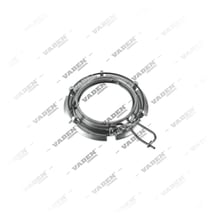
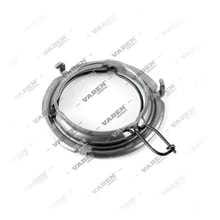
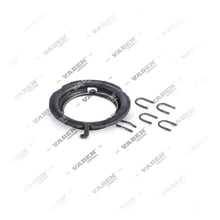
A clutch release carbon ring is a carbon-based wear component that operates at the contact point between the pressure plate's diaphragm spring and the release fork in the mechanical clutch systems of heavy commercial vehicles. In the field it is also known as a "carbon collar," "carbon ring," or simply "clutch carbon." Its job is to create a low-friction, self-lubricating contact surface between the rotating pressure plate and the stationary release fork. This allows quiet, controlled power transfer onto the diaphragm spring when the clutch pedal is depressed, without any metal-to-metal contact. In trucks, tractor units, buses, and trailer tractors — especially those fitted with classic diaphragm-spring clutch assemblies — the clutch release carbon ring is a critical wear part for the long-term, reliable operation of the system.
How Does a Release Ring Work?
When the clutch pedal is pressed, the release fork moves toward the center of the diaphragm spring, and this movement is transmitted to the diaphragm fingers through the carbon ring. Positioned between the rotating pressure plate assembly and the stationary mechanism, the carbon ring lets only the axial force pass through to the release fork, without transferring any rotational motion. Thanks to the natural slipperiness of the carbon material, no additional grease lubrication is needed at this contact surface. As the carbon ring wears down, clearance develops at the contact face, which leads to symptoms such as a stiffening pedal, vibration, or incomplete clutch disengagement. For this reason, the condition of the clutch release carbon ring is directly linked to the overall health of the clutch system.
Release Ring Technical Specifications
Clutch release carbon rings are manufactured from special carbon-graphite compounds engineered to withstand high temperatures and continuous friction. The material is formulated to combine wear resistance with self-lubricating properties, preventing scoring on the mating metal surface. Outer diameter, inner diameter, and thickness vary according to the diaphragm spring geometry of the pressure plate assembly, which is why selecting the correct dimensions for the specific vehicle and engine code matters. For exact torque, pressure, and tolerance values, always refer to the vehicle's current service manual. VADEN ORIGINAL clutch release carbon rings are manufactured to OE dimensions and tolerances and are directly compatible with original pressure plate assemblies.
- Material Composition: A high-density carbon-graphite compound resistant to heat and wear.
- Dimensional Fit: Inner/outer diameter and thickness are manufactured to match the diaphragm design of the pressure plate assembly.
- Self-Lubrication: Provides low-friction contact without requiring additional grease.
- Heat Resistance: Retains its shape and hardness under continuous friction.
- Installation Fit: Dimensioned to seat precisely against the original pressure plate and release fork geometry.
Types and Subgroups of Release Rings
- Fixed-Collar Carbon Ring: A type in which the carbon ring is press-fitted into a metal collar, used in classic diaphragm-spring clutch assemblies.
- Segmented Carbon Ring: A variant specific to certain pressure plate designs, in which the carbon surface is made up of individual segments.
- Thin-Profile Type: A low-profile carbon ring used in models with limited clearance inside the clutch housing.
- Standard-Thickness Type: A thicker, longer-lasting version widely used in heavy-duty pressure plate assemblies.
- Integrated Type: In some manufacturers' designs, the carbon ring is supplied as a single unit together with the pressure plate set.
How to Choose the Right Release Ring
The first step in choosing a clutch release carbon ring is to precisely identify the pressure plate assembly based on the vehicle's make, model, and engine code; carbon collars that look identical are not always interchangeable across different diaphragm geometries. The second key criterion is that the inner diameter, outer diameter, and thickness match the original part exactly, since any dimensional deviation leads to premature wear. Carbon material quality is equally decisive — low-grade compounds crumble quickly and can score the pressure plate surface. The table below summarizes the main criteria to consider when selecting a clutch release carbon ring.
Clutch Release Carbon Ring Selection Criteria| Criterion | Description |
|---|
| Vehicle Compatibility | Verified against make, model, engine code, and pressure plate assembly |
| Dimensional Accuracy | Inner diameter, outer diameter, and thickness matching the original part exactly |
| Material Quality | Dense carbon-graphite compound resistant to heat and wear |
| Installation Type | Compatibility with fixed-collar, segmented, or integrated assemblies |
| Surface Finish | Smooth, even carbon surface that prevents scoring |
| Source/Reference | Application list verified against the OEM part number |
Release Ring Maintenance and Key Considerations
- Check It During Clutch Service: Whenever the clutch disc or pressure plate is replaced, always inspect the wear condition of the carbon ring as well.
- Inspect the Carbon Surface Visually: Before installation, check for cracks, crumbling, or deep scoring.
- Confirm the Correct Dimensions: Before fitting, compare the inner/outer diameter and thickness against the removed part.
- Keep the Installation Area Clean: Dust and metal shavings can cause premature wear on the carbon surface, so keep the work area clean.
- Check Release Fork Alignment: A misaligned release fork will cause even a newly fitted carbon ring to wear out quickly.
- Use OE-Dimension Parts: Choose VADEN ORIGINAL clutch release carbon rings for long service life and trouble-free operation.
Common Faults and Their Solutions
- Stiff Clutch Pedal: Caused by a worn or crumbling carbon ring; inspect it and replace with a new one if necessary.
- Noise or Vibration During Gear Changes: Caused by uneven wear on the carbon ring surface; remove the part, inspect its condition, and replace it.
- Incomplete Clutch Disengagement: Caused by clearance from reduced carbon ring thickness; renew the carbon ring and, if needed, the pressure plate assembly.
- Scoring on the Pressure Plate Surface: Caused by low-quality or worn carbon material; use a carbon ring of original dimensions and quality.
- Recurring Premature Wear: Caused by release fork misalignment or incorrect dimension selection; re-verify installation alignment and dimensional fit.
Why Choose VADEN ORIGINAL?
- Manufactured to OE Dimensions: Carbon rings are produced to dimensions that match original pressure plate assemblies exactly.
- Durable Carbon Formulation: A heat- and friction-resistant material structure that delivers a long service life.
- Broad OEM Coverage: Application options for Mercedes-Benz, MAN, Scania, Volvo, DAF, Iveco, and Renault Trucks heavy vehicles.
- Quality Control: Every production batch is rigorously inspected for dimensional accuracy and surface quality.
- Exported to Over 100 Countries: VADEN ORIGINAL parts are trusted by fleet operators worldwide.
Conclusion
Despite its small size, the clutch release carbon ring is an indispensable wear part for the smooth operation of a mechanical clutch system. A carbon ring made from quality material in the correct dimensions delivers a solid pedal feel, quiet gear changes, and a longer service life for the pressure plate. With OE dimensions and a durable material structure, VADEN ORIGINAL clutch release carbon rings deliver the reliability that heavy commercial vehicle fleets require.
Frequently Asked Questions (FAQ)
What does a clutch release carbon ring do?
The clutch release carbon ring creates a low-friction contact surface between the rotating pressure plate and the stationary release fork in a mechanical clutch system. This allows quiet, controlled power transfer when the clutch pedal is pressed, without any metal-to-metal contact.
What symptoms appear when a clutch release carbon ring wears out?
A worn carbon ring typically causes symptoms such as a stiffening clutch pedal, noise or vibration during gear changes, and incomplete clutch disengagement. In these cases, the part should be removed, inspected, and replaced if necessary.
Is a clutch release carbon ring the same part as a clutch disc?
No, the two parts serve different functions. The clutch disc is the friction disc that transfers engine power to the transmission, while the carbon ring is a small carbon wear part that operates at the contact point between the pressure plate and the release fork.
Why should a clutch release carbon ring be replaced with an original-size part?
Even a small deviation in inner diameter, outer diameter, or thickness can cause uneven contact on the pressure plate surface and lead to premature wear. For this reason, it is recommended to use parts manufactured to OE dimensions, such as VADEN ORIGINAL.
Which heavy commercial vehicles use a clutch release carbon ring?
The clutch release carbon ring is used in trucks, tractor units, and buses from brands such as Mercedes-Benz, MAN, Scania, Volvo, DAF, Iveco, and Renault Trucks that are fitted with classic diaphragm-spring mechanical clutch assemblies. It is recommended to verify the vehicle and engine code before application.
Related technical guide: Clutch Release Bearing: Fault, Replacement and Care Guide