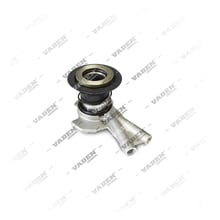
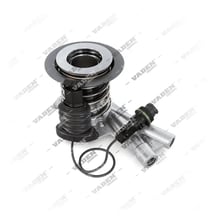
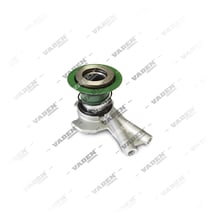
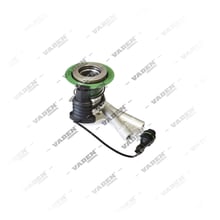
What Is a Release Bearing?
The clutch release bearing — known in the field as the "release bearing" or "throw-out bearing" — is a critical wear part on heavy commercial vehicles that applies axial force to the diaphragm spring when the driver depresses the clutch pedal, disengaging engine power from the gearbox. It bridges the gap between the rotating and stationary elements of the clutch system, sliding axially along the clutch shaft to contact the diaphragm spring fingers and pull the pressure plate away from the flywheel. Used on Mercedes-Benz, MAN, Scania, Volvo, DAF, Iveco, Renault Trucks, and Ford heavy-duty vehicles, it is indispensable for smooth gear changes and safe driving. VADEN ORIGINAL clutch release bearings are manufactured to OE dimensions to preserve original equipment performance.
How Does a Release Bearing Work?
When the driver presses the clutch pedal, the hydraulic or mechanical clutch system transmits this movement to the clutch fork, which pushes the clutch release bearing along the clutch shaft toward the engine until it contacts the center fingers of the rotating diaphragm spring. The bearing transmits this axial pressure while rotating freely on its own internal race, giving a friction-free transition between the spinning diaphragm spring and the stationary fork. Under the pressure, the diaphragm spring deforms and pulls the pressure plate back, separating the clutch disc from the flywheel and interrupting power transfer to the gearbox. Releasing the pedal reverses the sequence: the bearing retracts, the diaphragm spring returns to its resting position, and power transfer resumes — a cycle repeated with every gear change and every stop.
Release Bearing Technical Specifications
Clutch release bearings are precision components made up of an inner race, outer race, and ball bearing elements, engineered to withstand high axial load and rotational speed. The housing is typically hardened steel, built to endure continuous high temperature and mechanical load. When selecting a bearing, the vehicle make, chassis number, and clutch system type (mechanical, hydraulic, or concentric) must always be verified; for exact torque and pressure values, consult the vehicle's current service manual.
- Housing Material: Hardened steel inner and outer races, resistant to continuous mechanical load and high temperature.
- Dimensional Fit: Inner diameter, outer diameter, width, and contact profile must match the clutch shaft and diaphragm spring geometry to the millimeter.
- Lubrication Design: Self-lubricating sealed bearing or separate lubrication-point types vary by model.
- Rotational and Axial Load Capacity: Engineered for low-friction operation under continuous contact at high speed.
Release Bearing Types and Subcategories
- Standard Clutch Release Bearing: The classic type operated by a separate clutch fork, used in most conventional heavy-duty systems.
- Concentric Slave Cylinder (CSC): An integrated design combining the release bearing with the hydraulic cylinder, positioned around the clutch shaft.
- Self-Adjusting Clutch Release Bearing: Compatible with self-adjusting diaphragm springs, compensating for disc wear to keep pedal feel steady.
- Clutch Fork and Linkage Kit: The complementary parts of the mechanical or hydraulic lever that moves the bearing.
- Pilot Bearing (Spigot Bearing): A separate bearing that supports the gearbox input shaft at the flywheel end, operating close to the release bearing.
- Guide Sleeve: The guide element that lets the bearing slide smoothly and without friction along the clutch shaft.
How to Choose the Right Release Bearing
Choosing the correct clutch release bearing requires evaluating the vehicle's make, model, chassis number, and clutch system type together. The table below summarizes the key selection criteria.
Clutch Release Bearing Selection Criteria| Criterion | Why It Matters |
|---|
| Clutch System Type | Mechanical, hydraulic, or concentric (CSC) systems require different bearing designs |
| Inner and Outer Diameter | Millimeter-precise fit with the clutch shaft and diaphragm spring is essential for good contact |
| Vehicle Chassis Number | Different engine/gearbox combinations within the same model may use different part numbers |
| Bearing Construction | Sealed, lubricated, or self-lubricating types affect the service interval |
| Diaphragm Spring Compatibility | The contact surface profile must make full contact with the diaphragm spring fingers |
| OE Reference Number | Cross-checking against the original part number prevents incorrect installation |
Release Bearing Maintenance and Key Considerations
- Replace the Full Clutch Kit During Installation: The bearing, clutch disc, and pressure plate generally wear together; replacing only the bearing is a short-term fix.
- Check the Guide Sleeve and Clutch Shaft: A worn guide sleeve prevents smooth sliding, causing vibration and noise.
- Apply the Correct Lubrication: Use the grease type and amount recommended by the manufacturer; over-greasing risks contaminating the clutch disc and causing slippage.
- Adjust Pedal Free Play: Correct pedal clearance prevents the bearing from staying in constant contact and wearing prematurely.
- Use Parts Manufactured to OE Dimensions: For long service life and safe operation, choose VADEN ORIGINAL components matching the manufacturer's current service manual.
Common Faults and Solutions
- Squealing or Rumbling Noise When Pressing the Pedal: A worn or dry bearing; replace it and, if necessary, the guide sleeve.
- Difficulty Shifting Gears: The bearing cannot make full contact with the diaphragm spring or is excessively worn; inspect and replace the full clutch kit.
- Clutch Pedal Feels Loose or Drops: Mechanical failure in the bearing or fork linkage; inspect the fork and linkage.
- Continuous Friction or Vibration Noise: The bearing has stayed in constant contact with the diaphragm spring; check pedal free play and the hydraulic system.
- Clutch Slipping or Not Engaging Fully: Insufficient pressure force or a contaminated disc surface; review the complete clutch kit.
Why Choose VADEN ORIGINAL?
VADEN ORIGINAL clutch release bearings are manufactured to OE dimensions and tolerances, targeting original equipment performance.
- OE-Dimension Manufacturing: Precision production matching the clutch shaft and diaphragm spring geometry to the millimeter.
- Broad OEM Coverage: A compatible alternative for Mercedes-Benz, MAN, Scania, Volvo, DAF, Iveco, and Renault Trucks models.
- Quality Control: Components tested across diverse climate and operating conditions for consistent performance.
- Exported to More Than 100 Countries: A consistent, cost-effective solution for fleet operators and service workshops worldwide.
Conclusion
Small in size but central to the clutch system, the clutch release bearing rewards the right selection and timely maintenance with better driving comfort and gearbox lifespan. With OE-compatible dimensions and broad vehicle coverage, VADEN ORIGINAL clutch release bearings support the uninterrupted operation of heavy commercial vehicle fleets.
Frequently Asked Questions (FAQ)
What does a clutch release bearing do?
The clutch release bearing applies axial force to the diaphragm spring when the clutch pedal is pressed, pulling the pressure plate away from the flywheel. This temporarily interrupts power transfer between the engine and gearbox, allowing a gear change or a complete stop.
What symptoms appear when a clutch release bearing fails?
The most common symptoms are a squealing or rumbling noise when pressing the clutch pedal, difficulty shifting gears, continuous friction noise, and a clutch pedal that feels loose or drops. If any of these symptoms appear, the clutch release bearing and its guide sleeve should be inspected.
Why should a clutch release bearing be replaced together with other clutch parts?
The clutch release bearing, clutch disc, and pressure plate work interdependently and generally wear out around the same time. Replacing only the bearing can lead to the other parts failing shortly afterward and additional labor costs.
What is the difference between a concentric clutch release bearing and a standard one?
A concentric slave cylinder (CSC) is integrated with the hydraulic cylinder and positioned around the clutch shaft, while the standard type is actuated by a separate clutch fork. The correct type for a given vehicle model should be determined from the manufacturer's service manual.
Which vehicles are VADEN ORIGINAL clutch release bearings compatible with?
VADEN ORIGINAL clutch release bearings offer broad OEM coverage for heavy commercial vehicle makes such as Mercedes-Benz, MAN, Scania, Volvo, DAF, Iveco, and Renault Trucks. The vehicle's chassis number and clutch system type should be verified to select the correct part.
Related technical guide: Clutch Release Bearing: Fault, Replacement and Care Guide