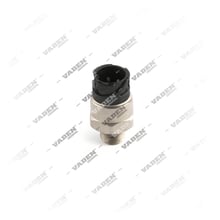
What is a Pressure Sensor?
The Transmission Pressure Sensor measures the hydraulic oil pressure inside the transmission and converts this value into an electrical signal. Working on a piezoresistive or diaphragm measuring principle, it can detect both the normal operating pressure of the system and momentary pressure drops. The measured data is used by the TCU to determine gear shift strategy, adjust clutch pressure and perform fault diagnosis.
What are the functions of the Pressure Sensor?
- Pressure monitoring: Continuously measures the operating pressure in the hydraulic circuit.
- Gear shift control: Supplies data that lets the TCU determine correct shift timing and clutch pressure.
- Pump performance tracking: Monitors whether the hydraulic pump is generating sufficient pressure.
- Fault diagnosis: Triggers an early warning fault code when abnormal pressure values occur.
- Safety function: Triggers limp-home mode when pressure drops to a critical low level.
What are the symptoms of a Pressure Sensor failure?
A sensor failure directly affects the normal operating behavior of the transmission and usually shows the following symptoms.
- Harsh, delayed or jerky movements during gear shifts
- Transmission warning light illuminated on the dashboard
- Transmission entering limp-home mode and staying within a limited gear range
- Sudden shifting noises while stationary or driving at low speed
- Pressure sensor signal fault codes stored in the diagnostic tool
How is the Pressure Sensor checked?
- Visual inspection: Check the sensor housing and connector for cracks, oil leaks or contamination.
- Resistance/voltage measurement: Compare the sensor output signal against manufacturer reference values using a multimeter.
- Diagnostic scan: Monitor live data from the TCU to check whether the pressure value is within a logical range.
- Wiring and connector check: Inspect the wiring harness for breaks, corrosion or loose connections.
- Comparative test: Evaluate the consistency of sensor response under different speed/load conditions.
What should be considered when replacing it?
- Relieve transmission oil pressure before removing the sensor and make the hydraulic line safe to work on.
- Always fit the new sensor's o-ring or gasket with a new one.
- Apply tightening torque according to the vehicle's current OE service manual; overtightening can crack the sensor housing.
- Verify the connector is fully seated, as a loose connection causes faulty readings.
- After installation, verify the sensor signal is read correctly using live diagnostic data.
- Perform TCU adaptation or a learning procedure if required.
How to choose the right Pressure Sensor?
Correct sensor selection should be based on technical compatibility criteria such as transmission model, measuring range and connector type.
Transmission Pressure Sensor Selection Criteria| Criterion | Description |
|---|
| Transmission model | The sensor must match the vehicle's transmission type and valve body mounting point |
| Measuring range | The sensor's pressure measuring range must match the original part |
| Connector type | The electrical connector must be fully compatible with the vehicle's wiring harness |
| Output signal type | The analog or digital output type must be compatible with the TCU software |
| OE reference cross-check | Verify by matching the OE number of the removed part |
Maintenance and service life
The transmission pressure sensor does not require periodic maintenance, but signal stability can decline over time due to exposure to high temperature and vibration in its operating environment. It is recommended to visually inspect the sensor housing and connector at every transmission oil change. Poor oil quality and prolonged operation at high temperature are the main factors that shorten sensor life.
VADEN Pressure Sensor
VADEN offers pressure sensors compatible with OE references for heavy commercial vehicle transmissions; products are manufactured and tested for measurement accuracy and electrical compatibility.
Frequently Asked Questions (FAQ)
Can the vehicle be driven if the transmission pressure sensor fails?
Usually the transmission enters limp-home mode and continues to operate within a limited gear range, but the vehicle should be taken to service as soon as possible since normal shift performance is lost.
Is the pressure sensor the same part as the speed sensor?
No. The pressure sensor measures hydraulic circuit pressure, while the speed sensor detects shaft rotation speed; the two have different functions and are usually located in different positions.
Why can gear shifts still be harsh after replacing the sensor?
Even if the sensor works correctly, shifts can remain harsh if the TCU adaptation values are not up to date; in this case a learning procedure needs to be performed.
How often should the transmission pressure sensor be checked?
There is no fixed interval, but visual and diagnostic checks are recommended at transmission oil change intervals.
Can a faulty sensor damage the transmission oil?
The sensor itself does not directly damage the oil, but incorrect pressure readings can lead to faulty clutch pressure that, over time, negatively affects oil quality and the clutch packs.
Related technical guide: Heavy-Duty Truck Gearbox: Faults, Replacement & Maintenance