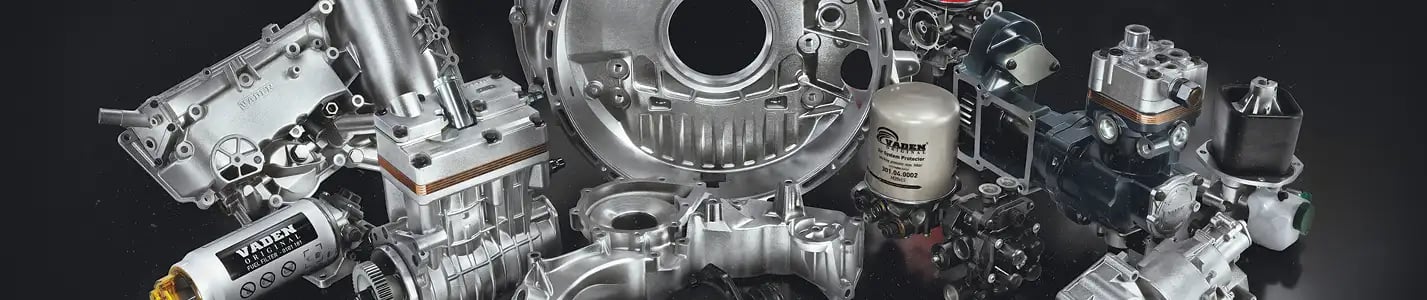
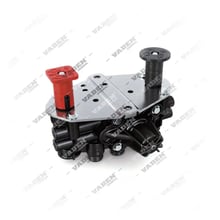
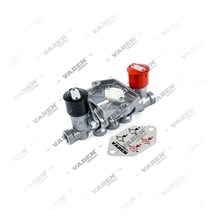
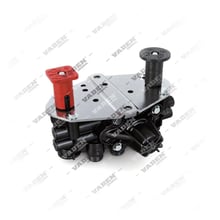
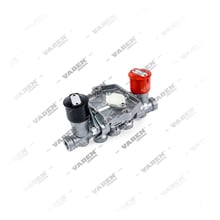
What Is a Park Release Emergency Valve?
The Parking and Drain Valve is a pneumatic control component that combines two distinct functions in a single housing within the air brake system of heavy commercial vehicles. Operated together with the parking brake button inside the cab, the valve body charges and vents the parking brake circuit, allowing the spring-type brake chambers to lock or release; it also supports a drain function that purges the moist, contaminated air that builds up in the system. Also known in the field as a "parking valve," "hand brake valve," or "drain valve," this part is widely used in Wabco- and Knorr-Bremse-type brake architectures on trucks, tractor units, buses, and trailers. Replaced as a complete unit, it guarantees that the parking brake command from the driver's cab reaches the brake chambers without delay.
How Does a Park Release Emergency Valve Work?
- Parking Brake Control: When the driver pulls the button, the valve cuts off the air line to the spring-type brake chambers; as pressure bleeds away, the springs inside engage and the vehicle is mechanically locked in place.
- Releasing the Parking Brake: When the button is pushed back in, the valve redirects pressurized air from the reservoir line to the chambers, the springs compress, and the vehicle becomes ready to move.
- Drain Function: A separate channel in the valve body lets condensation water and contaminated air that accumulate in the system be discharged periodically.
Because these two functions work side by side, the valve must maintain airtight sealing and precise mechanical switching at the same time; otherwise, parking brake response is delayed or the system suffers a loss of pressure.
Park Release Emergency Valve Technical Specifications
Parking and Drain Valve housings are typically made from corrosion-resistant aluminum alloy or cast steel, with NBR-based seals and O-rings in the internal channels. Operating pressure varies by vehicle model, but the valve typically works within the 6-10 bar band found in standard air brake systems. Connections are mostly M16x1.5 or M22x1.5 thread sizes, compatible with standard hose fittings. The valve body generally carries 2 to 4 air ports, connected separately to the reservoir, brake chamber, and drain lines. For correct installation and long service life, follow the torque values specified by the vehicle manufacturer and use original fasteners, based on the current service manual.
Park Release Emergency Valve Types and Subgroups
- Single-Circuit Parking Valves: Control a single spring-type brake chamber line and are found on simpler vehicles.
- Dual-Circuit Parking and Drain Valves: An advanced type that manages front and rear axle brake circuits separately for redundancy, common on heavy trucks and tractor units.
- Manually Operated Type: Works on the classic principle of direct actuation through a mechanical button or lever inside the cab.
- Type with Automatic Drain Function: An integrated design that automatically discharges moist air once a set pressure threshold is reached.
- Parking Valve Assembly with Trailer Connection: Used in multi-axle semi-trailer systems, relaying the tractor's parking brake command to the trailer brake line as well.
How to Choose the Right Park Release Emergency Valve
The first step in choosing a Parking and Drain Valve is correctly identifying the vehicle's chassis number and the architecture of its existing brake system (Wabco- or Knorr-Bremse-based). Next, check that the port count and connection dimensions on the valve body match the original part exactly; a different port layout may not fit the existing piping. Whether the vehicle runs a single-circuit or dual-circuit system is another decisive criterion, since the wrong circuit type can leave the parking brake ineffective on one axle.
Parking and Drain Valve Selection and Compatibility Criteria| Criterion | Check Point |
|---|
| Vehicle Make and Model | Chassis/model match should be verified for Mercedes-Benz, MAN, Scania, Volvo, DAF, Iveco, and Renault Trucks |
| System Type | Valve body type should be selected according to Wabco or Knorr-Bremse pneumatic brake architecture |
| Number and Layout of Ports | Reservoir, brake chamber, and drain line ports must match the existing piping diagram |
| Connection Size | Thread size and fitting type must be an exact match with the original part |
| Operating Pressure | A valve suited to the vehicle's system pressure range should be selected |
| OEM Reference Number | Cross-check against the original part number before placing an order |
Park Release Emergency Valve Maintenance and Points to Note
- Line Cleaning Before Installation: Before the valve is fitted, air lines should be cleared of dirt and moisture so foreign particles cannot damage the new valve.
- Correct Torque Application: Connection nuts should be tightened to the torque value specified by the vehicle manufacturer; over-tightening can crack the housing.
- Periodic Leak Checks: Check the area around the valve regularly for air-leak sounds or bubble formation using a soap test.
- Testing the Drain Function: During periodic maintenance, test the drain function manually to make sure the discharge channel is not blocked.
- Checking Control Button Movement: The parking brake button inside the cab should move smoothly, without stiffness or sticking.
Common Faults and Solutions
- Parking Brake Engages Late or Won't Release: This can result from worn rubber seals inside the valve or blocked channels; valve replacement and line cleaning are recommended.
- Continuous Air-Leak Sound: Likely caused by a failed housing gasket or O-ring seal; resolved with a complete valve replacement.
- No Water Discharging from the Drain Channel: The drain hole may be blocked with dirt or ice; clean the channel and replace the valve if necessary.
- Cab Button Feels Stiff or Sticks: This occurs due to wear in the internal mechanism or a lack of lubrication; the valve should be renewed.
- Parking Brake Ineffective on One Axle: In dual-circuit valves, blockage in a single line or loss of internal sealing may occur; circuit-based pressure checks and valve replacement are required.
Why Choose VADEN ORIGINAL?
- Manufactured to OE Dimensions: Housing, seal, and mechanism tolerances match original part dimensions.
- Broad OEM Compatibility: Compatible with Wabco- and Knorr-Bremse-based systems, including Mercedes-Benz, MAN, Scania, Volvo, DAF, Iveco, and Renault Trucks.
- Tested Durability: Subjected to endurance testing against pressure cycles and variable air conditions.
- Continuous Global Stock Availability: Uninterrupted supply through a production capacity that exports to more than 100 countries.
Conclusion
The Parking and Drain Valve is a critical component of the heavy commercial vehicle brake system, responsible for reliable engagement of the parking brake and discharge of moist air from the system. Timely, complete valve replacement protects both driver safety and overall brake system performance. VADEN ORIGINAL quality Parking and Drain Valve options deliver a reliable solution for heavy-duty operating conditions through OEM compatibility and durability.
Frequently Asked Questions (FAQ)
What does a Parking and Drain Valve do?
The Parking and Drain Valve transmits the command from the parking brake button inside the cab to the spring-type brake chambers, allowing the vehicle to be locked or released by the parking brake. It also carries out the drain function that discharges the moist, contaminated air accumulating in the system.
What symptoms appear when a Parking and Drain Valve fails?
The most common symptoms are the parking brake engaging late or failing to release, a continuous air-leak sound around the valve, the drain channel no longer discharging water, and the cab button becoming stiff. If any of these symptoms appear, the valve should be inspected.
Which vehicles use a Parking and Drain Valve?
This valve is used together with Wabco- or Knorr-Bremse-based air brake systems on heavy trucks, tractor units, buses, and trailer platforms from manufacturers such as Mercedes-Benz, MAN, Scania, Volvo, DAF, Iveco, and Renault Trucks.
What is the difference between a Parking and Drain Valve and a repair kit?
The Parking and Drain Valve refers to a complete unit that is replaced together with its housing. A repair kit, by contrast, is a service kit sold separately containing wear parts such as the seals and O-rings inside the valve; if the valve housing itself is damaged, complete replacement should be preferred.
When is Parking and Drain Valve replacement necessary?
Complete valve replacement is recommended when a crack is found in the valve housing, internal sealing is lost, wear is detected in the mechanism, or recurring air leaks appear that a repair kit cannot resolve.
Related technical guide: Emergency / Park-Release Valve: Faults, Replacement, Care