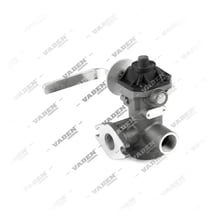
What Is an Load Unloading Valve?
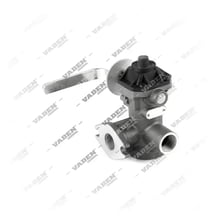
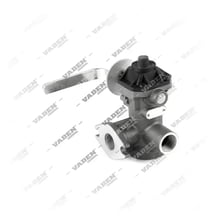
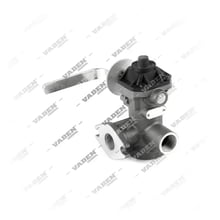
An unloader valve is a control component in the air brake system of heavy commercial vehicles that prevents the compressor from continuing to build pressure unnecessarily. It engages once the air tank reaches the upper pressure limit set by the pressure regulator, diverting airflow away from the compressor cylinders to atmosphere so the compressor keeps turning but runs unloaded. Also known as a "compressor unloader" or "unloading valve," it is manufactured either as a separate housing bolted onto the compressor or as a mechanism built into the regulator block. Without it, the compressor would run under load continuously, shortening its life and drawing unnecessary power from the engine. This category covers the complete range of unloader valves within the Brake System group, including valve housings and repair kits.
How Does an Load Unloading Valve Work?
During operation, the pressure regulator continuously monitors air tank pressure. Once the set upper limit (cut-out pressure) is reached, it sends a pilot air signal to the unloader valve. This signal moves the valve piston, triggering a mechanism that holds the compressor's intake valves open. Air entering the compressor cylinders is pushed back out uncompressed, and although the compressor keeps turning mechanically, it no longer builds air pressure. When tank pressure drops below the lower limit (cut-in pressure), the regulator cuts the pilot signal, the valve spring pushes the piston back to its original position, and the compressor resumes its normal cycle. This repeats continuously while the engine runs, keeping system pressure within range.
Load Unloading Valve Technical Specifications
An unloader valve consists of a steel or forged brass housing, a hardened piston, a return spring, and elastomer seals. Cut-out pressure typically falls in the 8-9 bar range, while cut-in pressure sits between 6.5-7.5 bar; exact values depend on the vehicle manufacturer's regulator calibration. Piston-to-bore tolerances are precision-machined to minimize air leakage — excessive clearance causes a delayed response, while an overly tight fit leads to mechanical binding. For correct operation, the vehicle's current service manual should always be the reference for exact torque and tolerance values.
- Housing: Made of steel or forged brass with a hardened piston bore.
- Pilot Air Inlet: Sized to match the signal line from the regulator, typically using an M16x1.5 or similar standard threaded connection.
- Return Spring: Pushes the piston back to its starting position once pressure drops.
- Sealing Elements: Elastomer o-rings and gaskets prevent air leakage.
Load Unloading Valve Types and Subgroups
- Regulator-Integrated Unloader Valve: Built into the same housing as the pressure regulator; a compact solution widely used in Wabco and Knorr-Bremse systems.
- Separate-Housing Unloader Valve: Mounted independently on the compressor, preferred on certain Mercedes-Benz and MAN compressor types.
- Piston Assembly and Repair Kits: Overhaul kits containing only the wearing piston, o-ring, and spring components; more economical than a complete valve replacement.
- Pilot Line Fittings: Nipples, tubing, and gasket elements that carry the pressure signal from the regulator to the valve.
- Heavy-Duty Valves with Reinforced Springs: Versions with a stronger return spring, used on buses and tractor units with large-volume air tank systems.
How to Choose the Right Load Unloading Valve
When selecting the correct part, first verify the compressor brand and model, then confirm the regulator type (integrated or separate housing). Valves that look identical can carry different cut-out pressure springs; choosing the wrong spring leads to an incorrectly set system pressure. When cross-checking OEM codes, both the valve's own part number and the code of the compressor it mounts to should be verified together. The table below summarizes the key criteria to check during the selection process.
Unloader Valve Selection Criteria| Criterion | Check Point |
|---|
| Compressor Compatibility | Brand and model code of the compressor the valve mounts to |
| Housing Type | Whether it is regulator-integrated or a separate housing |
| Pressure Range | Cut-out and cut-in pressure values in the system |
| Connection Size | Pilot line and mounting thread standard |
| Kit Content | Whether a complete valve or a piston/seal repair kit is required |
| Material Quality | Whether housing and piston material meets OEM specification |
Load Unloading Valve Maintenance and Key Considerations
- Check the Pilot Line Regularly: Leaks in the air line running from the regulator to the valve cause it to respond late or too early.
- Verify Piston Movement: During service, confirm the piston moves freely and is not sticking due to oil residue.
- Follow the Specified Mounting Torque: Overtightening can crack the housing, while a loose mount causes air leaks; use the torque value specified by the vehicle manufacturer.
- Replace Seals and O-Rings on Time: Hardened or cracked seals prevent the system from maintaining correct pressure.
- Don't Neglect Dryer Maintenance: A contaminated air dryer causes deposits to build up on the valve piston, accelerating failure.
Common Faults and Solutions
- System Pressure Exceeds the Upper Limit: Usually caused by a stuck piston or a broken spring; clean the valve piston and, if needed, renew it with a repair kit.
- Compressor Runs Under Load Continuously: Caused by a blocked pilot line or a piston stuck closed; check the line and disassemble the valve to inspect the piston.
- Sudden Pressure Fluctuations: Caused by worn seals or a loose mounting; replace the sealing elements and verify the connection torque.
- Compressor Never Unloads: The pilot air signal may not be reaching the valve; test the regulator output and the line connections.
- Continuous Air Leak from the Valve: Indicates a worn piston surface or a cracked housing; replace the complete valve or piston assembly with an OEM-quality part.
Why Choose VADEN ORIGINAL Load Unloading Valve?
- Manufactured to OE Dimensions: Piston, spring, and seal dimensions are produced to exactly match original compressor specifications.
- Extensive OEM Cross-Reference: A wide range of reference codes are available covering Wabco and Knorr-Bremse compressor systems.
- Verified Pressure Stability: Tested spring characteristics help keep cut-out and cut-in pressures within the specified range.
- Long Service Life: Durable housing and piston materials resist wear from frequent open-close cycles.
- Exported to Over 100 Countries: A global supply network and deep stock coverage give workshops fast, uninterrupted access to parts.
Conclusion
The unloader valve plays an invisible but critical role in keeping the air brake system efficient and safe. A properly calibrated valve protects the compressor from unnecessary load, helps reduce fuel consumption, and keeps the brake system ready at the correct pressure at all times. VADEN ORIGINAL unloader valves deliver a long-lasting, OE-quality solution for heavy commercial vehicle fleets.
Frequently Asked Questions (FAQ)
What does an unloader valve do?
An unloader valve stops the compressor's compression stroke and lets it spin unloaded once air tank pressure reaches the upper limit. This keeps the compressor from running under unnecessary load, reduces the strain on the engine, and keeps system air pressure within the specified range.
What happens when an unloader valve fails?
A faulty valve can leave the compressor running under load continuously or never unloading at all, leading to overheating, higher fuel consumption, and fluctuating system pressure. In some cases, tank pressure can exceed the set upper limit and trigger the safety relief valve.
Which compressor systems is the unloader valve compatible with?
VADEN ORIGINAL unloader valves are manufactured to fit the Wabco and Knorr-Bremse compressor systems widely used in heavy commercial vehicles. Before ordering, the brand and model code of the compressor the valve will mount to should be verified.
Should the unloader valve be replaced completely, or is a repair kit enough?
If only wearing parts such as the piston, o-ring, or spring are at fault, a repair kit overhaul is sufficient and more economical. If the housing is cracked, excessively worn, or has a persistent air leak, a complete valve replacement is the better choice.
How is the unloader valve's cut-out pressure determined?
Cut-out and cut-in pressure values are set by the spring characteristics of the regulator the valve is connected to, and they can vary from vehicle to vehicle. For exact pressure values, always refer to the vehicle's current service manual and the regulator's calibration data.
Vehicle and engine pages that list parts from this category: Otokar
Related technical guide: Quick Release Valve (QRV): Faults, Replacement & Care