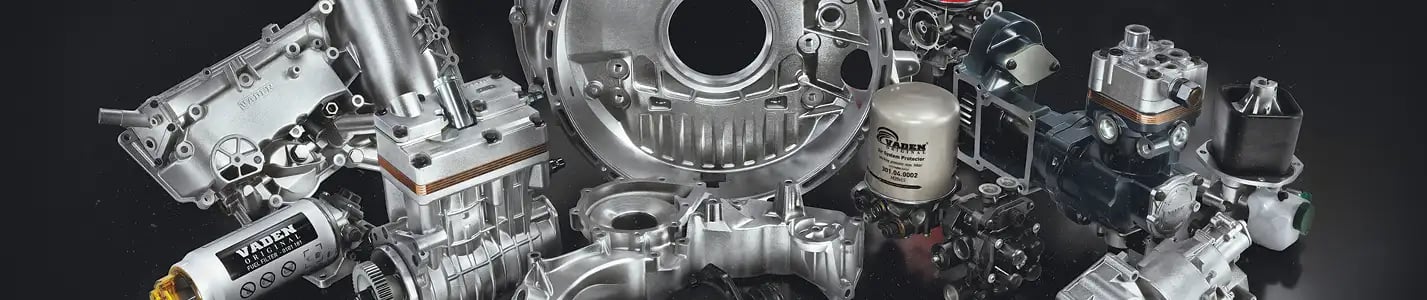
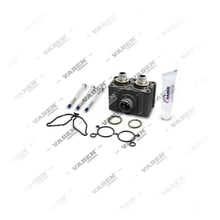
What Is a Gearbox Housing Heavy Series Coil?
The Transmission Housing Heavy-Duty Coil is the electrical drive element of the electro-pneumatic valve assemblies that manage gear shifts in automated manual transmissions (AMT) and pneumatically controlled gearboxes on heavy commercial vehicles. In the field it also goes by names such as "shift coil," "transmission solenoid," or "gear valve coil." Mounted on the air valve block inside the transmission housing, this coil converts the electrical signal sent by the electronic control unit (ECU/TCU) into a magnetic field that moves the valve piston, directing compressed air to the corresponding gear, split, or range actuator. The heavy-duty classification means the coil's winding and housing are reinforced against frequent switching cycles, constant vibration, and engine-bay heat. When this coil fails, gear shifts become delayed, harsh, or stop occurring altogether, making correct coil selection a direct factor in driving comfort and drivetrain service life.
How Does a Gearbox Housing Heavy Series Coil Work?
When the driver moves the gear lever, or the TCU decides to execute an automatic shift, the control unit sends current at a set voltage to the relevant solenoid valve. The coil converts this current into a magnetic field; the resulting force pulls the metal core (armature) inside the valve and opens the air passage. Compressed air flowing through it reaches the pneumatic cylinder that moves the shift fork, engaging the gear. When current is cut, the spring's return force closes the valve and airflow stops. This cycle runs through several coils working separately but in coordination for clutch, split (half-step), and range (group) shifts. Response speed and magnetic strength directly affect shift duration and the power interruption during the shift, which is why the original winding's quality is critical.
Gearbox Housing Heavy Series Coil Technical Specifications
Heavy-duty transmission coils generally operate at a nominal 24V, with winding resistance held within a narrow tolerance band that varies by model; this value is continuously monitored by the transmission control unit, and any deviation triggers a fault code. Mounting dimensions, connector type, and pin layout vary by vehicle and transmission model, so application compatibility should be verified against the original part number. For exact voltage, resistance, and tolerance values, the vehicle manufacturer's current service manual is authoritative.
- Housing Material: High-temperature-resistant thermoplastic or resin-coated metal construction is used.
- Heat Resistance: Winding integrity is maintained at temperatures approaching 100°C around the transmission housing and under continuous vibration.
- Sealing: The O-ring and gasket on the coil body block the ingress of air and moisture, preventing short circuits.
Gearbox Housing Heavy Series Coil Types and Subgroups
- Gear Selection Coil: Drives the main valve assembly that directs the shift fork to the correct gear position.
- Split (Half-Step) Coil: A fast-responding solenoid that controls half-step shifts between the main gears.
- Range (Group) Coil: Manages the shift between the low and high gear groups and operates with a higher airflow rate.
- Clutch Control Coil: Triggers the pneumatic valve that drives the clutch actuator on automated transmissions.
- Compact Coil Assembly with Connector: A one-piece design with an integrated wiring socket that mounts directly onto the valve block.
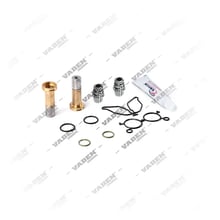
- Replacement Winding and O-Ring Kit: Repair kits used when only the winding or sealing element needs replacing while the coil housing is still sound.
How to Choose the Right Gearbox Housing Heavy Series Coil?
Before selecting a coil, verify the transmission model, its position on the valve block (gear, split, or range), and the original part number; visually similar coils can have different winding resistances, and the wrong choice triggers a fault code. The table below summarizes the key selection criteria.
Transmission Housing Heavy-Duty Coil Selection Criteria| Criterion | What to Check |
|---|
| Nominal Voltage | 24V system compatibility, matching the TCU supply voltage |
| Winding Resistance | Compliance with OEM tolerance range, avoiding fault-code risk |
| Connector Type | Pin and socket match with the vehicle wiring harness |
| Mounting Position | Application specific to the gear, split, or range valve group |
| Transmission Model | Physical fit with the heavy-duty automated transmission housing |
| Sealing Class | Resistance to moisture and dust conditions in the engine bay |
Gearbox Housing Heavy Series Coil Maintenance and Precautions
- Check the Connector Connection: Loose or corroded connectors cause intermittent signals and incorrect gear detection.
- Measure Winding Resistance: Checking resistance with a multimeter during periodic maintenance gives early warning of winding health.
- Inspect the Sealing Elements: Oil or moisture reaching the coil housing creates a short-circuit risk.
- Follow the Mounting Torque: Overtightening can crack the housing, while a loose mount leads to lost contact from vibration.
- Replace with the Original Part Number: An incompatible coil can disrupt the valve block's airflow and shift timing.
Common Faults and Solutions
- Delayed or Harsh Gear Shifts: A weakened magnetic field or partial winding failure; measure the coil's resistance and replace it with the OEM equivalent.
- Transmission Fault Code (Solenoid Circuit Fault): An open or short circuit; check the connector and winding, and renew the coil if necessary.
- Failure to Engage a Specific Gear: Complete failure of the relevant split or range coil; diagnose and replace it.
- Shutdown After Overheating: Winding insulation damaged by heat; check airflow around the housing and coil quality.
- Signal Loss from Vibration: Loose mounting or fatigued connector pins; recheck mounting torque and harness fixation.
Why Choose VADEN ORIGINAL Gearbox Housing Heavy Series Coil?
- OE-Spec Manufacturing: Winding resistance, connector type, and housing dimensions match the original transmission valve block exactly.
- Broad OEM Cross-Reference: Cross-referenced against numerous part numbers used in heavy-duty automated transmissions.
- Vibration- and Heat-Resistant Construction: Reinforced winding insulation delivers long service life under engine-bay conditions.
- Consistent Shift Performance: Accurate magnetic response supports smooth, on-time gear shifts.
- Exported to More Than 100 Countries: Manufactured to the quality control standards trusted by global fleet operators.
Conclusion
The Transmission Housing Heavy-Duty Coil is a small but critical component that determines the speed, precision, and reliability of gear shifts in heavy commercial vehicles. A coil selected with the correct winding resistance, connector match, and mounting position prevents transmission fault codes and preserves driving comfort. VADEN ORIGINAL, built to OE specifications, delivers a reliable, long-lasting solution for heavy-duty transmission housings.
Frequently Asked Questions (FAQ)
What happens when the Transmission Housing Heavy-Duty Coil fails?
When the coil fails, the corresponding gear, split, or range shift becomes delayed, harsh, or fails to occur at all. The transmission control unit typically raises a solenoid circuit fault code, and the vehicle may enter limp-home mode, continuing to operate with a limited selection of gears.
Why does the coil's winding resistance matter?
Winding resistance determines whether the coil generates the correct magnetic field to move the valve piston on time. A value outside the OEM tolerance range is read as a fault by the control unit and degrades shift performance.
What voltage does the Transmission Housing Heavy-Duty Coil operate at?
Heavy commercial vehicles commonly use 24V nominal systems. Since exact voltage and resistance values can vary by transmission model, it is best to check the vehicle's current service manual.
What should be checked when replacing the coil?
Before installation, confirm that the connector type, pin layout, and position on the valve block (gear, split, or range) match correctly. Because overtightening can crack the housing, mounting torque should be followed, and sealing elements should be renewed at the same time.
Which vehicles are VADEN ORIGINAL coils compatible with?
VADEN ORIGINAL transmission housing coils are manufactured to OE dimensions to match the valve blocks of automated manual transmissions used in heavy commercial vehicles. Exact application compatibility should be verified against the transmission model and original part number.
Related technical guide: Heavy-Duty Truck Gearbox: Faults, Replacement & Maintenance