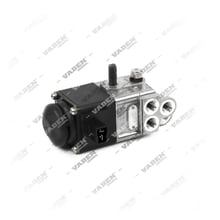
What is a Gate Control Valve?
The Door Control Valve in the VADEN range is manufactured to original flow rate and switching characteristics, supporting safe and predictable operation of passenger doors.
What are the functions of the Gate Control Valve?
This valve carries out several functions together to keep the passenger door system safe and comfortable.
- Air routing: Directs compressed air to the opening or closing side of the door cylinders.
- Speed control support: Regulates air flow rate, contributing to controlled rather than abrupt door opening/closing.
- Control integration: Converts the command from the driver's lever or electronic switch into pneumatic motion.
- Safety interlock support: Works together with interlock systems that prevent vehicle movement while the door is open, increasing safety.
- Pressure release: Safely vents excess pressure from the system after closing.
What are the symptoms of Gate Control Valve failure?
Valve failures cause direct, noticeable problems in passenger door operation.
- Slow or stiff door opening/closing: Wear of moving parts inside the valve makes air flow irregular.
- Door not fully opening/closing: A valve positioning fault results in insufficient air reaching the door cylinders.
- Air leak noise: Worn internal seals can cause a continuous whistling-like air leak.
- Door interlock warning: When the valve signal is not transmitted correctly, the vehicle's movement interlock system can trigger a false warning while the door is open.
- Sudden/hard closing: If the speed control function fails, the door may close faster and harder than expected — a passenger safety risk.
How is the Gate Control Valve inspected?
Inspection should be done with the vehicle stationary and the door system engaged.
- Visual inspection: Check the valve body, hose connections, and gasket surfaces for cracks or leak traces.
- Function test: Test opening, closing, and mid-position hold functions in sequence via the door control lever/switch.
- Speed/flow observation: Observe whether door opening and closing speed is normal and symmetric.
- Pressure test: Compare air pressure at valve inlet and outlet against manufacturer values.
- Interlock test: Check whether the vehicle's movement interlock system responds correctly while the door is open.
What should be considered during replacement?
Since replacing the Door Control Valve directly concerns passenger safety, it should be done carefully.
- Correct reference: Select the original valve matching the door system manufacturer and vehicle model.
- Hose connections: Connect inlet, outlet, and control lines to the correct ports, sealed properly.
- Adjustment/calibration: Readjust speed control screws to manufacturer values if needed.
- Torque values: Tighten connection fasteners to manufacturer torque; the vehicle's current OE service manual governs the exact value.
- Interlock test: Always confirm the movement interlock function works with the door open after installation.
- Repeated function test: Open and close the door several times to confirm smooth, symmetric motion.
How to choose the right Gate Control Valve?
Selection should consider door system type, number of ports, and control method together.
Door Control Valve selection criteria| Criterion | Description |
|---|
| Door system type | Must fully match the vehicle's door manufacturer and model |
| Number of ports | Correct connection for open/close/mid-position functions |
| Control method | Compatible with mechanical lever or electronic switch |
| Air flow rate | Must meet the demand of the door cylinders |
| Material/durability | Wear resistance suited to frequent-use conditions |
Maintenance and service life
Since the Door Control Valve is engaged hundreds of times a day, it is prone to mechanical fatigue and seal wear. Regular air quality control (dryer maintenance) reduces moisture and contamination inside the valve, extending its life. Testing valve speed and function during periodic door system maintenance helps catch potential faults early. Given the intensive use in public transport vehicles, this valve's condition should be monitored regularly for passenger safety.
VADEN Gate Control Valve
VADEN offers the door control valve for the passenger door systems of buses and midibuses in original flow rate and switching characteristics. Its reliable, repeatable operation supports passenger safety and long door system life. Durable against frequent door use, it also helps reduce fleet-wide downtime caused by failures for urban public transport operators.
Frequently Asked Questions (FAQ)
What does a Door Control Valve do?
It directs compressed air to the door cylinders, controlling the opening and closing motion of passenger doors.
What happens when a Door Control Valve fails?
The door may open/close slowly or stiffly, fail to open fully, or an air leak noise and interlock warning may appear.
Is a door closing too hard dangerous?
Yes, a valve with a faulty speed control function can cause the door to close faster than expected, posing a passenger safety risk.
Why is an interlock test important after replacing the valve?
It confirms the safety system that prevents vehicle movement while the door is open is working correctly, and must always be tested after installation.
What should be considered when choosing a Door Control Valve?
Select the original reference matching the door system manufacturer, number of ports, and control method (mechanical/electronic).
Vehicle and engine pages that list parts from this category: Otokar
Related technical guide: Foot Brake Valve: Faults, Replacement & Maintenance Guide