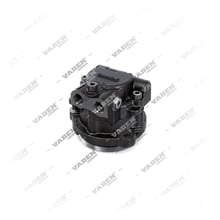
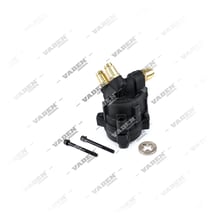
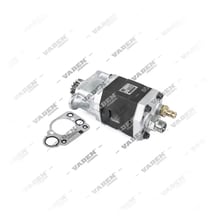
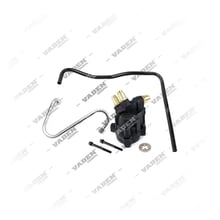
What Is a Fuel Pump?
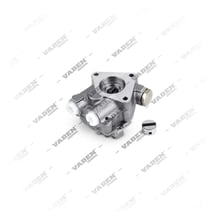
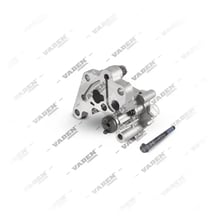
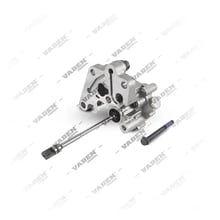
Fuel Pump is the complete pump unit that delivers fuel to a heavy commercial vehicle's engine at the required pressure and with a steady flow. This category covers cases where a worn or failing pump needs a full unit replacement rather than part-by-part repair. On the shop floor it is also known as a lift pump, transfer pump, or fuel feed unit, mounted directly to the engine block or onto the fuel line. Choosing a complete Fuel Pump means matching housing type, mounting point, drive method, and flow capacity to the vehicle's fuel system. Unlike repair kits, the products in this category are supplied as a single piece, complete with housing and internal mechanism.
How Does a Fuel Pump Work?
A complete Fuel Pump draws fuel from the tank through the suction line and, using its internal mechanism, pressurizes it before delivering it to the injection system or carburetor. In mechanical-type pumps this motion is driven off the engine's camshaft, while electric types use an electric motor to keep the pump rotor running continuously. The diaphragm, piston group, or gear set inside the pump moves fuel forward in a steady flow through intake and discharge strokes. The goal of a complete unit replacement is not to repair the worn mechanism piece by piece, but to restore system integrity with a new pump built to production tolerances and set at the factory.
Fuel Pump Technical Specifications
When choosing a complete Fuel Pump, the deciding criteria are pump type, flow capacity, operating pressure range, housing material, and connection dimensions. Pressure and flow values vary by vehicle, engine displacement, and fuel system, so exact figures should always be confirmed against the vehicle's current service manual.
- Pump Type: A mechanical, electric, or electronically controlled drive design must match the vehicle's system.
- Housing Material: Corrosion-resistant aluminum alloy or steel-based housings withstand the fuel's chemical exposure and heat.
- Connection Dimensions: Flange size, inlet-outlet line diameter, and bolt pattern must match the original unit exactly.
- Flow and Pressure Range: Values vary with engine displacement and should be selected to match the system's requirements.
Fuel Pump Types and Subgroups
- Mechanical Fuel Pump: Driven off the camshaft, this is the classic type most commonly used on the feed line of diesel engines.
- Electric Fuel Pump: Driven by an electric motor, it provides pre-feed the moment the ignition is switched on, helping the engine start faster.
- Diaphragm Pump Group: Pushes fuel forward with a flexible diaphragm motion, preferred on low-pressure feed lines.
- Gear-Type Transfer Pump: A complete unit with a gear mechanism that carries fuel into the high-pressure injection system at a constant flow rate.
- Hand-Primed (Priming) Combination Unit: Complete pump groups fitted with a manual lever for bleeding air and initial priming.
- Complete Mounting Kit Pump: A full pump unit supplied with gaskets, fasteners, and flange hardware, ready for direct installation.
How to Choose the Right Fuel Pump?
When buying a complete pump, the priority is finding a product that matches the vehicle's engine code, chassis number, or original part number exactly. Repairing with a kit only makes sense when specific internal parts (diaphragm, valve, gasket) are worn and the housing is sound. If there is a crack in the housing, permanent damage to the internal mechanism, or a recurring fault, complete unit replacement is the more reliable and, over time, more economical solution. The table below summarizes the key differences between the two approaches.
Complete Fuel Pump Replacement vs. Repair Kit Comparison| Criterion | Complete Pump Replacement | Repair with Kit |
|---|
| Suitable Situation | Housing damage, internal mechanism failure, recurring fault | Single-part wear, housing intact |
| Installation Time | Short, direct fit | Longer, requires disassembly and reassembly |
| Factory Tolerance | Arrives at OE dimensions, pre-set | Requires post-installation inspection |
| Long-Term Reliability | High, all internal components are new | Varies depending on the repaired part |
| Overall Cost Approach | More economical for recurring faults | Suitable for a single minor fault |
Fuel Pump Maintenance and Key Considerations
- Choose an OEM-Dimension Product: Before installation, compare flange size, inlet-outlet diameters, and bolt pattern with the original pump.
- Renew the Sealing Elements: Even with a complete pump replacement, fit new inlet-outlet gaskets and connection rings.
- Clean the Fuel Line: Remove dirt and particles left in the line before installation; otherwise the new pump can fail again in a short time.
- Don't Skip Bleeding the Air: Make sure no air remains in the system after installation; use the hand pump or priming procedure if needed.
- Check the Drive Mechanism: On mechanical types, confirm the camshaft drive element is not worn, otherwise the new pump will wear prematurely too.
- Apply Torque per the Manual: Tighten connection bolts to the torque value specified in the vehicle's service manual; overtightening can crack the housing.
Common Faults and Solutions
- Engine Hard to Start or Stalling: Insufficient fuel pressure; check the pump's flow and pressure values, and replace the complete pump if needed.
- Air Bubbles Visible in the Fuel Line: Leak or loose connection in the suction line; check the line gaskets and pump inlet.
- Fuel Leaking from the Pump: Cracked housing or worn sealing element; if the leak originates from the housing, complete pump replacement is required.
- Rough Idle or Power Loss: Fluctuating fuel flow; check the complete unit for possible wear in the internal mechanism.
- Abnormal Noise While the Pump Is Running: Worn gear set or bearing; if the noise persists, complete pump replacement is recommended.
- Electric Pump Not Running at All: Electric motor failure or a broken connection; check the power supply first, then the pump housing.
Why VADEN ORIGINAL?
- Manufactured to OE Dimensions: Housing, flange, and connection dimensions match the original pump exactly, reducing the need for extra adjustment.
- Broad OEM Match Range: Options compatible with applications from brands such as Mercedes-Benz, MAN, Scania, Volvo, DAF, Iveco, and Renault Trucks.
- Factory-Tolerance Internal Mechanism: Pressure regulation and flow values are matched to OE standards during production.
- International Quality Assurance: VADEN ORIGINAL products are exported to more than 100 countries and used reliably across diverse fleet structures.
- Long-Term Reliability: Correct OEM matching and consistent production quality reduce the risk of recurring faults.
Conclusion
The Fuel Pump is a critical complete unit for engine performance and fuel system integrity. In cases of housing damage or a recurring fault, complete unit replacement should be chosen over a repair kit, with OEM dimensions and connection compatibility as the primary selection criteria. With correct installation and regular maintenance, VADEN ORIGINAL complete pumps help keep the vehicle running reliably and without interruption.
Frequently Asked Questions (FAQ)
When should a complete Fuel Pump be replaced?
A complete unit replacement is recommended if there is a crack in the pump housing, permanent damage to the internal mechanism, or a recurring fault. If only a single part such as the diaphragm, valve, or gasket is worn and the housing is sound, repair with a kit may be enough.
What is the difference between a Fuel Pump and a repair kit?
A complete Fuel Pump is a full unit that arrives as a single piece, including the housing, internal mechanism, and connection hardware. A repair kit contains only the worn internal parts (such as the diaphragm, valve, or gasket) and is used when the housing itself is sound.
What could cause the Fuel Pump to make the engine hard to start?
Difficulty starting or frequent stalling is usually caused by insufficient fuel pressure. Check the pump's flow and pressure values, and if wear is suspected in the internal mechanism, consider a complete unit replacement.
Which vehicles are VADEN ORIGINAL Fuel Pumps compatible with?
VADEN ORIGINAL complete pumps are offered with options suited to various models from heavy commercial vehicle brands such as Mercedes-Benz, MAN, Scania, Volvo, DAF, Iveco, and Renault Trucks. Compatibility should be confirmed against the engine code or part number before ordering.
What should be considered when installing a Fuel Pump?
Make sure the connection flange and inlet-outlet dimensions match the original unit exactly, renew the sealing elements, and confirm no air remains in the system after installation. Connection bolts should be tightened to the torque value specified in the service manual.
Related technical guide: Diesel Injection Pump: Faults, Replacement & Maintenance