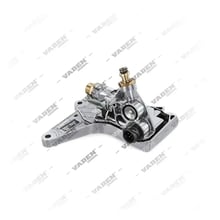
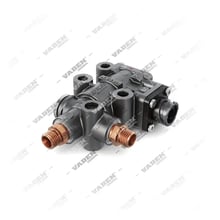
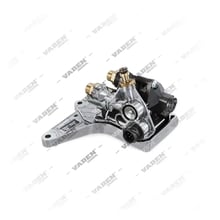
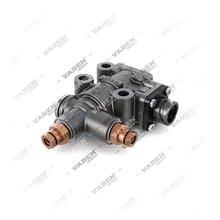
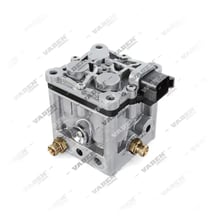
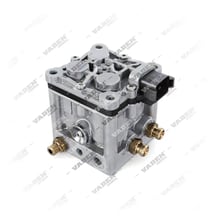
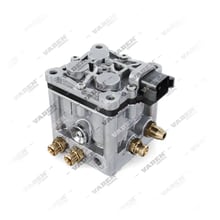
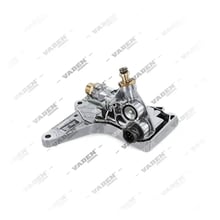
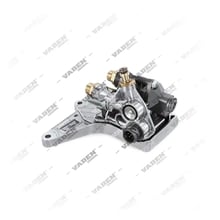
What Is an Exhaust Brake Valve?
The exhaust brake valve is a complete pneumatic control unit mounted on the engine exhaust line of heavy commercial vehicles, engaging and disengaging the exhaust brake system on command. When the driver presses the exhaust brake switch, the valve restricts the exhaust gas outlet, building back-pressure in the engine so the vehicle slows down without loading the friction service brakes. This category covers not the individual internal parts but the complete exhaust brake valve unit, supplied with its housing, butterfly/slide mechanism, pneumatic actuator and gasket set together. In the field it is also known as the exhaust flap valve, engine brake valve or exhaust throttle valve, and it is manufactured in various housing diameters and connection types for Mercedes-Benz, MAN, Scania, Volvo, DAF, Iveco and Renault Trucks heavy trucks and buses.
How Does an Exhaust Brake Valve Work?
When the exhaust brake is activated, the vehicle's control unit sends compressed air through the pneumatic line to the valve's actuator. This air pushes the butterfly or slide mechanism into the closed position, restricting the free flow of exhaust gas. Because the engine keeps running against this trapped gas, the cylinders behave much like a compressor, and this natural resistance slows the vehicle down. The system engages the instant the driver releases the accelerator or presses the brake pedal, and it is usually interlocked with the clutch or gear lever sensors so it cannot engage at the wrong moment. Once released, spring force or reverse air pressure reopens the butterfly and exhaust flow returns to normal.
Exhaust Brake Valve Technical Specifications
Complete exhaust brake valve units vary by housing material, butterfly diameter, actuator type and flange size. Housings are typically cast or stainless steel, engineered for high exhaust temperatures and vibration. The actuator may be single-acting or double-acting, with operating pressure varying by manufacturer. The flange diameter and bolt pattern must match the vehicle's exhaust pipe exactly; an incorrect size makes installation impossible and causes leaks. Torque values, pressure ranges and tolerances should always be checked against the vehicle's current service manual, since these vary by model and engine type.
Exhaust Brake Valve Selection and Application Comparison| Criterion | What to Check |
|---|
| Housing and Flange Size | Exhaust pipe diameter and bolt pattern must match the original part exactly |
| Actuator Type | Single-acting or double-acting pneumatic cylinder must be compatible with the vehicle's control system |
| Operating Pressure | Must operate within the pneumatic pressure range specified by the vehicle manufacturer |
| OEM Reference Number | Cross-check against the Wabco, Knorr-Bremse or vehicle manufacturer's OE number |
| Complete Unit or Repair Kit | Choose a complete unit if the housing shows wear or cracking; a repair kit is sufficient for gasket or seal failure alone |
Exhaust Brake Valve Types and Subgroups
- Butterfly-Type Exhaust Brake Valve: Restricts flow with a rotating disc inside the exhaust pipe; the most widely used type.
- Slide-Type Exhaust Brake Valve: Narrows the exhaust cross-section with a linearly moving slide, preferred on certain engine families.
- Single-Acting Pneumatic Actuator Valve: Closes under air pressure and opens by spring force.
- Double-Acting Pneumatic Actuator Valve: Uses air pressure in both directions, giving a faster response.
- Integrated Position Sensor Valve: Includes a sensor that reports valve position to the vehicle's control unit.
- Flanged Connection Assemblies: Complete mounting kits supplied with a vehicle-specific flange size and gasket set.
How to Choose the Right Exhaust Brake Valve
To make the right selection, first read the vehicle's chassis number or the OE number stamped on the existing valve and compare it against the VADEN ORIGINAL catalogue cross-reference. The housing diameter, flange pattern and actuator type must be identical to the original; a valve that looks similar but differs in size will cause an air or exhaust leak after installation. The choice between a complete unit and a repair kit depends on the failure source: a cracked housing, heavy corrosion or a loose butterfly shaft calls for a complete replacement, while gasket or seal hardening alone may only need a repair kit. Pressure and torque values should always follow the vehicle's current service manual.
- Verify the OE Number: Compare the number on the existing valve or vehicle catalogue with the VADEN ORIGINAL cross-reference.
- Check Housing and Flange Size: The connection diameter and bolt pattern must match the original part exactly.
- Confirm the Actuator Type: Verify from the vehicle's pneumatic diagram whether it is single-acting or double-acting.
- Identify the Failure Source: Housing damage calls for a complete replacement; gasket wear alone calls for a repair kit.
Exhaust Brake Valve Maintenance and Points to Watch
- Pre-Installation Surface Check: Make sure the connection surface is clean, free of burrs and not deformed.
- Correct Torque Application: Tighten the flange bolts to the manufacturer's torque value in a crosswise sequence.
- Pneumatic Line Inspection: Regularly check the air hoses feeding the actuator for leaks, cracks and loose connections.
- Free Movement of Moving Parts: Make sure the butterfly or slide mechanism is not seizing due to soot buildup.
- Position Sensor Testing: On sensor-equipped valves, periodically check for fault codes.
Common Failures and Solutions
- Exhaust Brake Does Not Engage: The actuator may not be receiving air; check the air line and solenoid, replacing the valve if necessary.
- Does Not Disengage / Loss of Engine Braking: The butterfly may be seized with soot or the spring broken; disassemble the housing and inspect the mechanism.
- Abnormal Noise from the Exhaust: The flange gasket may be worn or the housing cracked; renew the gasket set or replace the complete unit.
- Smell of Exhaust Leak: The connection bolts may have loosened or the flange surface may be deformed; check the torque and replace the valve if needed.
- Fault Code Keeps Recurring: The position sensor may have failed; test the sensor connection and the sensor itself.
Why VADEN ORIGINAL?
- Manufactured to OE Dimensions: Housing and flange tolerances match the original part exactly, fitting without extra machining.
- Extensive Cross-Reference: A catalogue matched to Wabco and Knorr-Bremse systems makes finding the right part straightforward.
- Durable Material Selection: A housing resistant to heat and vibration delivers long service life under demanding conditions.
- International Supply Reliability: VADEN ORIGINAL products are exported to over 100 countries and trusted across service networks worldwide.
Conclusion
The exhaust brake valve is the complete unit at the heart of the engine brake system, and choosing the right housing size, actuator type and OE match should be central to the decision. With VADEN ORIGINAL exhaust brake valves, you can reliably protect your vehicle's engine brake performance and driving safety.
Frequently Asked Questions (FAQ)
When an exhaust brake valve fails, should it be replaced completely or is a repair kit enough?
If the housing is cracked, corroded or the butterfly shaft has play, a complete unit replacement is required. If the problem is limited to gasket or seal hardening, a repair kit may be sufficient. The valve should be removed and the housing integrity inspected before deciding.
Which vehicles use an exhaust brake valve?
Exhaust brake valves are used as part of the engine brake system on heavy trucks and buses such as Mercedes-Benz, MAN, Scania, Volvo, DAF, Iveco and Renault Trucks. Housing diameter and actuator type vary depending on the vehicle and engine type.
What should I pay attention to when fitting a new exhaust brake valve?
Make sure the flange size and bolt pattern match the original exactly, that the pneumatic lines are connected correctly, and that the bolts are tightened to the manufacturer's torque value. An incorrect size or insufficient torque leads to an air or exhaust leak.
Does the vehicle lose power if the exhaust brake valve fails to engage?
When the exhaust brake fails to engage, engine brake assistance is lost and the service brakes carry a heavier load on downhill descents; this shows up as reduced braking performance rather than a loss of engine power. The actuator and air line should be checked.
Are VADEN ORIGINAL exhaust brake valves compatible with OEM parts?
Yes, VADEN ORIGINAL exhaust brake valves are dimensioned according to OE systems such as Wabco and Knorr-Bremse and are offered with an extensive cross-reference list. Comparing the OE number before ordering is recommended to confirm correct fitment.
Related technical guide: Exhaust / Engine Brake: Faults, Replacement & Maintenance Guide