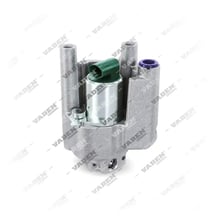
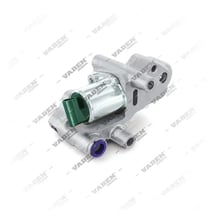
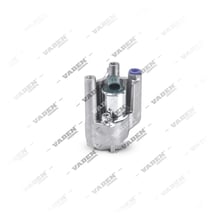
What Is a Engine Brake Valve?
The Control Valve is a complete regulating unit that directs flow through the air and oil circuits of a heavy-duty commercial vehicle engine according to system demand. It senses pressure changes while the engine runs and opens or closes at preset thresholds to route flow to the correct point in the circuit. In the field it is sometimes called a "regulating valve" or "directional control valve," but its function stays the same: cutting off, releasing, or redirecting flow as the engine's subsystems require. This category covers the complete control valve unit; the seals, springs, and gaskets inside it are covered under a separate repair kit category. Applications exist across Mercedes-Benz, MAN, Scania, Volvo, DAF, Iveco, and Renault Trucks engines, with different housing and connection dimensions. VADEN ORIGINAL Control Valve units are manufactured to OE dimensions, engineered as a seamless replacement for the original part.
How Does a Engine Brake Valve Work?
A Control Valve consists of a housing sensitive to the pressure or vacuum signal in the engine circuit, a moving valve element, and a spring assembly that positions that element. When system pressure reaches the specified value, the element inside the valve moves, opening or closing the flow path; flow is then either delivered to or cut off from the relevant line of the circuit. In some applications an electric actuator triggers the valve; in others it works purely through a mechanical spring-pressure balance. As engine speed and load change, the valve continuously readjusts flow to keep the system within its design range, supplying the connected subsystem — air, oil, or cooling circuit — evenly under every operating condition and preventing sudden pressure spikes.
Engine Brake Valve Technical Specifications
Control Valve housings are typically manufactured from pressure-resistant aluminum alloy or cast steel, while the internal gaskets and seals are chosen for resistance to temperature and the fluid type involved. The opening/closing threshold pressure varies by engine and system design, so the vehicle's current service manual should always be consulted for exact pressure or torque values. Because connection dimensions, thread type, and housing length can differ by engine variant, compatibility should be confirmed against the original part number or chassis number before installation.
- Housing Material: Pressure-resistant aluminum alloy or cast steel.
- Sealing Elements: Gasket and seal material suited to temperature and fluid type.
- Opening/Closing Threshold: Pressure/vacuum value that varies by engine and system design.
- Connection Size: Thread type and housing length differ by engine variant.
Engine Brake Valve Types and Subcategories
- Pressure Control Valve: Keeps circuit pressure within a preset range, preventing the system from being overloaded.
- Directional Control Valve: Routes flow between two or more lines to feed the correct circuit.
- One-Way (Check) Control Valve: Allows flow in only one direction, preventing backflow.
- Vacuum-Controlled Valve: Operates based on the engine's vacuum signal to trigger the relevant actuator.
- Electro-Pneumatic Control Valve: A driver-controlled type that opens and closes flow based on a signal from the engine's electronic control unit.
- Thermostatic Control Valve: Directs flow according to temperature change to regulate the engine's warm-up process.
How to Choose the Right Engine Brake Valve
Choosing the right Control Valve starts with verifying the vehicle's engine code and original part number, since opening pressure and connection size can vary by model even when the housing looks identical. The second step is identifying the circuit the valve operates in — air, oil, vacuum, or cooling — as internal structure and material differ for each. Third, decide whether the valve needs a complete replacement or just a repair kit; wear or cracking in the housing calls for a full replacement. The table below summarizes the key selection criteria.
Control Valve Selection Criteria| Criterion | What to Check |
|---|
| Circuit Type | Internal structure and material suited to the air, oil, vacuum, or cooling circuit |
| Connection Size | Thread type, housing length, and mounting point must exactly match the original |
| Trigger Type | Distinction between mechanical spring, vacuum signal, or electro-pneumatic actuator |
| Engine Compatibility | Confirmation of Mercedes-Benz, MAN, Scania, Volvo, DAF, Iveco, or Renault Trucks engine code |
| Replacement Scope | Whether a complete valve or an internal repair kit is required |
Engine Brake Valve Maintenance and Points to Watch
- Pre-Installation Cleaning: Clear the valve seat and mating surfaces of dirt and old gasket residue.
- Correct Tightening Torque: Overtightening deforms the housing, while a loose fit causes leaks; use the torque value from the vehicle manufacturer's current service manual.
- Direction and Flow Check: Pay attention to the flow direction marking on the valve during installation; reversed installation will keep the system from working.
- Leak Test on First Start: After starting the engine, check the connection points for air or oil leaks.
- Periodic Visual Inspection: If the housing shows cracking, corrosion, or signs of overheating, the valve should be replaced as a complete unit.
Common Faults and Their Solutions
- Irregular System Pressure: The valve spring may have weakened or the internal surface may be worn; the valve should be replaced as a complete unit.
- Continuous Leak from the Valve: The gasket or seal is damaged; if the housing is sound this can be resolved with a repair kit, otherwise a complete valve is needed.
- Valve Won't Open or Sticks: Contamination or corrosion has built up inside; if cleaning is not enough, the valve must be replaced.
- Extended Engine Warm-Up Time: A thermostatic or vacuum-controlled valve may be stuck in the engaged position; the valve should be tested and replaced if necessary.
- Signal Fault in an Electro-Pneumatic Valve: The actuator or connector socket may be faulty; check the wiring and connector before considering valve replacement.
Why VADEN ORIGINAL?
- Manufactured to OE Dimensions: Housing, connection size, and opening pressure are produced using the original part as the reference.
- Broad OEM Match Coverage: Cross-reference support is provided for Mercedes-Benz, MAN, Scania, Volvo, DAF, Iveco, and Renault Trucks engines.
- Durable Material Selection: Housing and gasket materials resistant to pressure and temperature deliver a long service life.
- Exported to More Than 100 Countries: Products that pass global quality control processes are used with confidence across different markets.
Conclusion
The Control Valve preserves both system safety and component lifespan by keeping pressure and flow at the correct point in the engine circuit. Selected by the correct engine code and circuit type, it prevents sudden pressure spikes and avoids unnecessary wear on neighboring components. VADEN ORIGINAL Control Valve, manufactured to OE dimensions, offers a reliable and long-lasting solution.
Frequently Asked Questions (FAQ)
What does a Control Valve do?
A Control Valve routes air, oil, or vacuum flow in the engine circuit according to pressure changes. It opens and closes at preset threshold values to ensure the relevant subsystem is fed correctly.
What is the difference between a Control Valve and a repair kit?
A Control Valve is a complete unit including the housing, valve element, and spring assembly. A repair kit covers wear parts inside the valve such as gaskets, seals, and springs; if the housing shows wear or cracking, a complete valve should be chosen instead.
What symptoms appear when a Control Valve fails?
Irregular system pressure, leaks, the valve failing to open or sticking, extended engine warm-up time, and signal faults in electro-pneumatic types are common symptoms. The valve should be checked if any of these appear.
Which engines is the VADEN ORIGINAL Control Valve compatible with?
The VADEN ORIGINAL Control Valve covers applications for Mercedes-Benz, MAN, Scania, Volvo, DAF, Iveco, and Renault Trucks engines. Compatibility should be confirmed via the engine code or original part number before ordering.
What should be considered when installing a Control Valve?
The valve seat should be cleaned, the correct tightening torque applied, and the flow direction marking on the valve observed. Check the connection points for leaks the first time the engine is started.
Related technical guide: Crankshaft Seal Oil Leak: Symptoms and Causes