What is the EGR Valve?
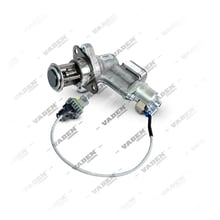
The EGR Valve is a unit fitted between the exhaust manifold and the intake manifold, containing a moving disc or conical valve element, controlled by an electric stepper motor or a pneumatic actuator. In modern systems the valve position is continuously monitored by a position sensor and fed back to the ECU. On some engines the EGR valve works integrated with an EGR cooler, which also lowers the temperature of the returning gas.
What are the functions of the EGR Valve?
- NOx reduction: limits nitrogen oxide formation by lowering combustion temperature.
- Ratio control: precisely adjusts the amount of recirculated exhaust gas based on engine load and speed.
- Emissions compliance: provides the gas mixture ratio required to meet Euro emission standards.
- Feedback: reports actual valve opening to the ECU via the position sensor, enabling closed-loop control.
What are the symptoms of EGR Valve failure?
When the valve sticks open or closed due to soot build-up, the malfunction indicator lamp (MIL) illuminates and a fault code for the EGR circuit is usually logged. Rough idling, excessive exhaust smoke (black or white) beyond the acceptable level, increased fuel consumption and power loss are typical symptoms. If the valve gets stuck fully open, the engine takes in excess EGR gas and loses power; if stuck fully closed, NOx emissions rise, and on some vehicles an abnormal increase in AdBlue consumption may be observed.
How is the EGR Valve checked?
The EGR position sensor data is read with a diagnostic tool and the commanded opening is compared with the actual opening. When the valve is removed and visually inspected, the disc or conical surface is checked for soot build-up, sticking or mechanical wear. In active test mode, the valve is forced open and closed and its response time and full range of motion are observed. Resistance is measured on the electrical connection to confirm the stepper motor or solenoid coil is sound.
What should be considered during replacement?
Connection gaskets must always be renewed and old gasket residue cleaned off when replacing the valve; reusing the old gasket causes an air/gas leak. Before plugging in the electrical connector, the pin layout and locking mechanism should be checked, as a poorly seated connector can cause faulty sensor readings. After installation, run the valve adaptation or learning procedure with the diagnostic tool if applicable, and monitor at idle and during a road test to confirm the fault code does not recur.
How to choose the right EGR Valve?
Valve selection should be based on the engine code and emission standard (Euro 5/6, etc.), as different valve variants can exist for different emission levels within the same engine family. The actuator type (electric stepper motor or pneumatic) must match the original exactly, otherwise the ECU will report a communication error. VADEN EGR valves are manufactured to OE electrical interface and connection dimensions, offering a direct-fit solution.
EGR Valve - general technical reference values| Parameter | Approximate range |
|---|
| Operating temperature | -40 degC ... +150 degC (electronic section) |
| Exhaust gas temperature (valve body) | High temperature, varies by engine type |
| Control type | Electric stepper motor or pneumatic actuator |
| Feedback | Position-sensor equipped (closed-loop control) |
| Maintenance interval | Periodic cleaning recommended based on soot buildup |
The values in the table are general reference figures; for exact temperature and electrical values the engine current OE service manual is authoritative.
Maintenance and service life
EGR valve life varies depending on the engine oil quality, air filter maintenance, and operating conditions (extended idling, low load). Regular short-distance driving increases soot buildup and can cause the valve to stick prematurely; periodic cleaning or timely replacement preserves engine performance and emissions compliance.
VADEN EGR Valve
VADEN manufactures EGR valves for heavy-duty diesel engines to OE electrical interface and connection dimensions, reliably supporting emissions compliance and engine performance.
Frequently Asked Questions (FAQ)
What does the EGR valve do
It sends a portion of exhaust gas back into the intake manifold, lowering combustion temperature and reducing nitrogen oxide emissions.
What happens if the EGR valve fails
Rough idling, excessive smoke, increased fuel consumption and the malfunction lamp illuminating can occur.
Why does the EGR valve stick
Soot and oily deposits accumulating on the disc or conical valve surface restrict its movement and cause it to stick.
Should the gasket be renewed during valve replacement
Yes, connection gaskets must always be renewed; reusing the old gasket causes an air/gas leak.
What should be checked when selecting an EGR valve
The engine code, emission standard and actuator type must match the original exactly.
Related technical guide: EGR Valve & EGR Flap: Faults, Replacement and Maintenance