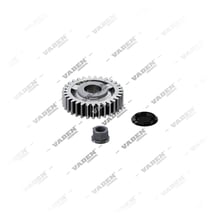
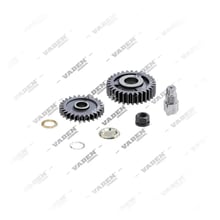
What is an Compressor Pinion Kit?
The gear set is a drive assembly made of two or more meshing gear wheels, generally manufactured from hardened steel. The drive gear on the engine side and the gear connected to the compressor crankshaft mesh together to transmit rotational motion; in some applications an idler gear is also part of the set. The tooth profile is generally helical, which provides quieter operation and smoother power transfer compared with a straight-cut gear.
What are the functions of an Compressor Pinion Kit?
The set's main function is to transmit engine power to the compressor without loss and in sync.
- Power transmission: Transmits the rotational motion taken from the engine crankshaft to the compressor piston mechanism.
- Synchronization: Ensures the compressor operates proportionally to engine speed, supporting correct pressure generation.
- Vibration damping: The gear profile is designed to reduce impact effects during sudden load changes.
- Extended service life support: The correct tooth profile and material hardness delay wear and extend compressor life.
- Noise control: The helical tooth profile keeps operating noise in the drive line low.
What are the symptoms of an Compressor Pinion Kit failure?
When the gears wear out or break, irregular compressor operation and characteristic mechanical noises appear.
- Metallic noise: A ringing, knocking or whining sound coming from the compressor area.
- Pressure irregularity: Brake system air pressure failing to build within the target time or fluctuating.
- Increased vibration: Above-normal vibration felt in the compressor housing.
- Gear debris: Metal shavings accumulating in the oil filter or at the bottom of the sump.
- Longer pressure build-up: The brake system's air tank taking longer than normal to reach target pressure.
How is an Compressor Pinion Kit inspected?
Inspection requires removing the compressor and closely examining the gear surfaces.
- Visual check: Look for pitting, chipped teeth or excessive wear on tooth surfaces.
- Backlash measurement: Compare the flank clearance between gears against the manufacturer's tolerance.
- Sound test: Listen to the compressor area with a stethoscope while the engine is running to locate the source of any abnormal noise.
- Oil analysis: Assess wear level by examining the density of metal particles in the oil.
- Tooth surface color check: Look for discoloration or burn marks caused by overheating.
What should be considered when replacing it?
Replacing the gear set is a process that requires precise alignment and the correct assembly sequence.
- Replace as a set: Meshing gears must always be replaced together; replacing a single gear leads to uneven wear.
- Alignment: Installing the gears according to their timing marks preserves synchronization.
- Tightening torque: Fastening nuts should be tightened to the manufacturer's value; the vehicle's current OE service manual is the reference for the exact value.
- Lubrication check: Apply the appropriate oil to the gear surfaces before assembly.
How is the right Compressor Pinion Kit selected?
Selecting the correct set requires evaluating the compressor model, tooth count and connection type together. Gears from different manufacturers that look identical can differ slightly in tooth angle, so installation without confirming the original part number is not recommended.
Compressor gear set selection criteria| Criterion | Description |
|---|
| Compressor model | A set matching the vehicle's compressor type code should be selected |
| Tooth profile | Tooth count and module must match the original set |
| Material hardness | Hardened and ground steel gears are preferred |
| OE reference | Should be cross-checked against the original equipment number |
| Idler gear | If the application uses an idler gear, check whether the set includes this part as well |
Maintenance and service life
Since the gear set is fed by the engine lubrication circuit, it has no maintenance schedule of its own; its service life depends on engine oil quality and the oil change interval. Regular oil changes and monitoring oil pressure delay gear wear. Insufficient lubrication, operation under excessive load and misalignment are the main factors that shorten the gear set's service life. Long idling periods or frequent cold starts can delay formation of the lubricating film, increasing the risk of dry friction on the gear surfaces during the first revolutions. Because the compressor shares the same lubrication circuit as the engine, adhering to the engine's oil change interval directly affects the gear set's performance.
VADEN Air Brake Compressor Gear Set
VADEN offers gear sets matching OE dimensions for heavy commercial vehicle air brake compressors. Made from hardened steel, the products are included in the catalog matched to the tooth profile specific to each compressor model and cross-referenced with the original part number.
Frequently Asked Questions (FAQ)
What does an air brake compressor gear set do
It transfers motion from the engine crankshaft to the compressor piston mechanism in sync, enabling the brake system to build the required air pressure.
What symptoms appear when the gear set fails
Metallic noise from the compressor area, irregular brake air pressure and increased vibration are the most common symptoms.
Should the gear set be replaced as a single gear
No, all meshing gears must be replaced together; single-sided replacement causes uneven wear and premature failure.
What is the most common cause of gear wear
Insufficient or contaminated engine oil combined with continuous operation under excessive load are the main causes of gear wear.
How do you choose the correct gear set
Select the original set matching the compressor model, tooth count and module, using the correct OE reference number.
Related technical guide: Air Brake Compressor: Faults, Replacement & Maintenance Guide