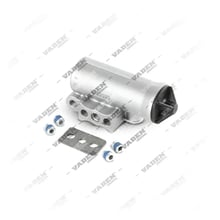
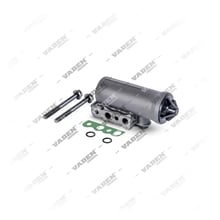
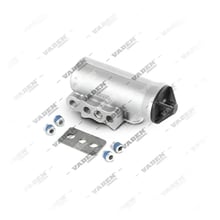
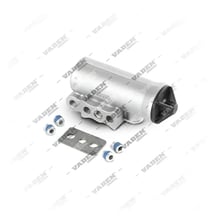
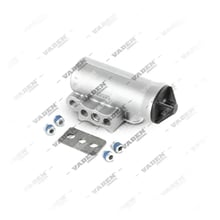
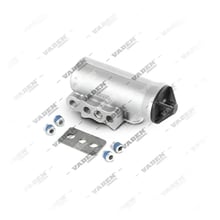
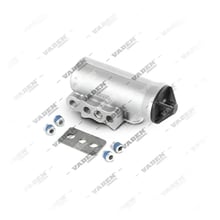
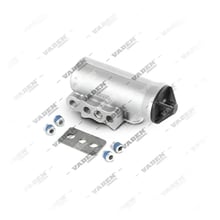
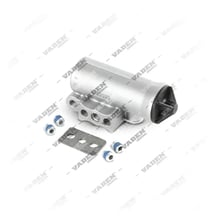
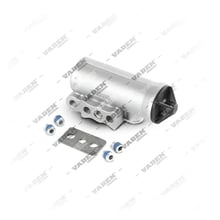
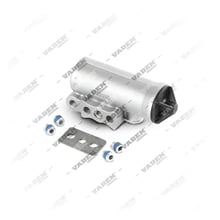
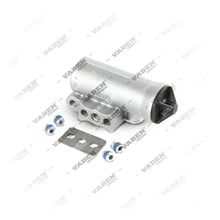
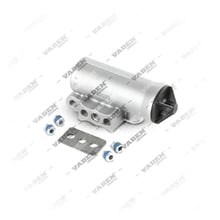
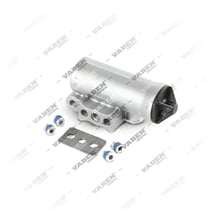
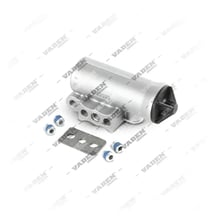
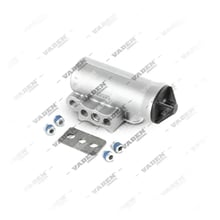
What is a Compressor Governor Valve (Governor)?
Because it sets the system's operating point, a governor that is out of factory calibration or worn directly affects both brake safety and compressor life. VADEN manufactures this part to match original OE dimensions and tolerance values.
What are the functions of a Compressor Governor Valve?
The governor's core functions in the system are:
- Pressure limiting: When reservoir pressure reaches the upper threshold (typically the 8.0-8.5 bar band), it switches the compressor to unload mode, preventing unnecessary load and fuel consumption.
- Reload at lower threshold: When pressure drops below the set lower threshold (typically 6.5-7.0 bar), it returns the compressor to load mode.
- System balance: Provides uninterrupted, balanced pressure across brakes, suspension, and auxiliary air consumers.
- Compressor protection: Prevents continuous under-load operation, avoiding premature wear of compressor pistons, valves, and seal sets.
- Dryer/valve synchronization: Works in coordination with the air dryer and multi-circuit protection valves to maintain system-wide pressure stability.
What are the symptoms of a failing Compressor Governor Valve?
A faulty or worn governor typically shows the following symptoms:
- Pressure fluctuation: The gauge needle swings more than normal or drifts outside the set band.
- Continuous unloading noise: The compressor unloads earlier or more frequently than expected, with a constant air discharge sound from the exhaust port.
- Pressure never builds: If the valve stays open and holds the compressor in unload mode continuously, the tank never fills.
- Excessive pressure buildup: If the valve fails to close at the upper limit, the safety valve engages and the system runs at peak pressure continuously.
- Delayed load/unload response: Reaction time to pressure change lengthens and the compressor overheats.
- Visual findings: Corrosion on the housing, oil/air leakage around the ports, or a seized spring mechanism.
How is a Compressor Governor Valve inspected?
Inspection should be performed with the vehicle parked, the engine running, and system pressure stabilized:
- Gauge monitoring: With the engine idling, observe how long a full cycle takes between the lower and upper pressure thresholds.
- Exhaust port listening: A clear air discharge sound should be heard the moment the compressor unloads at the upper limit; a continuous leak indicates a leaking valve.
- Manometer verification: Compare an independent pressure gauge against the vehicle's gauge to detect calibration drift.
- Line connection check: Inspect inlet, outlet, and unloader lines for cracks, looseness, or blockage.
- Spring and piston movement: On a removed unit, the piston should move freely and the spring should show no permanent deformation.
When in doubt, it is recommended to record a pressure curve with the appropriate diagnostic equipment before replacing the part.
What should be considered during replacement?
Before replacement, fully bleed the system's air, then observe the following:
- Correct part number: Choose the OE reference that exactly matches the compressor model and port diameter; a governor with the wrong threshold setting will unbalance the system.
- Gaskets and O-rings: Always replace old seals at the mating surfaces with new ones; never install dry.
- Leak test: After installation, pressurize the system and check all connections with soap solution or an electronic leak detector.
- Tightening torque: Tighten fasteners to the manufacturer's specified torque; over-tightening can crack the housing. The vehicle's current OE service manual is the authority for the exact value.
- Function test: After replacement, run the engine and observe at least one full load/unload cycle to verify the set band.
How to choose the right Compressor Governor Valve?
Selection should be based on OE part number, not brand — visually identical parts may be calibrated to different pressure thresholds. The table below summarizes the key parameters to consider during selection.
Compressor Pressure Regulator selection criteria| Criterion | Description |
|---|
| OE reference number | Exact match with the original part number specified by the vehicle/compressor manufacturer |
| Pressure setting band | Lower/upper pressure thresholds matching the system's factory setting |
| Connection port size | Thread standard matching inlet, outlet, and unloader lines |
| Compressor model compatibility | Housing type matched to compressor families such as Wabco or Knorr-Bremse |
| Material quality | Corrosion-resistant housing and a spring rated for high cycle life |
Maintenance and service life
The pressure regulator is generally a maintenance-free part, but neglecting air system maintenance shortens its life. Moisture and oil residue reaching the valve's inner surfaces from the air dryer slows piston movement and gradually degrades sealing. Regular tank draining, air dryer cartridge replacement, and keeping the compressor intake filter clean are the most effective ways to extend the governor's service life. Depending on vehicle mileage and operating conditions, checking pressure cycle times during periodic maintenance is recommended; replacing the part early when abnormal deviation is detected prevents larger failures spreading to the compressor and tank system.
VADEN Compressor Governor Valve
As an air brake compressor manufacturer, VADEN offers pressure regulators within its compressor parts range built to OE tolerance values. Products are manufactured with the original setting band and connection dimensions for direct, drop-in fit.
Frequently Asked Questions (FAQ)
Is the compressor pressure regulator the same part as the air dryer?
No, they are different components. The pressure regulator manages the compressor's load/unload cycle based on pressure, while the air dryer removes moisture and contamination from the air to protect the system. They work together but perform separate functions.
Can the vehicle be driven if the pressure regulator fails?
Brief low-pressure fluctuations can be risky; if pressure never builds or rises excessively, brake system reliability is compromised. In this case the vehicle should be taken to a service center and not driven long distances until the fault is fixed.
Can I adjust the pressure setting myself?
Factory-set governors generally have a fixed setting; some models have an adjustment screw, but this should only be done at an authorized service center according to the values in the vehicle's current OE service manual. An incorrect setting negatively affects the brake system.
What could cause the gauge to still fluctuate after replacement?
If fluctuation continues despite a new part, there may be a separate fault in the air dryer, multi-circuit protection valve, or line connections; the system should be re-checked as a whole.
Which compressor families use this part?
VADEN's catalog includes OE-referenced pressure regulators for common compressor families, primarily Wabco and Knorr-Bremse; the OE number should be the basis for correct selection.
Related technical guide: Air Brake Compressor: Faults, Replacement & Maintenance Guide