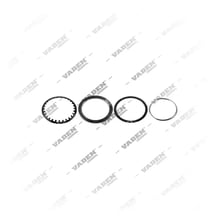
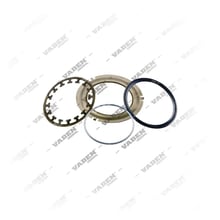
What Is a Clutch Mounting Kit?
A Clutch Kit is a replacement parts set that brings together all the main components needed for a complete clutch system overhaul in heavy commercial vehicles into a single package. It includes the pressure plate (clutch cover), the clutch disc (friction plate), the release bearing, and usually an alignment tool; this allows every wearing component to be renewed at once whenever the coupling, the concentric slave cylinder, or the gearbox has been removed. In the field it is also called a "clutch set" or "complete clutch assembly." Unlike individual clutch repair parts, this category represents the complete solution needed once a full replacement has been decided on. For vibration-free, quiet, and long-lasting clutch performance, it is essential that the components in the kit are mutually compatible, come from the same production batch, and are built to OE dimensions.
Functions of a Clutch Mounting Kit
In the clutch system, power transfer from the engine crankshaft to the gearbox input shaft happens through friction; the three main components that make this possible (disc, pressure plate, bearing) interact directly with one another. A Clutch Kit prevents premature failures caused by uneven wear by replacing all three components at the same time. For example, if only the disc is replaced while an old pressure plate is left in place, the new disc cannot reach its expected service life because of the pressure plate's weakened spring force. Using a complete kit keeps every component on the same wear baseline and keeps engagement-disengagement response consistent.
- Power Transfer: The disc transmits engine torque from the flywheel to the gearbox input shaft through friction.
- Engagement-Disengagement Control: The pressure plate presses the disc against the flywheel or releases it in response to pedal movement.
- Smooth Release Action: The bearing allows the pressure plate's diaphragm fingers to be contacted evenly, without friction.
- Vibration and Noise Reduction: A set of matched components minimizes the jolt at engagement and pedal vibration.
Clutch Mounting Kit Technical Specifications
The decisive technical criteria when selecting a Clutch Kit are disc diameter, spline count, pressure plate type (diaphragm or coil-spring), and the bearing actuation method (mechanical or hydraulic concentric). Pressure spring force and disc friction material are set by the manufacturer according to the vehicle's engine torque and duty profile (urban, long-haul, tractor unit); going outside these ranges can lead to clutch slip or premature wear. Always consult the vehicle's current service manual for exact torque, diameter, and tightening values. VADEN ORIGINAL clutch kits are manufactured to OE dimensions and supplied with material quality that meets original equipment tolerances, ensuring direct compatibility with the existing gearbox and flywheel assembly.
Clutch Mounting Kit Types and Subgroups
- Standard 3-Piece Clutch Kit: The basic set containing the disc, pressure plate, and bearing, used in vehicles with a mechanical release system.
- Concentric Slave Cylinder Kit: A set that includes a concentric slave cylinder instead of a bearing, for vehicles with a hydraulic release system.
- Kit with Alignment Tool: A kit that includes a dedicated tool for correctly centering the disc on the flywheel axis.
- Heavy Duty Kits: Sets with reinforced pressure springs and friction material, for tractor units and tippers exposed to high torque and frequent engagement cycles.
- Twin-Disc Clutch Kits: Advanced sets using two friction discs to increase power transfer capacity in high-torque heavy-duty vehicles.
How to Choose the Right Clutch Mounting Kit?
Clutch Kit Selection Criteria| Criterion | Check Point |
|---|
| Disc Diameter and Spline Count | Must match the gearbox input shaft's spline profile exactly |
| Release System Type | Determine whether the vehicle uses a mechanical bearing or a hydraulic concentric slave cylinder |
| Engine and Chassis Code | Confirm the correct kit by matching the OEM part number with the chassis/engine code |
| Duty Profile | Assess whether a standard or heavy-duty kit is required based on load and route type |
| Kit Integrity | Verify that the disc, pressure plate, and bearing are from the same batch, in a single box, and mutually compatible |
What to Watch for When Replacing a Clutch Mounting Kit
- Check the Flywheel Surface: Before installing the new kit, make sure the flywheel shows no scoring, cracking, or signs of overheating; resurface or replace it if necessary.
- Use an Alignment Tool: An alignment shaft or tool must always be used to center the disc exactly on the flywheel axis; misalignment causes vibration and premature wear.
- Apply Tightening Torque in Stages: Tighten the pressure plate bolts in a crosswise sequence and in stages, to the torque value specified by the manufacturer.
- Bleed the Hydraulic System: On kits with a concentric slave cylinder, make sure the hydraulic circuit is fully bled after installation.
- Prevent Oil and Dirt Contamination: Oil, grease, or fingerprints on the disc surface reduce the coefficient of friction and cause slipping; wear gloves during installation.
Common Faults and Their Solutions
- Clutch Slip: Worn disc or a weakened pressure spring; the complete clutch kit needs to be renewed.
- Grinding Noise When Shifting Gears: Worn or dry bearing; it is recommended to replace the bearing together with the other parts in the kit.
- Vibration at Engagement: Misaligned disc or damaged flywheel surface; the installation should be rechecked using the alignment tool.
- Stiff Pedal or a Spongy Feel: Air trapped in the hydraulic circuit or a faulty concentric slave cylinder; the system needs bleeding or the cylinder needs replacing.
- Clutch Doesn't Fully Disengage: Incorrect adjustment, damaged diaphragm fingers, or use of an incompatible kit; replacement should be done with a correct, OE-dimension clutch kit.
Why Choose a VADEN ORIGINAL Clutch Mounting Kit?
- Manufactured to OE Dimensions: The disc, pressure plate, and bearing are produced to the same tolerances, eliminating extra labor or fitment issues.
- Extensive OEM Coverage: A broad application list covering Mercedes-Benz, MAN, Scania, Volvo, DAF, Iveco, Renault Trucks, and BMC models.
- Kit Integrity Guarantee: All parts in the box come from the same production batch, eliminating the risk of mismatched components.
- Exported to More Than 100 Countries: A globally tested manufacturing standard with consistent quality control.
- Long Service Life: Extended wear resistance through correct material selection and heat-treatment processes.
Conclusion
A Clutch Kit is the most time- and cost-efficient solution in heavy commercial vehicle maintenance for renewing the clutch system completely and in a balanced way. Chosen with the right criteria and installed with care, it protects both driving comfort and the long-term health of the gearbox and engine components. Sets backed by VADEN ORIGINAL, built to OE tolerances with broad vehicle compatibility, give fleet operators and workshops a reliable choice.
Frequently Asked Questions (FAQ)
What does a Clutch Kit include?
A Clutch Kit is a complete set that includes the clutch disc, pressure plate, and release bearing. In most heavy-duty applications these three parts are sold together and usually come with an alignment tool as well.
Can I replace only the disc and leave the other parts as they are?
Technically it's possible, but it isn't recommended. An old pressure plate with weakened spring force shortens the life of a new disc, and if the bearing is worn, grinding noise and vibration complaints will continue. Replacing the complete Clutch Kit delivers a balanced, long-lasting result.
Which vehicles is a Clutch Kit compatible with?
VADEN ORIGINAL Clutch Kits are manufactured to fit heavy commercial vehicle brands such as Mercedes-Benz, MAN, Scania, Volvo, DAF, Iveco, Renault Trucks, and BMC. To identify the correct kit, the chassis/engine code must be matched with the OEM part number.
When does a Clutch Kit need to be replaced?
If you notice symptoms such as clutch slip, vibration at engagement, grinding noise when shifting gears, or a spongy pedal, the Clutch Kit should be inspected and replaced if necessary.
What should be considered when installing a Clutch Kit?
The flywheel surface must be undamaged, the disc must be centered correctly using an alignment tool, the pressure plate bolts must be tightened crosswise to the torque value specified by the manufacturer, and oil must not contaminate the disc surface. Always consult the vehicle's current service manual for exact torque values.
Related technical guide: Clutch Hose Failure, Replacement and Maintenance Guide | VADEN