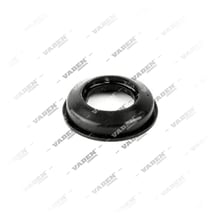
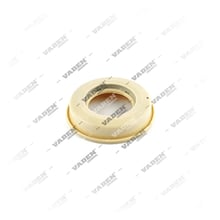
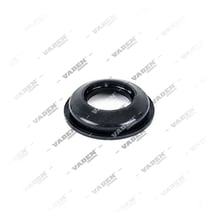
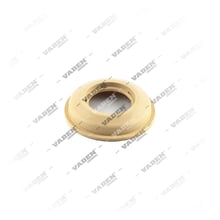
What Is a Brake Caliper Shaft Dust Rubber?
A caliper guide pin boot is a flexible, bellows-type rubber component that protects the brake caliper's sliding pin (guide pin) from dust, mud, road salt, and moisture. In the field it also goes by names such as "caliper pin boot," "slide pin gaiter," or "guide pin sleeve." It is an integral part of the floating-caliper brake system used on heavy commercial vehicles; it fits over the sliding pin between the caliper body and the mounting bracket, sealing both ends of the pin against the outside environment. The caliper's guide pin must be able to slide back and forth so the caliper can distribute pad clamping force evenly when the brake pedal is applied, and this smooth sliding motion depends directly on the condition of the boot. VADEN ORIGINAL caliper guide pin boots are manufactured to OE dimensions for truck, tractor unit, bus, and trailer brake calipers and keep the sliding pin protected over the long term.
How Does a Brake Caliper Shaft Dust Rubber Work?
The caliper guide pin boot is anchored at one end into the recess in the caliper body, while its other end seats tightly around the sliding pin. When the brakes are applied, the pin moves a few millimeters within its bore; the folds of the bellows structure absorb this movement, letting the boot flex without tearing.
- Sealing: Closes off the pin bore, keeping dust, mud, salt water, and abrasive particles from entering.
- Grease Protection: Prevents the lubricating grease on the pin surface from washing out or becoming contaminated, keeping the sliding motion consistent.
- Free Sliding Motion: Physically enables the pin movement that lets the caliper self-adjust as the brake pad wears.
- Corrosion Barrier: Blocks moisture from reaching the pin surface, preventing rust and pin seizure.
- Vibration Damping: Its flexible structure absorbs small vibrations at the caliper-to-pin contact point.
Brake Caliper Shaft Dust Rubber Technical Specifications
Caliper guide pin boots are made from specialized rubber or synthetic elastomer compounds designed to withstand wide temperature swings, brake dust, and road salt. Because they operate close to the brake disc, the material's heat resistance is critical; lower-quality rubber hardens and cracks over time, losing its protective function. The inside diameter must match the outer diameter of the sliding pin, and the outside diameter must match the recess in the caliper body, both to millimeter-level precision; a boot outside these tolerances either fails to grip the pin securely or does not seat properly in its bore. Pin diameter and bellows profile vary by vehicle make, axle position (front/rear), and caliper manufacturer (such as Wabco, Knorr-Bremse, or Bendix applications); for exact dimensions and tolerances, consult the vehicle's OEM parts catalog or service manual.
Brake Caliper Shaft Dust Rubber Types and Subcategories
- Single-Fold Boot: A standard type with a single fold, used on pins with a short travel distance.
- Multi-Fold Boot: Offers greater flex allowance and is preferred on calipers of heavy-tonnage vehicles with longer pin travel.
- Metal-Ring Reinforced Boot: Has a metal reinforcement ring at the end that seats against the caliper body, reducing the risk of the boot popping out of its bore.
- Clip-Retained Boot: Secured to the pin end with a metal or plastic clip, used in applications requiring extra sealing.
- Heat-Resistant Special-Compound Boot: Developed for calipers mounted close to the disc, where they are exposed to high thermal loads.
How to Choose the Right Brake Caliper Shaft Dust Rubber
The most important criterion when selecting a caliper guide pin boot is determining the correct size and profile based on the vehicle's caliper brand, axle position, and chassis number. A boot with the wrong inside diameter will not grip the pin properly, while the wrong bellows length can cause tearing during braking. The table below summarizes the key criteria to consider when choosing.
Caliper Guide Pin Boot Selection Criteria| Criterion | Why It Matters |
|---|
| Guide Pin Diameter | An inside-diameter mismatch means the boot won't grip the pin tightly and sealing fails |
| Caliper Bore Size | If the outside diameter doesn't match, the boot pops out of its bore or fails to seat fully |
| Axle Position (Front/Rear) | Pin length and bellows profile can differ between front and rear calipers |
| Caliper Manufacturer Application | Bellows geometry varies across Wabco, Knorr-Bremse, and Bendix applications |
| Material and Heat Resistance | Rubber that can't withstand the thermal load near the disc cracks prematurely |
| Retention Type | Clip-retained or ring-reinforced designs require the correct installation method |
Brake Caliper Shaft Dust Rubber Installation and Maintenance
- Clean and Inspect the Pin: Before installation, remove old grease from the sliding pin and replace the pin as well if it shows pitting or wear.
- Use the Correct Grease: Apply a high-temperature, rubber-compatible caliper pin grease; general-purpose greases can cause the boot to swell.
- Seat the Boot Fully in Its Bore: Both ends of the bellows must seat properly in the bore and on the pin, with no twisting left in the folds.
- Perform Periodic Visual Checks: During brake service, visually inspect the boot for cracking, tearing, or hardening.
- Check It Whenever Pads Are Replaced: The caliper is removed during pad replacement, so use that opportunity to assess the boot's condition.
- Replace a Damaged Boot Without Delay: Even a small tear can quickly let contamination reach the pin and cause it to seize.
Common Faults and Their Solutions
- Guide Pin Seizure: Caused by dirt and moisture entering through a torn boot; replace the boot and, if necessary, the pin, then re-grease.
- Uneven Pad Wear: A seized pin prevents the caliper from moving evenly; inspect and replace the boot and pin, and check the pads.
- Vehicle Pulling During Braking: A seized pin on one side keeps that caliper from closing fully; renew the boot and pin assembly on the affected side.
- Brake Disc Overheating: An inability of the caliper to retract lets the pad keep dragging on the disc; repair the boot damage and free up pin movement.
- Squealing from the Brake System: A dry or contaminated pin surface; replace the boot and reinstall with the correct grease.
Why VADEN ORIGINAL?
- Manufactured to OE Dimensions: Caliper guide pin boots are produced to original inside diameter, outside diameter, and bellows depth tolerances.
- Heat- and Road-Salt-Resistant Material: The special rubber compound delivers long service life against thermal load near the disc and outside elements.
- Broad OEM Coverage: Available for a wide range of heavy commercial vehicle calipers using Wabco, Knorr-Bremse, and Bendix applications.
- Quality-Controlled Production: Every batch is tested for sealing performance and flexibility before shipping.
- Exported to More Than 100 Countries: VADEN ORIGINAL parts are trusted by fleet operators and service shops worldwide.
Conclusion
Despite its small size, the caliper guide pin boot is a critical sealing component for the healthy operation of the brake caliper's sliding pin mechanism. Timely inspection and replacement prevent pin seizure and loss of braking performance. VADEN ORIGINAL caliper guide pin boots, manufactured to OE dimensions, help support safe and predictable brake performance.
Frequently Asked Questions (FAQ)
What does a caliper guide pin boot do?
A caliper guide pin boot protects the brake caliper's sliding pin from dust, mud, moisture, and road salt. By isolating the lubricating grease on the pin surface from outside elements, it keeps the pin sliding freely.
What happens if a caliper guide pin boot tears?
A torn boot lets dirt and moisture reach the pin, which quickly leads to pin seizure. A seized pin prevents the caliper from operating evenly, which can cause uneven pad wear and the vehicle pulling to one side during braking.
When should a caliper guide pin boot be replaced?
It should be replaced immediately if cracking, hardening, or tearing is found during pad replacement or routine brake service. Even without visible damage, regular visual inspection at set intervals is recommended.
Which vehicles are VADEN ORIGINAL caliper guide pin boots compatible with?
VADEN ORIGINAL caliper guide pin boots are used on heavy trucks, tractor units, buses, and trailers fitted with Wabco, Knorr-Bremse, and Bendix application brake calipers. For exact compatibility, verification against the vehicle's chassis number and caliper model is recommended.
What grease should be used when fitting a caliper guide pin boot?
A high-temperature, rubber-compatible caliper pin grease should be used. General-purpose or unsuitable greases can cause the rubber to swell and lead to premature failure.
Related technical guide: Brake Caliper Overhaul Kit: Guide Pins, Boots & Adjuster