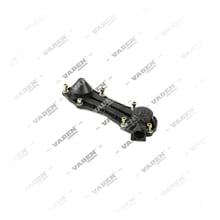
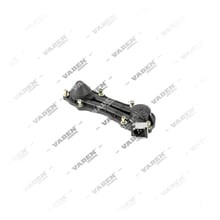
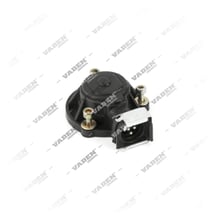
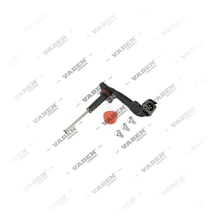
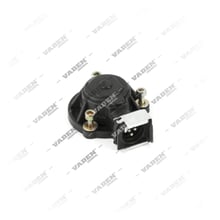
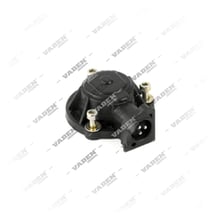
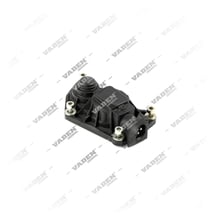
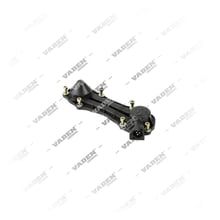
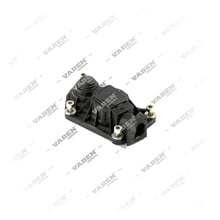
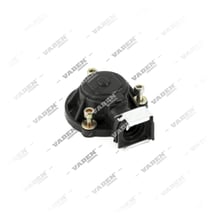
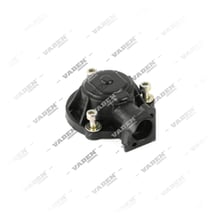
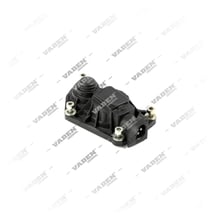
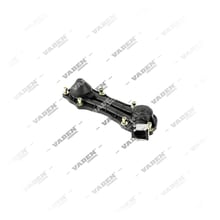
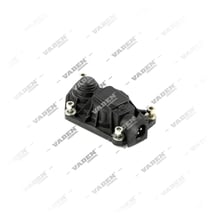
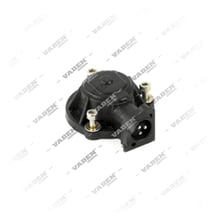
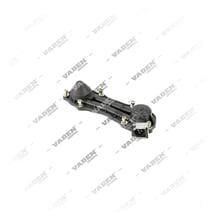
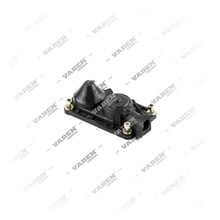
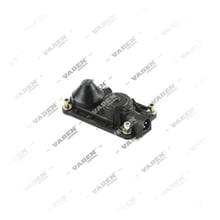
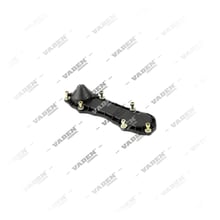
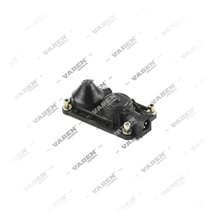
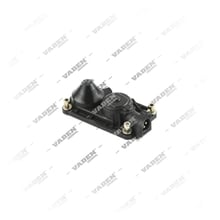
What Is a Brake Caliper Sensor Cover?
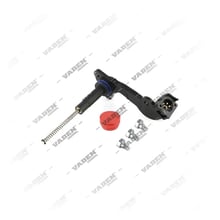
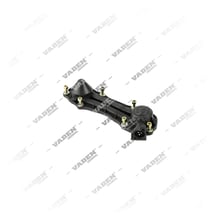
A caliper sensor is a component mounted on the brake caliper of heavy commercial vehicles that electronically monitors the wear level of the brake pad. In the field it also goes by names such as "brake pad wear sensor," "brake pad warning sensor," or "caliper wear sensor." When pad thickness reaches the predefined lower limit, the sensor either breaks the circuit or changes its resistance, causing the warning light on the dashboard to illuminate. On the disc brake systems of trucks, tractor units, buses, and trailers, it takes the form of a short wiring harness and connector assembly fixed to the caliper body or the pad carrier. A caliper sensor gives the driver and the fleet manager early notice of when pad replacement is due, contributing directly to the continuity of braking safety.
How Does a Brake Caliper Sensor Cover Work?
A caliper sensor works on the principle of a conductive wire or contact tip embedded in the pad material or fixed at a set position on the caliper. As the pad wears down, the sensor tip touches the disc surface or the carrier and short-circuits the loop, or the wire physically wears through and breaks, opening the circuit. This electrical change is detected by the vehicle's electronic control unit, which generates a warning on the dashboard indicating that pad replacement is required. In some systems, the sensor also acts as a mechanical-to-electrical transition element detecting caliper movement linked to the brake pedal or the pad carrier's position. Correct operation of the caliper sensor is one of the cornerstones of overall brake-system traceability and planned maintenance.
Brake Caliper Sensor Cover Technical Specifications
Caliper sensors are manufactured with different connector types, cable lengths, and resistance values depending on vehicle make and caliper type. In general, the sensor body uses a heat- and vibration-resistant polymer or rubber-coated cable, resistant to braking-generated heat and road vibration. Connector tips vary by vehicle-specific plug design and are usually single-pole or dual-pole. Cable length is determined by the caliper's position on the vehicle and must be calculated during installation to avoid tension on the line. The sensor's electrical resistance and circuit-break threshold must be compatible with the vehicle's electronic control unit; for this reason, the vehicle manufacturer's current technical data and wiring harness diagram should form the basis for selecting the correct part.
- Cable Sheathing: Made from heat- and wear-resistant polymer or rubber-based insulation material.
- Connector Design: Produced with vehicle-specific single- or dual-pole quick-connect plugs.
- Circuit Type: Two different electrical principles can be used as the pad wears — one that opens the circuit and one that short-circuits it.
Brake Caliper Sensor Cover Types and Subgroups
- Single-Wire Wear Sensor: The most common and simplest sensor type, which opens the circuit once pad thickness reaches the limit.
- Dual-Wire Wear Sensor: A sensor group with two separate circuits capable of monitoring the front and rear pads at the same time.
- Connector-Equipped Wiring Harness Sensor: A sensor type that plugs directly onto the caliper via a vehicle-specific connector, allowing fast installation.
- Clip-Mounted Sensor: A sensor secured to the caliper body or pad carrier with a clip, built for vibration-resistant mounting.
- Long-Cable Sensor Variants: Versions produced in different cable lengths depending on the caliper's position on the chassis.
How to Choose the Right Brake Caliper Sensor Cover
Choosing a caliper sensor requires weighing vehicle make, caliper type, and connector compatibility together. The wrong connector type or cable length can cause tension during installation and lead to premature failure. The table below summarizes the key selection criteria.
Caliper Sensor Selection Criteria| Criterion | Description |
|---|
| Connector Type | Must precisely match the vehicle-specific plug design |
| Cable Length | Must allow tension-free installation based on caliper position |
| Sensor Count | Single- or dual-wire system must be compatible with the vehicle's circuit |
| Caliper Compatibility | Mounting points specific to caliper groups such as Wabco and Knorr-Bremse must be used as the reference |
| Heat and Vibration Resistance | Cable sheathing must withstand the high temperatures generated by braking |
| Vehicle Application | Must be verified against the specific truck, tractor unit, bus, or trailer model |
Brake Caliper Sensor Cover Maintenance and Key Considerations
- Check the Cable Insulation Regularly: Replace the sensor if the cable sheathing shows cracks or wear, to avoid the risk of a short circuit.
- Keep the Connector Tight: Loose or oxidized connectors can trigger a false warning; clean the connection point regularly.
- Renew the Sensor When Replacing Pads: An old sensor that isn't replaced along with the pad may not accurately reflect the new pad's wear level.
- Watch the Cable Routing: During installation, keep the cable away from hot surfaces and moving parts to prevent premature wear.
- Use Parts Built to Original Specification: Choose VADEN ORIGINAL sensors with the correct resistance and circuit-break threshold.
Common Faults and Solutions
- Pad Warning Light Stays On Continuously: The sensor cable has broken or the connector has lost contact; check the cable and replace the sensor if necessary.
- Warning Light Never Comes On: The sensor circuit has short-circuited or the wrong sensor type has been fitted; verify the connector type and circuit resistance.
- Sensor Wears Out Prematurely: The cable is in contact with a hot surface or a moving part; correct the cable routing and check the mounting clip.
- Corrosion Forms in the Connector: Caused by moisture and salt ingress; clean the connector and renew the protective cap or seal if necessary.
- Incorrect Pad Thickness Warning: The sensor's mounting position is wrong; reposition it according to the vehicle manufacturer's current service manual.
Why VADEN ORIGINAL?
- Manufactured to OE Dimensions: Cable length, connector type, and circuit resistance match the original caliper sensor data exactly.
- Broad OEM Coverage: Offers options suited to Mercedes-Benz, MAN, Scania, Volvo, DAF, and Iveco vehicles fitted with Wabco- and Knorr-Bremse-based caliper systems.
- Heat- and Vibration-Resistant Construction: Cable sheathing and connector materials are tested against heavy-duty operating conditions.
- Exported to More Than 100 Countries: Quality processes are verified across a wide range of fleet profiles in diverse regions.
Conclusion
The caliper sensor is a key component for catching brake pad wear in good time and enabling planned maintenance in heavy commercial vehicles. A sensor selected with the right connector type, cable length, and caliper compatibility improves both driving safety and the predictability of maintenance costs. VADEN ORIGINAL caliper sensors, built to OE dimensions and offering broad vehicle compatibility, are a dependable choice for fleet operations.
Frequently Asked Questions (FAQ)
What does a caliper sensor do?
A caliper sensor monitors the wear level of the brake pad and triggers a warning on the dashboard once pad thickness reaches the limit. This ensures the pad is replaced on time and helps prevent a sudden loss of braking performance.
What happens when a caliper sensor fails?
A faulty caliper sensor can cause the pad warning light to never come on, or to stay on continuously. In either case, the sensor and its cable connection should be checked and replaced if necessary.
Does the caliper sensor need to be replaced along with the brake pads?
For sensor types that wear at the same rate as the pad or are built into the pad mounting, it is recommended to renew the sensor together with the new pad. An old sensor may not accurately reflect the new pad's actual wear level.
Which vehicles are VADEN ORIGINAL caliper sensors compatible with?
VADEN ORIGINAL caliper sensors are offered in options suited to Mercedes-Benz, MAN, Scania, Volvo, DAF, and Iveco heavy commercial vehicles fitted with Wabco- and Knorr-Bremse-based caliper systems. It is recommended to verify the connector type and cable length for your vehicle before ordering.
How can corrosion in the caliper sensor connector be prevented?
Regularly cleaning the connector of moisture and dirt, keeping the connection point tight, and using a protective cap where needed all reduce the risk of corrosion. If corrosion has already formed, clean the connector and renew the sensor if necessary.
Related technical guide: Brake Pad Wear Sensor: Function, Faults & Replacement Guide