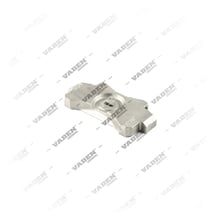
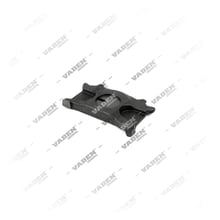
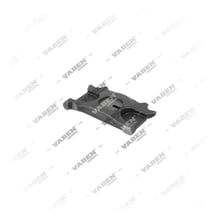
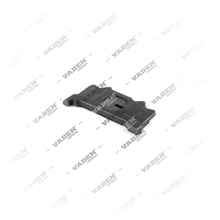
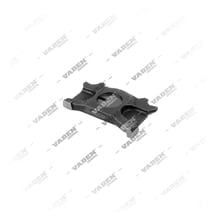
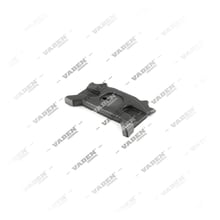
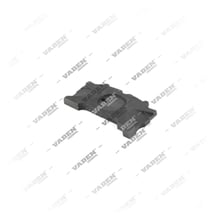
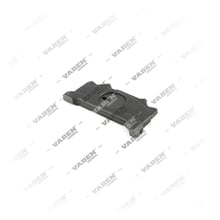
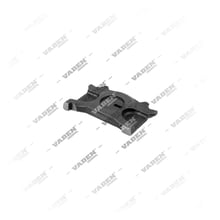
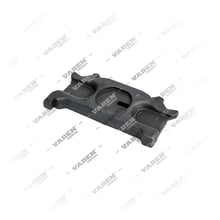
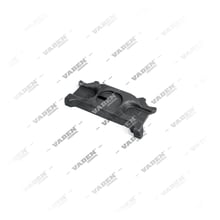
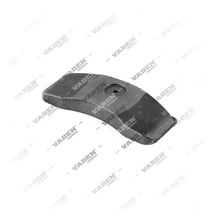
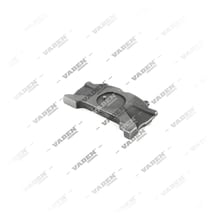
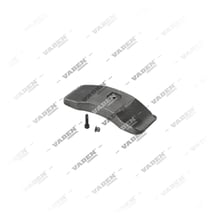
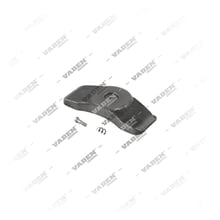
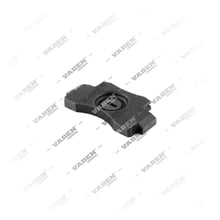
What Is a Brake Caliper Pad Plate?
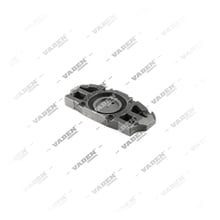
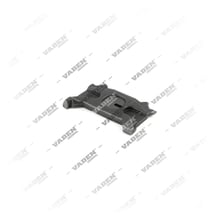
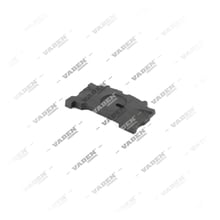
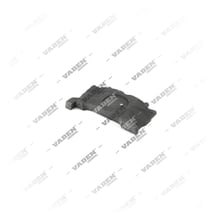
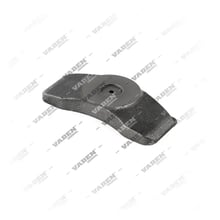
A caliper pad plate is a thin metal carrier and pressure component that holds the brake pad in the correct position inside the disc brake caliper of heavy commercial vehicles. In the field it is also referred to as a pad plate, pad backing plate, or anti-rattle plate. It sits between the caliper housing and the pad shoe, providing a balanced, full-contact pressure surface on the side of the pad pushed by the piston or bridge. This way the pad presses against the disc with even, uniform force rather than at an angle or on one side only. Without a caliper pad plate, the pad shoe can shift inside the caliper, generate noise, and wear unevenly over time. In the disc brake systems used on trucks, tractor units, buses, and trailers, the caliper pad plate is an unseen but critical connecting component that directly affects braking performance.
How Does a Brake Caliper Pad Plate Work?
When the brake pedal is pressed, the caliper piston or mechanical bridge system applies force to the pad shoe through the caliper pad plate. The plate distributes this force evenly across the back face of the pad, ensuring the pad makes full, parallel contact with the disc.
- Force Distribution: Transfers piston or bridge pressure evenly across the entire back surface of the pad.
- Return Positioning: Helps the pad return smoothly and without vibration into the caliper seat once braking ends.
- Vibration Damping: Spring tabs or clips on the plate hold the pad firmly in the caliper, preventing rattling noise.
- Thermal Separation: Limits, to a certain degree, the direct transfer of heat from the pad body to the caliper piston.
Brake Caliper Pad Plate Technical Specifications
A caliper pad plate is typically stamped from high-strength, corrosion-resistant steel sheet and coated according to the caliper type. Thickness and profile vary by the vehicle's caliper brand and model, so there is no standard size — every caliper family requires its own plate geometry. The surface of the plate that contacts the pad must be flat and smooth, while the edges that seat into the caliper housing must be fully secured by clips or spring tension. Heat resistance is engineered to withstand the continuous thermal load coming from the brake disc; no deformation or discoloration should occur under excessive heat. When determining vehicle compatibility, the caliper brand (such as Knorr-Bremse, Wabco, Bendix) and caliper model should be the primary reference, and the vehicle's current service manual should be consulted for exact torque and installation dimensions.
Brake Caliper Pad Plate Types and Subgroups
- Fixed Caliper Plate: Used in fixed calipers with a two-sided piston design, pressing the pad evenly from both directions.
- Floating Caliper Plate: Keeps the pad correctly aligned on the bridge in single-piston, sliding caliper systems.
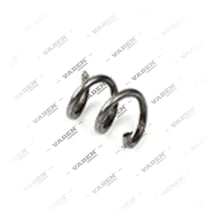
- Clipped (Anti-Rattle) Plate: A version fitted with a spring clip that secures the pad in the caliper seat and reduces rattling noise.
- Heat-Shielded Plate: A version carrying an additional thermal barrier layer, preferred for heavy-load and mountain-road applications exposed to high heat.
- Wear-Sensor Plate Assembly: An integrated plate type that also houses the cable channel for the pad wear sensor.
How to Choose the Right Brake Caliper Pad Plate
The first criterion when choosing a caliper pad plate is the vehicle's caliper brand and model; plates that look identical can be incompatible across different caliper families. The second criterion is whether the plate is supplied together with the pad set or as a separate part — some manufacturers include the plate in the pad box. Third, the vehicle's usage profile (urban, long-haul, mountainous terrain) can be decisive in terms of heat resistance and clip durability. The table below summarizes the key points to consider during selection.
Caliper Pad Plate Selection Criteria| Criterion | Why It Matters |
|---|
| Caliper brand/model | Plate geometry and clip design are caliper-specific, not universal |
| Compatibility with pad set | Full contact surface is achieved only when plate and pad are used together |
| Material and surface coating | Corrosion and heat resistance determine the plate's service life |
| Clip/spring durability | A weak clip lets the pad shift inside the caliper and causes noise |
| Usage profile | Heavy loads and frequent braking require higher heat resistance |
Brake Caliper Pad Plate Maintenance and Key Points
- Check at Every Pad Change: When replacing pads, inspect the plate for deformation, rust, or cracks; replace any plate in doubt.
- Clean the Contact Surface: Before installation, remove rust and dirt buildup between the plate and the caliper seat to ensure full seating.
- Position Clips and Springs Correctly: If anti-rattle clips are not fitted in the correct position, the pad will not be secured and premature wear will begin.
- Do Not Over-Apply Grease: Apply only a small amount of high-temperature grease to the contact points specified by the caliper, and keep grease off the pad surface.
- Follow the Vehicle's Service Manual: Installation sequence, torque values, and plate orientation should be based on the current service manual from the vehicle and caliper manufacturer.
Common Faults and Solutions
- Rattling or Vibration Noise During Braking: Usually caused by a worn or broken anti-rattle clip; the plate and clip set should be renewed.
- Uneven Pad Wear: A deformed or bent plate prevents the pad from pressing evenly against the disc; the plate should be inspected and replaced if necessary.
- Vibration Felt at the Brake Pedal: Incomplete contact between the plate and pad disrupts force transfer; installation accuracy and plate surface should be reviewed.
- Rust and Sticking: In humid or salty conditions the plate can rust, preventing the pad from moving freely in the caliper seat; a rusted plate should be cleaned or replaced.
- Early Need for Pad Replacement: Using an unsuitable or missing plate can cause the pad to wear faster than expected; it is recommended to replace the pad and plate together as a correctly matched set.
Why VADEN ORIGINAL?
VADEN ORIGINAL caliper pad plate products are manufactured to OE dimensions and tolerances, ensuring a precise fit inside the caliper and the correct pad contact surface.
- OE Dimensions and Tolerances: Precision manufacturing that ensures full seating inside the caliper and a correct pad contact surface.
- Wide OEM Coverage: Compatible with the Knorr-Bremse and Wabco caliper families widely used on Mercedes-Benz, MAN, Scania, Volvo, DAF, Iveco, and Renault Trucks vehicles.
- Durable Material: Corrosion-resistant steel and quality-controlled manufacturing preserve clip strength and the pressure surface over the long term.
- Global Supply Assurance: Exports to over 100 countries provide a traceable supply chain for fleet operators and service workshops.
Conclusion
Despite its small size, the caliper pad plate is an essential connecting component for the efficient, quiet operation of the brake caliper. Using a well-matched plate with a sturdy clip, paired correctly with the caliper and pad set, prevents uneven pad wear, noise, and pedal vibration. VADEN ORIGINAL caliper pad plate options offer an OE-quality solution for safe, long-lasting braking performance in heavy commercial vehicle fleets.
Frequently Asked Questions (FAQ)
What does a caliper pad plate do?
A caliper pad plate is a thin metal carrier component that holds the brake pad shoe in the correct position inside the disc brake caliper and distributes piston or bridge force evenly across the entire pad surface. This allows the pad to press against the disc smoothly and evenly, preventing noise and vibration.
Should the caliper pad plate be replaced at every pad change?
It is not mandatory, but it is recommended to check the plate for deformation, rust, or cracks at every pad change. A plate with reduced clip strength or a damaged surface should be replaced together with the new pads.
What are the symptoms of a worn caliper pad plate?
The most common symptoms are a rattling noise during braking, a vibration felt at the pedal, and uneven pad wear. If any of these symptoms appear, the plate and clip set should be inspected.
Which vehicles are VADEN ORIGINAL caliper pad plates compatible with?
VADEN ORIGINAL caliper pad plates offer wide OEM compatibility with the Knorr-Bremse and Wabco caliper families used on heavy commercial vehicles such as Mercedes-Benz, MAN, Scania, Volvo, DAF, Iveco, and Renault Trucks. Exact compatibility should be verified by caliper brand and model.
What happens if the caliper pad plate is installed incorrectly?
A plate that is misaligned or whose clip is not fully seated can allow the pad to shift inside the caliper, leading to uneven wear and inconsistent braking performance. Installation sequence and orientation should follow the vehicle's current service manual.
Related technical guide: Caliper Pad Retainer & Pad Plate: Faults, Replacement, Care