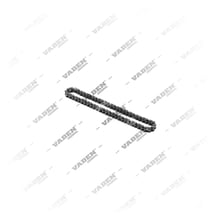
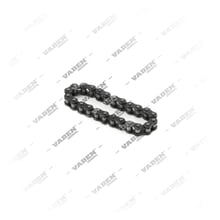
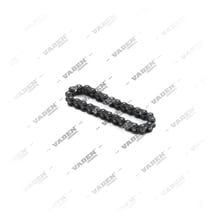
What Is a Brake Caliper Mechanism Chain?
A caliper mechanism chain is a small but critical spare part located within the internal adjustment mechanism of a disc brake caliper, transmitting the movement of the piston or adjuster spindle as the brake pad wears down. In the field it is sometimes also called a "caliper adjuster chain" or "mechanism chain." This chain sits inside the caliper's automatic slack adjuster mechanism and, as pad thickness decreases, transfers the rotational movement of the mechanism so that the piston position advances correctly. Without the caliper mechanism chain, the automatic adjuster system cannot compensate for pad wear, and over time pedal free play and brake response distance deteriorate. Most disc brake calipers used on heavy commercial vehicles - trucks, tractor units, buses and trailers - include this type of chain or a similar transmission element.
How Does a Brake Caliper Mechanism Chain Work?
The caliper mechanism chain is designed to rotate the adjuster spindle or adjuster ball nut inside the caliper in proportion to the amount of pad wear. Each time the brake is applied, a small axial movement occurs within the caliper body; once this movement exceeds a certain threshold, the mechanism chain engages and turns the adjuster spindle slightly. This rotation automatically reduces the distance between the piston or backing plate and the pad, so that clearance remains constant as the pad thins. When the chain wears, loosens or breaks, the adjuster mechanism can no longer transmit motion smoothly, which leads to increased pedal free play, delayed brake response or uneven pad wear.
Brake Caliper Mechanism Chain Technical Specifications
Caliper mechanism chains are manufactured with a link count, connection type and overall length that vary by caliper manufacturer and model, so verifying the caliper brand and model is essential when selecting the part. The chain's tensile strength and link tolerances directly affect the precision of the adjuster mechanism; a chain that is too loose causes delayed adjustment, while one that is too tight can cause premature adjustment and early pad contact. Torque and installation values should always be based on the vehicle's and caliper model's current service manual.
- Material: High-strength, corrosion-resistant steel alloy that withstands brake dust, moisture and road salt.
- Connection Ends: Shaped to fit a pin, hook or ball-nut interface, with geometry specific to the caliper model.
- Link Count and Length: Varies by caliper family and determines the timing of the adjuster mechanism.
Brake Caliper Mechanism Chain Types and Subgroups
- Standard Link Chain: Made of classic serially connected metal links, providing basic adjustment transmission in most caliper families.
- Short-Link Chain: A variant with a shorter link pitch, used in compact caliper bodies with limited internal clearance.
- Pin-End Connection Chain: Connects to the adjuster spindle via a dedicated pin socket, with an end geometry specific to certain caliper series.
- Hook-End Connection Chain: A variant attached directly to the backing plate or adjuster lever by a hook, simplifying removal and installation.
- Chain Within a Complete Adjuster Mechanism Kit: The chain supplied together with the adjuster spindle, spring and connecting elements in a single repair kit.
How to Choose the Right Brake Caliper Mechanism Chain
When choosing the correct caliper mechanism chain, first clarify the caliper's brand and model - for example a Wabco or Knorr-Bremse caliper family - together with the vehicle manufacturer, such as Mercedes-Benz, MAN, Scania, Volvo, DAF, Iveco or Renault Trucks. Next, the chain's link count, overall length and end-connection type should be compared directly against the caliper's original part; chains that look similar can have a different link pitch. The table below summarizes the key criteria to consider during selection.
Caliper Mechanism Chain Selection Criteria| Criterion | Why It Matters |
|---|
| Caliper Brand and Model | Chain end geometry and connection type are specific to the caliper family |
| Link Count and Length | Determines whether the adjuster mechanism operates with correct timing |
| End Connection Type | Required for correct fitment to a pin, hook or nut interface |
| Material and Corrosion Resistance | Determines service life under brake dust, moisture and road salt |
| Sold as Part of a Kit | Replacing it together with the adjuster spindle and spring increases reliability |
| Vehicle Application | Fitment to truck, tractor unit, bus or trailer calipers must be verified |
Brake Caliper Mechanism Chain Maintenance and Key Considerations
- Inspect the Chain Separately During Caliper Overhaul: Visually check chain tension and link wear whenever the pads are replaced.
- Pay Attention to Correct Installation Orientation: If the chain is connected to the wrong link, the adjuster mechanism operates incorrectly, so install it according to the caliper manufacturer's instructions.
- Confirm There Is No Excess Slack or Tension: After installation, check that the mechanism moves without play.
- Replace Early at the First Signs of Corrosion: A rusted chain, or one with links stuck together, loses adjustment precision and should be replaced.
- Assess Together with the Adjuster Spindle and Spring: The chain should be checked as part of a system with the adjuster spindle and spring it is connected to, not in isolation.
Common Faults and Solutions
- Increasing Brake Pedal Free Play: Usually caused by a mechanism chain that has broken or loosened and lost its function; the chain and adjuster kit should be replaced.
- Uneven or Premature Pad Wear: A chain adjusting at incorrect tension disturbs piston position; the chain and adjuster mechanism should be inspected.
- Metallic Rattling Noise from the Caliper: Can result from loose or broken chain links striking the caliper body; the caliper should be opened and examined.
- Automatic Adjuster Not Working: Chain corrosion or a broken link connection can lock the mechanism; the chain kit should be replaced completely.
- Stiff Brake Pedal or a Dragging Sensation: Can result from the mechanism over-adjusting due to excessive chain tension; replacement with a new chain at correct tension is recommended.
Why VADEN ORIGINAL?
- Manufactured to OE Dimensions: Produced true to the original link count and end-connection geometry.
- Broad OEM Match: Compatible options are offered for a range of models, including Wabco and Knorr-Bremse caliper families.
- Durable Material: Corrosion-resistant steel alloys deliver long service life under brake dust and moisture conditions.
- Exported to More Than 100 Countries: VADEN ORIGINAL parts are delivered through a supply network trusted by fleet operators.
- Reliability as a Kit: When needed, the chain is offered together with the adjuster spindle and spring in a repair kit.
Conclusion
The caliper mechanism chain is a small but indispensable component at the heart of a disc brake caliper's automatic slack adjuster system. Choosing the correct model, timely inspection and, when necessary, replacement together with the adjuster spindle ensure consistent brake pedal operation and balanced pad wear. VADEN ORIGINAL caliper mechanism chains, manufactured to OE dimensions, offer a reliable, long-lasting solution for heavy commercial vehicle fleets.
Frequently Asked Questions (FAQ)
What does a caliper mechanism chain do?
A caliper mechanism chain is the connecting element within a disc brake caliper's automatic slack adjuster system that senses pad wear and rotates the adjuster spindle accordingly. This automatically adjusts the piston position as the pad thins, keeping pedal free play constant.
What symptoms appear when a caliper mechanism chain fails?
The most common symptoms are increasing brake pedal free play, uneven pad wear, a metallic rattling noise from the caliper, and a non-functioning automatic adjuster mechanism. In these cases, the chain and its associated adjuster kit should be inspected.
Should a caliper mechanism chain be replaced on its own, or as part of a kit?
The chain generally forms a system together with the adjuster spindle and spring it is connected to; for this reason, in most cases it is recommended to replace it as part of a complete adjuster mechanism kit. This ensures the mechanism operates with correct timing.
Which calipers are VADEN ORIGINAL caliper mechanism chains compatible with?
VADEN ORIGINAL caliper mechanism chains are compatible with a range of caliper models used on heavy vehicles from Mercedes-Benz, MAN, Scania, Volvo, DAF, Iveco and Renault Trucks, primarily including Wabco and Knorr-Bremse caliper families. For correct application, it is recommended to verify the caliper brand and model with technical support.
Why does a caliper mechanism chain rust, and what is the consequence?
Due to its position close to the brake housing, the chain is constantly exposed to road salt, moisture and brake dust; in chains made from lower-quality material, this causes the links to seize together and adjustment precision to be lost. Chains made from corrosion-resistant steel alloy reduce this risk.
Related technical guide: Brake Caliper Mechanism: Camshaft, Bearings, and Return Spring