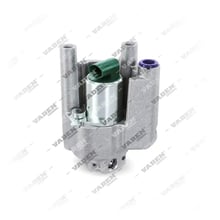
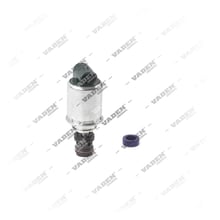
What is a control valve (engine brake valve)?
A control valve is a pneumatic component that governs engine brake effectiveness on heavy-duty vehicles by regulating exhaust gas flow to generate braking force. It uses engine compression and exhaust back-pressure to slow the vehicle down, taking load off the wheel brake system so brake pads wear more slowly and overall stopping power stays consistent. Trucks, tractor units, buses, and trailers rely on this valve most on long downhill descents and under heavy payloads, where it protects both the engine and the braking system from excess strain. When the control valve fails, braking performance drops, brake pads wear out faster, and the engine can run hot.
What does a control valve do?
- Regulates road speed: Uses engine compression and exhaust back-pressure to control vehicle speed on descents and at highway speeds.
- Reduces wheel brake load: Takes pressure off the wheel brake system, minimizing wear on brake pads, discs, and drums.
- Boosts braking power: Adds supplemental braking force on demanding routes and heavily loaded vehicles for safer, more confident driving.
- Regulates exhaust flow: Restricts exhaust gas flow in a controlled way to create the engine brake effect and keep engine temperature in check.
- Supports fuel efficiency: Reduces strain on the engine, helping maintain optimal performance and lower fuel consumption.
Control valve specifications at a glance
| Specification | Description |
|---|
| Function | Manages engine brake effectiveness; controls vehicle speed via engine compression/exhaust back-pressure |
| Operating principle | Restricts exhaust gas flow to build counter-pressure in the engine |
| Material | Durable cast/aluminum housing with heat-resistant internal components |
| Vehicle type | Trucks, tractor units, buses, trailers, and other heavy commercial vehicles |
| System | Engine brake / exhaust brake system (pneumatic or electro-pneumatic control) |
| Compatibility | Heavy-duty platforms including Mercedes-Benz, MAN, Scania, Volvo, DAF, Iveco, Renault, BMC, Ford |
| OE-match approach | Designed to OE mounting and function specs; compatible with Wabco / Knorr-Bremse system logic |
| Recommended inspection interval | Every 100,000 km on average, with replacement as needed |
Types of control valves and their sub-components
- Exhaust brake control valve: The main valve type, restricting flow in the exhaust line to directly create the engine brake effect.
- Pneumatically operated control valve: Triggered by compressed air to open and close the exhaust throttle in classic engine brake systems.
- Electro-pneumatic control valve: Integrates with the electronic engine management system for precise control on modern heavy-duty vehicles.
- Seals and internal mechanism parts: Wear items inside the valve housing, including seals, springs, and pistons.
What to watch for in control valve maintenance
- Carbon build-up cleaning: Carbon and soot deposits inside the valve should be cleaned out regularly.
- Connection checks: Pneumatic hose and electrical connections should be checked for looseness and tightened as needed.
- Response time testing: The valve's open/close response time during braking should be tested periodically.
- Worn part replacement: Worn seals, springs, or pistons should be replaced promptly.
- Use of genuine-quality parts: Choose OE-standard parts like VADEN ORIGINAL for dependable engine brake performance.
Common control valve problems and fixes
- Reduced braking performance: Usually caused by a blocked or faulty valve; clean the valve or replace it if the issue persists.
- Unusual noise: Often the result of valve damage or loose connections; tighten fittings and replace a damaged valve.
- Irregular exhaust output: A sign the valve isn't functioning correctly; inspect both the exhaust line and the valve mechanism.
- Engine overheating: Can stem from a clogged control valve; clean or replace the valve to restore normal engine temperature.
- Stiffness from carbon deposits: Extended use can cause the valve mechanism to stiffen with carbon build-up; prevent this with regular cleaning and inspection.
Why choose a VADEN ORIGINAL control valve?
- OE-standard compliance: Manufactured to original equipment function and mounting specs for reliable installation and trouble-free operation.
- Rugged construction: Built from heat- and pressure-resistant materials for long service life and strong wear resistance.
- High performance: Delivers strong engine brake support and consistent operation for improved braking performance.
- Easy maintenance and installation: An easy-to-clean, easy-to-replace design that keeps maintenance costs down.
- Broad range coverage: Fitments available for Mercedes-Benz, MAN, Scania, Volvo, DAF, Iveco, Renault, BMC, Ford, and more.
- Technical support: Expert VADEN ORIGINAL support for choosing and fitting the right part.
Frequently Asked Questions (FAQ)
What does a control valve (engine brake valve) do?
The control valve regulates exhaust gas flow so engine compression and exhaust back-pressure can control vehicle speed. This reduces the load on the wheel brake system, slows brake pad wear, and improves safety on long descents.
Why do control valves fail?
Extended use can cause carbon build-up inside the valve or wear in internal parts like springs, pistons, and seals. Loose connections can also stop the valve from operating correctly.
What are the symptoms of a failing control valve?
Reduced braking performance, unusual noise, irregular exhaust output, and engine overheating are typical signs of a control valve problem. Have the valve inspected as soon as these symptoms appear.
Can a control valve be repaired, or does it need replacing?
Minor blockages can sometimes be cleared by cleaning the valve, but a control valve with worn internal parts usually needs to be replaced as a complete unit.
How often should a control valve be inspected?
Inspection every 100,000 km is recommended on average, with replacement if needed. Under heavy-duty operating conditions, this interval should be shortened.
Which vehicles and brands use a control valve?
Control valves are used in the engine brake systems of trucks, tractor units, buses, and trailers. Equivalents are available for platforms including Mercedes-Benz, MAN, Scania, Volvo, DAF, Iveco, Renault, BMC, and Ford.
Conclusion
The control valve (engine brake valve) is a vital component that keeps heavy-duty vehicles braking safely and effectively. Without proper maintenance, brake pads can wear out fast, braking performance can drop, and the engine can overheat. Protect your engine and keep your fleet safe on the road: explore VADEN ORIGINAL control valves now and order the right replacement part for your vehicle.
Related products — Engine: Engine (view all)