What Is Grease?
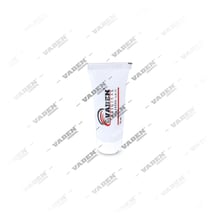
Brake caliper grease is a specialized high-temperature lubricating grease used at the moving points of disc brake calipers on heavy commercial vehicles — sliding pins, guide bushings, and piston contact surfaces. In the field it is often called "caliper pin grease" or simply "brake grease." This grease is NOT a mechanical spare part such as a caliper housing, caliper pin, or pad set; it is a chemical lubrication and maintenance product, and the two categories should never be confused. The caliper slides on its carrier to balance pad pressure against the disc, and that sliding motion only stays smooth when the right grease has been chosen. The Brake Caliper Grease product group in the VADEN ORIGINAL catalog is positioned for exactly this need, as a complementary maintenance item that sits apart from the caliper's mechanical components.
Functions and How Grease Works
Brake caliper grease keeps caliper pins sliding freely inside their carrier bushings, which lets the caliper press the pad against the disc evenly on both sides. When lubrication is insufficient or the grease has aged, the pins can bind in their bore, causing the caliper to work one-sided and the pads to wear unevenly. A correctly formulated caliper grease also forms a barrier against moisture and salt ingress, slowing corrosion on the pins and bushings. Because local temperatures rise quickly once the brake is working, the grease must hold on to its consistency and adhesion under that heat — otherwise it dries out prematurely, hardens, and lubrication is lost. For this reason, caliper greases are built on brake-specific formulas that differ from engine oils or general-purpose chassis greases.
- Smooth Sliding: Cuts friction between the pin and bushing so the caliper can move freely.
- Balanced Pad Pressure: Helps both pads contact the disc with equal force.
- Corrosion Barrier: Forms a protective film on pin and bushing surfaces against moisture and salt.
- Thermal Stability: Keeps its consistency through temperature swings in the brake area, preventing premature drying.
Grease Technical Specifications
When evaluating caliper greases, the core criterion is high-temperature resistance combined with resistance to brake dust and moisture. The market generally favors synthetic or semi-synthetic base-oil formulas with a high dropping point, which keeps the grease flowing under the heat swings that occur close to the brake disc. Because NLGI consistency class and the exact temperature range vary from product to product, it is best not to quote a fixed value — instead follow the range stated in the vehicle's and the caliper brand's current service manual. Brake-dust-resistant, silicone-based or ceramic-enhanced formulas are engineered so they do not damage rubber seals or boot material, and that compatibility directly affects how long the caliper seals last.
Types and Subcategories of Grease
- Caliper Pin Grease: A high-tack specialty formula designed to keep sliding pins moving freely inside their bushings.
- Silicone-Based High-Temperature Grease: A rubber-compatible type that keeps working without melting in brake areas that run hot.
- Copper-Based Anti-Seize Grease: A variant used on caliper bolts and mating surfaces to prevent corrosion and seizing.
- Ceramic-Enhanced Brake Grease: A brake-dust-resistant formula aimed at low friction and long service life at high temperature.
- Piston Boot and Dust Boot Grease: A rubber-friendly, low-volume grease type used between the caliper piston boot and the piston surface.
How to Choose the Right Grease
Before choosing a grease, confirm the caliper brand and type, then use the grease specification recommended by that caliper's manufacturer as your reference point. Using the wrong grease — particularly one that is chemically incompatible with rubber parts — can cause seals to swell. The table below summarizes the key criteria to weigh during selection.
Brake Caliper Grease Selection Criteria| Criterion | Why It Matters |
|---|
| Temperature Resistance | Must hold its consistency through the heat swings in the brake area |
| Material Compatibility | Must not damage rubber seals or the piston boot |
| Water and Salt Resistance | Protects pins and bushings from corrosion caused by road salt and moisture |
| Consistency Class (NLGI) | Should match the range stated in the vehicle's and caliper's service manual |
| Application Quantity | Excess grease traps brake dust and adds to contamination — apply sparingly |
Grease Maintenance and Key Considerations
- Re-Grease at Every Pad Change: Clean and re-lubricate the caliper pins at every pad replacement, removing all old grease residue.
- Avoid Over-Application: Excess grease traps brake dust and dirt, which can eventually make the pin harder to move; a thin, even film is enough.
- Keep It Off the Disc and Pad Surface: Grease that contacts the brake disc or pad face lowers the friction coefficient and can lengthen stopping distance.
- Check Rubber Compatibility: Confirm on the product label that the grease is chemically compatible with the piston boot and seal material.
- Mind Storage Conditions: Store grease in a sealed, moisture-free container, and never reuse contaminated grease.
Common Faults and Solutions
- Caliper Pin Seizure: Caused by dried-out or contaminated grease; remove the pin, clean it, and re-lubricate with the correct caliper grease.
- Uneven Pad Wear: Results from the caliper running one-sided due to insufficient lubrication; inspect and re-grease the pins and bushings.
- Brake Noise or Squeal: Caused by dry contact surfaces or the wrong grease type; apply a suitable formula to the relevant contact points.
- Grease Contamination on the Brake Disc: Caused by excess grease or grease applied to the wrong spot; clean the disc and reapply a smaller amount.
- Piston Boot Swelling or Tearing: Caused by using a grease incompatible with rubber; switch to a rubber-friendly, compatible formula and replace the boot.
Why VADEN ORIGINAL?
- Formula Built for the Brake System: Engineered for high-temperature and brake-dust conditions, unlike general-purpose greases.
- Broad Application Coverage: Positioned for compatibility with Wabco and Knorr-Bremse calipers on Mercedes-Benz, MAN, Scania, Volvo, DAF, and Iveco heavy vehicles.
- Material Safety: Manufactured with chemical compatibility for rubber seals and piston boots in mind.
- Export Experience in 100+ Countries: A heavy-duty product range tested across a wide range of climate conditions.
Conclusion
Brake Caliper Grease is a specialty lubrication product that keeps a disc brake caliper's sliding pins and bushings correctly lubricated, delivering balanced pad pressure, even wear, and a longer caliper service life. Choosing the right formula and applying it at the recommended intervals and in the correct quantity benefits both braking safety and maintenance costs. Always consult the vehicle's and the caliper's current service manual for exact temperature and consistency values. The VADEN ORIGINAL product range is built to meet this need reliably for heavy commercial vehicle fleets.
Frequently Asked Questions (FAQ)
Are brake caliper grease and the pad or caliper the same product?
No. Brake caliper grease is a chemical maintenance product used to lubricate caliper pins and sliding surfaces; it is not a mechanical spare part like a pad set or caliper housing. The two are separate product categories and are not interchangeable.
Where exactly is brake caliper grease applied?
Grease is applied in a thin film to the caliper pins, the guide bushings the pins sit in, and, where required, the piston boot contact surfaces. Care should be taken to keep grease off the brake disc or pad surface, since contact there can reduce braking performance.
What are the risks of using the wrong grease?
A grease that is chemically incompatible with rubber can cause the piston boot to swell or harden, while a grease that cannot handle the heat will dry out and lead to pin seizure and uneven pad wear. That is why it is important to choose a product matching the specification stated in the vehicle's and caliper's service manual.
How often should caliper grease be renewed?
The general practice is to clean and re-grease the caliper pins at every pad change. The vehicle's operating conditions and how often it is exposed to road salt and moisture can also affect the maintenance interval; check the service manual for the exact schedule.
Is applying too much grease harmful?
Yes. Grease applied in excess traps brake dust and dirt, which can gradually make the pin harder to move and increase contamination over time. It is best applied as a thin, even film, only at the necessary contact points.
Related technical guide: Disc Brakes vs. Drum Brakes: A Heavy-Duty Vehicle Comparison